A product launch gets moved up by three weeks. A studio pipeline suddenly fills with overflow shots. An architecture team needs polished walkthrough visuals before investor review. This is usually when outsourced 3d animation services stop being a backup plan and start becoming a competitive advantage.
For many companies, the question is not whether they need 3D content. It is whether they can produce it fast enough, at the right quality level, without straining internal teams or adding permanent overhead. That is where a qualified outsourcing partner changes the economics and the delivery timeline at the same time.
Why businesses rely on outsourced 3d animation services
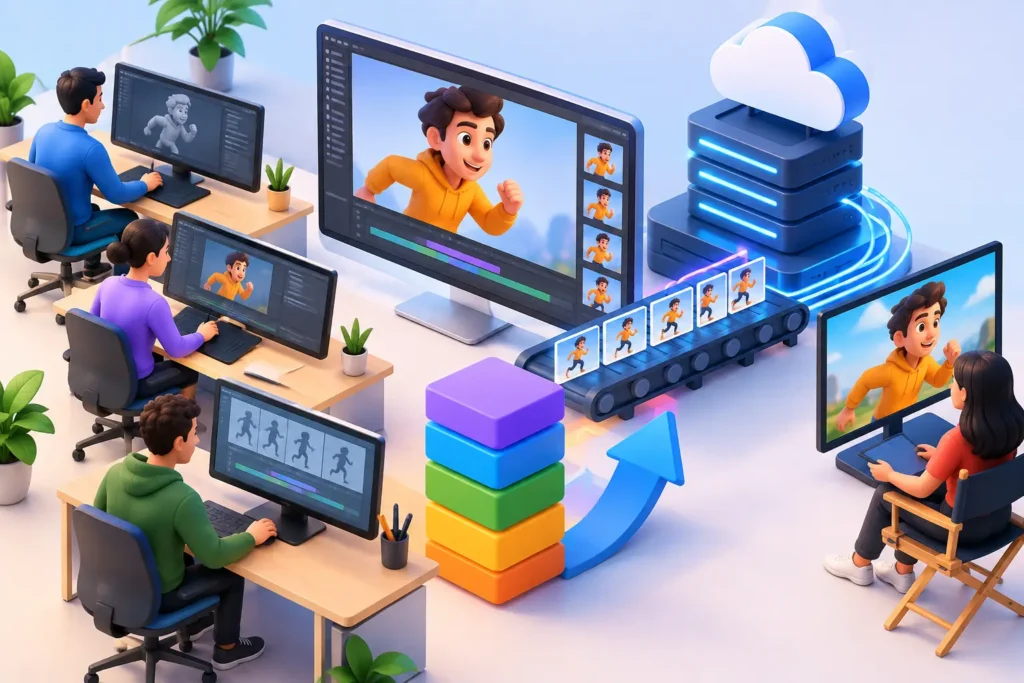
The biggest reason is capacity. Most internal teams are built for normal demand, not spikes. When campaigns, product launches, episodic production, or client revisions pile up at once, deadlines get tight fast. Outsourcing gives companies access to experienced modelers, riggers, animators, lighting artists, and post-production specialists without going through a long hiring cycle.
The second reason is specialization. Not every project needs the same skill set. A medical animation requires a different level of technical accuracy than a consumer product promo. Architectural visualization has its own standards for lighting, materials, and environmental realism. Film and TV pipelines demand consistency across multiple shots and assets. Outsourced production gives decision-makers access to targeted expertise instead of asking one in-house team to cover every discipline.
Cost control matters too. Building an internal animation department means salaries, software licenses, hardware, management time, and the risk of underused capacity between projects. With outsourced 3D services, production can scale up or down based on active demand. For many brands and studios, that model is simply more efficient.
What outsourced 3d animation services usually include
A serious outsourcing partner should offer more than animation alone. Production quality depends on the full pipeline working together. That often starts with concept alignment, style references, and asset planning. From there, services may include 3D modeling, texturing, rigging, animation, lighting, rendering, compositing, editing, and final delivery in the formats a client actually needs.
This broader scope matters because fragmented vendors create friction. If modeling is handled by one team, rigging by another, and post-production somewhere else, revision cycles often slow down. Issues get passed downstream. Accountability becomes harder to manage. By contrast, an end-to-end production partner can keep quality standards consistent from first asset build to final export.
For business buyers, that translates into simpler communication, clearer scheduling, and fewer surprises during review.
Where outsourcing creates the most value
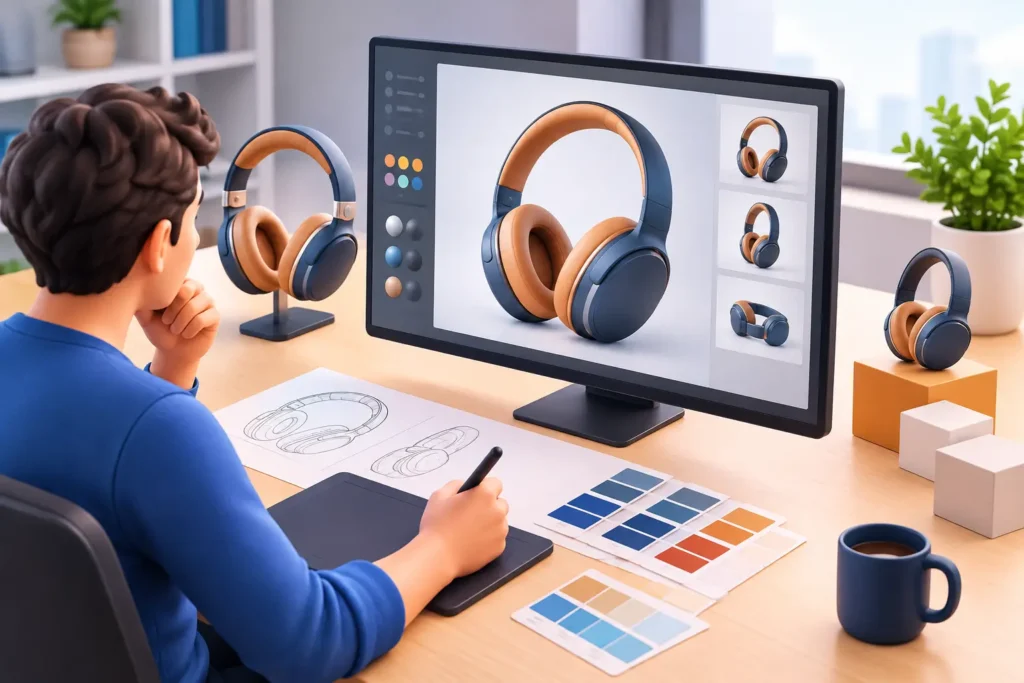
Product marketing is a major use case. Brands need launch videos, exploded views, assembly animations, and polished product visuals long before manufacturing or photography are fully available. Outsourced teams can create accurate, high-impact visuals that support sales and campaign timelines.
Studios and production houses use outsourcing to handle overflow, episodic volume, or specialty tasks that internal artists do not have time to absorb. In these environments, reliability matters as much as creative quality. A partner has to match pipeline expectations, naming conventions, file structures, and revision discipline.
Architecture and real estate teams often outsource walkthroughs, flythroughs, and photoreal render sequences to present developments clearly to clients, investors, and stakeholders. These projects require strong environment modeling, camera direction, material realism, and efficient rendering workflows.
Medical, industrial, and technical sectors benefit for a different reason. They need visual storytelling that is both clear and precise. Animation is not just about making content look impressive. It has to explain processes, functionality, and mechanisms without introducing inaccuracies.
The real advantages – and the trade-offs
Outsourcing works best when speed, scale, and specialized execution are priorities. It gives companies production flexibility without locking them into fixed internal headcount. It can also improve output quality if the external team brings deeper technical experience than the client currently has in-house.
But outsourcing is not automatic efficiency. It depends on process maturity. If a client cannot provide a clear brief, reference materials, technical requirements, or review ownership, even a strong external team will spend time chasing alignment. The better the inputs, the smoother the output.
There is also a difference between low-cost outsourcing and high-value outsourcing. Choosing the cheapest option can create bigger costs later in the form of rework, missed deadlines, inconsistent quality, or files that do not integrate with the rest of a production pipeline. For commercial projects, a dependable team is usually the better investment than a bargain quote.
Time zone differences can be either an advantage or a complication. For some clients, global production support means work continues while their internal team is offline. For others, delayed feedback cycles can slow approvals. This is why communication structure matters just as much as artistic capability.
How to evaluate an outsourcing partner
Portfolio quality is the first filter, but it should not be the only one. Buyers should look for relevant category experience. A team that produces attractive animation reels may still struggle with regulated medical content, product-accurate marketing visuals, or architecture-specific rendering standards.
Process clarity is another key signal. A strong partner can explain how projects move from briefing to asset development, review rounds, rendering, revisions, and final delivery. They should be able to discuss file formats, feedback handling, production milestones, and expected turnaround with confidence.
It also helps to ask how the team manages scalability. Can they support one animation this month and a larger content batch next quarter? Can they maintain consistency across a campaign, a series, or multiple SKUs? Businesses rarely need one isolated asset. They need production support they can count on repeatedly.
Communication quality should be tested early. If responses are vague before a project starts, that usually does not improve under deadline pressure. Clear scheduling, direct answers, and realistic scope discussions are all signs of a partner that understands commercial production.
What a strong workflow looks like
The most effective outsourced engagements start with precise discovery. That includes business goals, audience, technical references, style direction, timing, output requirements, and approval roles. Without that foundation, production can still move forward, but revisions become more expensive.
Next comes pre-production alignment. Storyboards, animatics, sample frames, or look development help reduce downstream risk. This stage is where creative direction becomes tangible enough for stakeholders to react to before full production hours are spent.
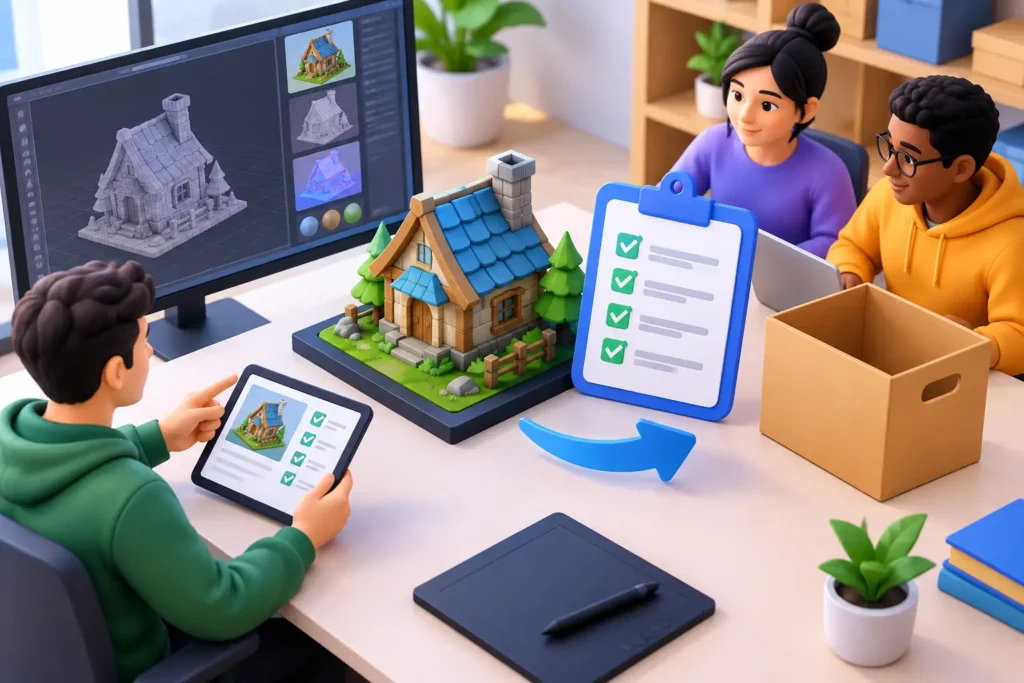
During production, structured review checkpoints keep projects on track. That means clients are not waiting until final render to flag issues with motion, product details, environment design, or pacing. Good outsourcing teams build review moments into the schedule so adjustments happen at the right stage.
Final delivery should be just as organized as production. Files need to be delivered in usable formats, with version control and clear handoff standards. For brands and studios managing multiple assets, this operational detail matters more than many vendors realize.
Why long-term outsourcing usually outperforms one-off hiring
Many companies begin outsourcing to solve a short-term problem, then keep the relationship because it improves the entire production model. Once an external team understands a brand’s standards, preferred workflows, revision style, and asset requirements, production gets faster and more predictable.
That familiarity reduces onboarding time across future projects. It also improves consistency, which is critical for product lines, recurring campaigns, serialized content, and branded visual systems. A partner that already knows your expectations can move with much more confidence than a new freelancer or newly assembled temporary team.
This is where a company like 3D Modeling Animation Studio becomes valuable beyond simple task execution. The goal is not just to deliver one animation. It is to provide dependable external production capacity that supports growth without sacrificing quality.
Choosing outsourced 3D animation with business goals in mind
The best outsourcing decisions are not driven by cost alone. They are driven by business fit. If your team needs faster turnaround, technical precision, broader capabilities, or support during demand spikes, outsourced 3D animation can remove bottlenecks that internal hiring will not solve quickly.
At the same time, the right partner should strengthen control, not reduce it. You should gain visibility into timelines, review stages, and deliverables while offloading the execution burden to specialists who know how to deliver under pressure.
For brands, studios, architects, and production teams, that is the real value of outsourced 3d animation services. They make it possible to produce more, respond faster, and maintain a high visual standard without building an oversized in-house department. If your pipeline is growing faster than your internal capacity, that is usually the moment to stop treating outsourcing as overflow and start treating it as strategy.