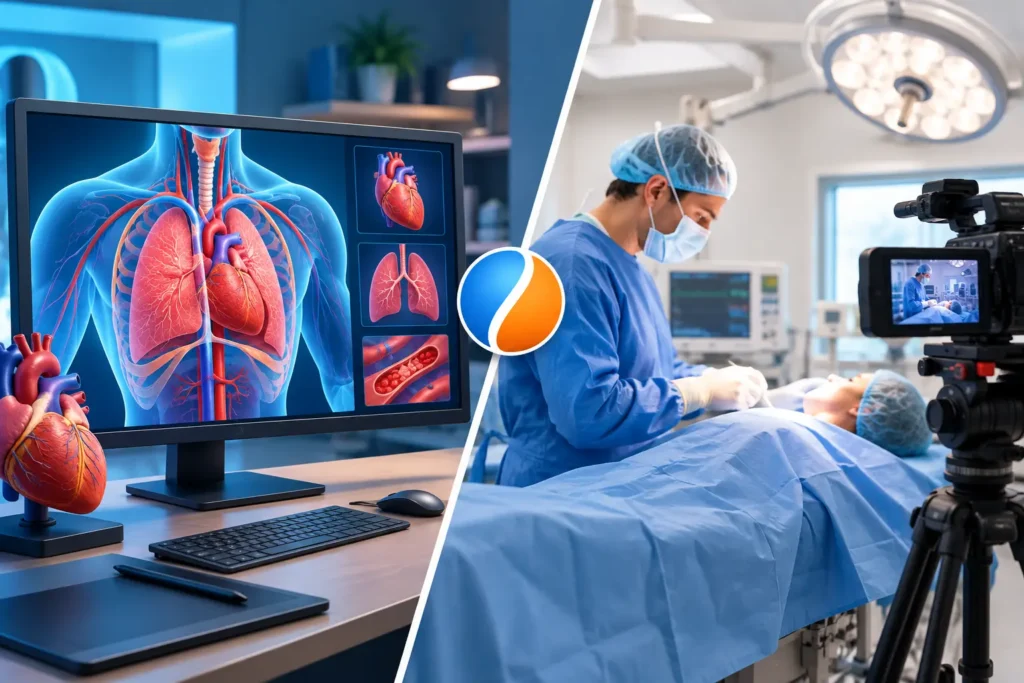

A medical animation can fail long before the first frame is rendered. The usual problem is not the software or the artist. It is a planning gap: an unclear audience, an unverified scientific claim, a missing product detail, or a review process that arrives too late. This medical animation planning guide helps marketing leaders, medical device teams, agencies, and production managers build a stronger path from concept to approved final video.
Medical visuals carry more responsibility than standard product animation. They must make complicated anatomy, mechanisms, procedures, and treatment pathways understandable without distorting clinical reality. At the same time, the production must support a commercial goal, fit a deadline, and stay within budget. Clear planning protects all three.
Start With the Business Decision the Animation Must Support
Before discussing visual style, define what the animation needs to achieve. A surgical device manufacturer may need to help clinicians understand a product mechanism before a sales meeting. A pharmaceutical team may need a mechanism of action animation for an educational campaign. A healthcare company may need a patient-friendly video that reduces anxiety before a procedure.
Those are different jobs, and they require different levels of detail. A clinician audience may expect accurate anatomical terminology, product specifications, and a closer view of tissue interaction. A patient audience usually needs simplified language, a calmer pace, and a clear explanation of what happens next. Trying to make one video serve every audience often creates a crowded, unfocused result.
Set a single primary objective, then identify secondary uses. For example, a two-minute product animation may be the main asset, while short social clips, sales presentation segments, trade show loops, and still images are planned as supporting deliverables. This approach helps an outsourced production team organize the project efficiently and avoids rebuilding assets later.
Build the Brief Before You Build the Scene
A strong brief gives the animation team enough context to estimate accurately and make sound creative decisions. It should not be a loose request for a high-end medical video. It should explain the audience, message, deliverables, approval requirements, and the facts that cannot be changed.
The most useful brief answers five questions:
- What must the viewer understand, believe, or do after watching?
- Who is the primary viewer, and what is their current level of medical knowledge?
- Which claims, device features, clinical steps, or anatomical relationships require precise representation?
- Where will the content appear, including websites, presentations, paid campaigns, conferences, or internal training?
- Who has authority to approve creative, scientific, legal, and brand decisions?
Also provide existing source materials early. These may include CAD files, product photography, engineering drawings, clinical literature, reference videos, brand guidelines, approved copy, and prior campaign assets. Source quality affects both schedule and cost. A usable CAD model can shorten modeling time, while incomplete or outdated reference files can create rounds of avoidable revisions.
Separate Facts From Visual Interpretation
Medical animation combines objective information with artistic choices. The size and placement of an implant, the sequence of a procedure, and the interaction between a drug and a receptor may require scientific validation. Camera movement, lighting, color treatment, transitions, and the amount of visual abstraction are creative decisions.
Keeping those categories separate makes reviews faster. Subject matter experts can focus on whether the content is medically correct, while brand and marketing teams can evaluate clarity, pacing, and visual impact. Without that separation, a minor preference about color can delay approval of a clinically significant frame.
Define the Right Level of Scientific Detail
Accuracy does not always mean showing every anatomical structure or molecular event. In fact, too much detail can weaken communication when the audience needs a clear explanation rather than a complete medical lecture.
The right level depends on the animation’s purpose. For patient education, selectively simplified anatomy may improve comprehension. For healthcare professional training, a more detailed model may be necessary to show access points, instrument positioning, or procedural sequence. For investor communications, the focus may be on the product opportunity and high-level mechanism rather than an exhaustive clinical demonstration.
This is where a medical reviewer should enter the process early. Ask the reviewer to confirm the script, storyboard, and key style frames before full production begins. Waiting until the final animation to request clinical feedback is expensive because changes may affect modeling, rigging, animation, compositing, narration, and timing at once.
When the subject involves an investigational therapy, unapproved indication, or regulated product claim, include legal and regulatory stakeholders in the approval map. A production studio can create precise visuals, but the client team must establish what claims are approved for the intended market and channel.
Plan the Production in Reviewable Stages
The best medical animation planning guide is practical about approvals. Projects move faster when stakeholders review a sequence of controlled milestones instead of reacting to a nearly finished video.
A typical production flow starts with discovery and scripting. The script establishes the story, key claims, terminology, voiceover length, and intended runtime. It is the least expensive point to make structural changes, so it deserves careful review.
Next comes the storyboard. Storyboards translate the script into frames and show what viewers will see in each scene. They reveal whether the narrative has a logical progression and whether complicated moments need additional time or a different visual approach. For medical work, annotations can identify anatomy, product components, and references that need validation.
Style frames follow when the visual direction needs approval. These polished images establish the look of materials, environments, lighting, color, labels, and anatomical realism. Approving the style before animation prevents the team from producing a technically correct video that does not match the brand.
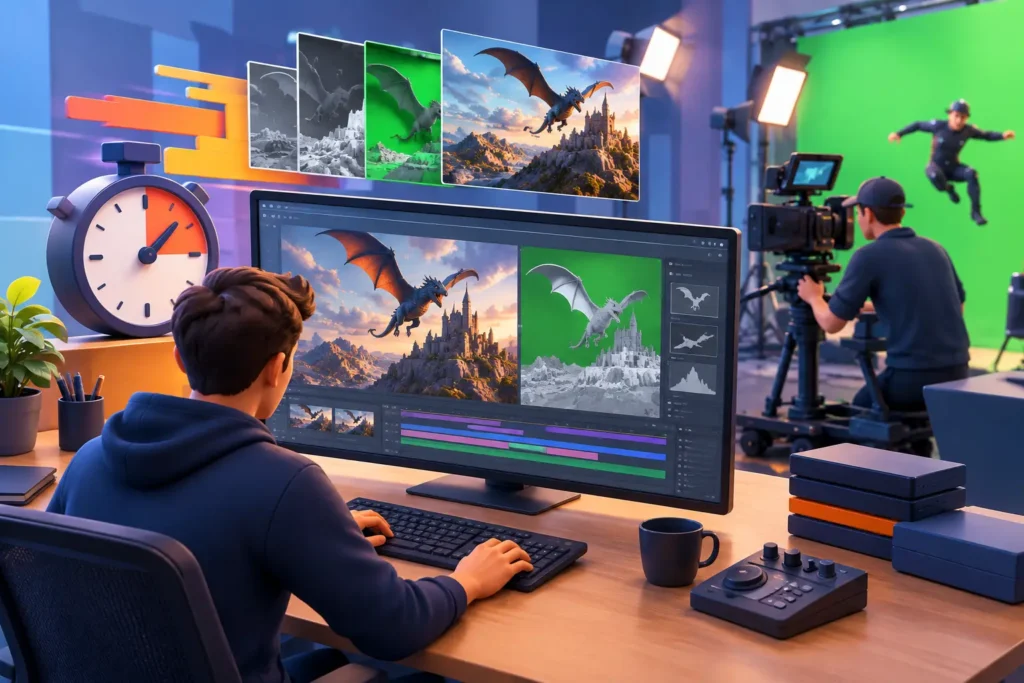
After modeling and animation, review a low-resolution preview or animatic for motion, pacing, and sequence accuracy. Final rendering, compositing, sound design, captions, and versioning should happen after core content is approved. This staged workflow gives decision-makers visibility without forcing them to inspect unfinished details too early.
Budget for Scope, Not Just Runtime
Runtime matters, but it is not the main cost driver. A 30-second animation showing a custom surgical device inside detailed anatomy can require more work than a two-minute video built from simple scenes and existing assets.
Budget is shaped by the number of custom models, the complexity of anatomy, the availability of CAD data, animation requirements, simulation needs, visual realism, narration, language versions, and delivery formats. A video that requires only one 16:9 master is a different production request from a campaign requiring vertical edits, square cutdowns, subtitled versions, localized voiceovers, and trade show displays.
Be specific about what must be custom and what can be simplified. If a device will only appear briefly in the background, it may not need the same modeling detail as the product shown in close-up. If a blood flow effect is illustrative rather than clinically quantitative, a stylized treatment may be the better choice. These decisions preserve budget for the moments that carry the message.
A reliable outsourcing partner should provide a clear scope, production assumptions, revision structure, and delivery schedule. The lowest initial quote is not always the best choice if it excludes essential stages such as scientific review support, post-production, or final format adaptations.
Protect the Schedule With Clear Ownership
Medical projects commonly involve product managers, clinical specialists, legal reviewers, marketers, agency teams, and executive stakeholders. That expertise is valuable, but unmanaged feedback can stop production.
Assign one project owner who consolidates comments and resolves conflicting input before sending feedback to the animation team. Establish review deadlines and name the approver for each stage. It also helps to define what counts as a revision. A correction to a clinical label is different from a late request to add an entirely new procedure scene.
Feedback should be specific and tied to a timecode or storyboard frame whenever possible. Rather than asking to make a scene clearer, explain what the intended viewer may misunderstand and what information must be emphasized. This gives artists and animators room to solve the communication problem instead of guessing at a preferred visual fix.
Choose Deliverables That Keep Working After Launch
A finished master video is valuable, but the underlying production assets can support a wider content program. Consider whether your team will need product stills, isolated device renders, alternate camera angles, short clips, caption files, transparent-background elements, or localized versions. Planning these outputs from the start is more efficient than reopening the project after launch.
For teams managing fluctuating demand, 3D Modeling Animation Studio can provide scalable production support across modeling, medical animation, post-production, and video adaptation. The goal is not simply to complete one asset. It is to create a dependable visual system that can serve sales, marketing, education, and product communication as needs change.
A well-planned medical animation gives every specialist a defined role and every creative decision a business purpose. Bring the right people into the process early, approve the science before polishing the visuals, and give your production team the clarity needed to deliver work that earns attention and trust.