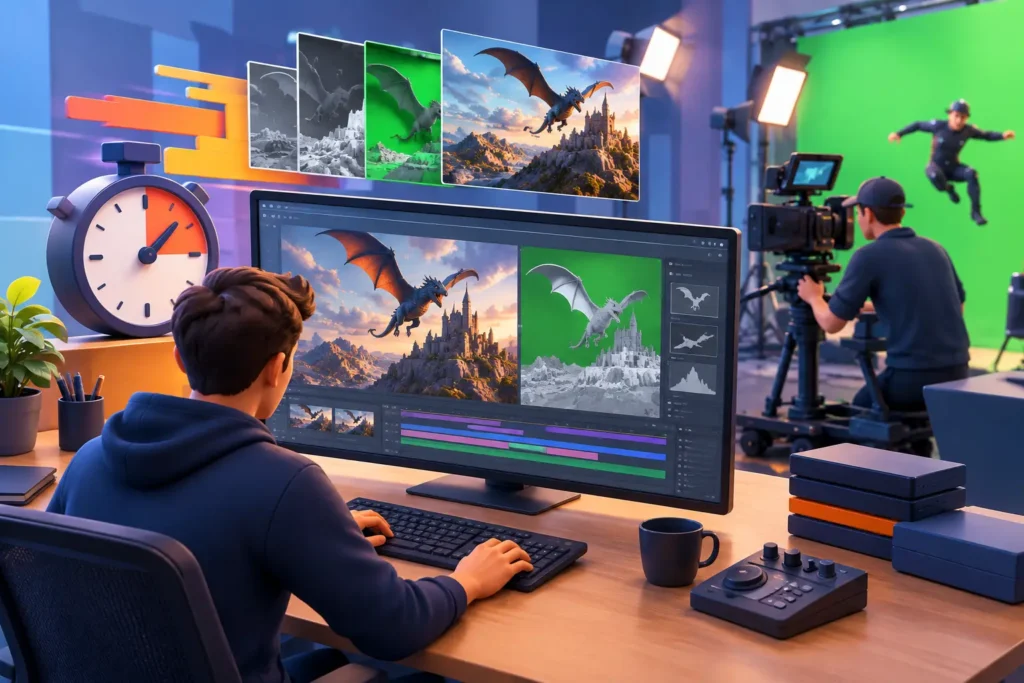
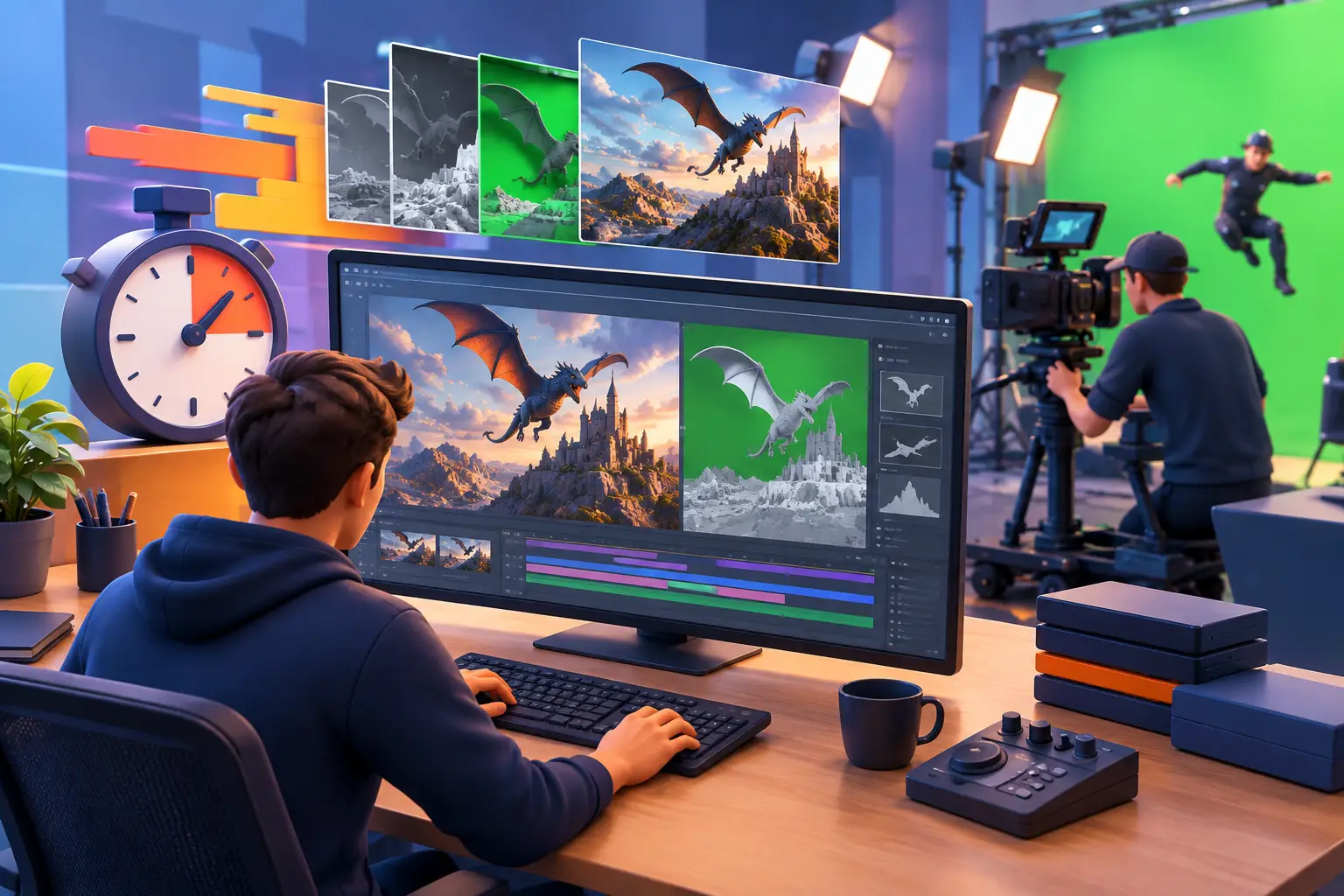
A product launch cannot wait for a reshoot. An architectural pitch cannot rely on unfinished construction. A medical device animation cannot leave room for visual ambiguity. In each case, visual effects give teams the ability to show what is not yet available, too costly to film, unsafe to capture, or impossible to explain with live action alone.
For business buyers, VFX is not simply a finishing layer added after editing. It is a production capability that can protect schedules, clarify complex messages, and raise the perceived value of a campaign or presentation. The strongest results come from treating visual effects as part of the production plan from the start, with a clear brief, disciplined asset management, and a team that understands both creative intent and technical delivery.
What Visual Effects Actually Deliver for Commercial Projects
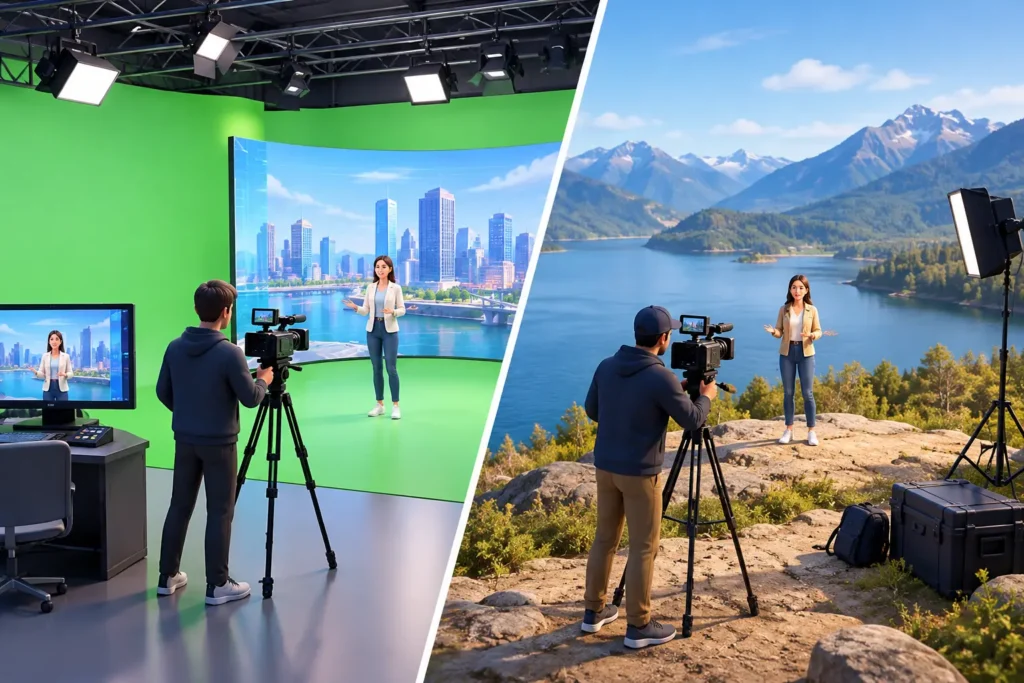
Visual effects combine digital imagery with live-action footage, photography, or entirely computer-generated scenes. That may mean placing a finished product into a location before it exists, removing unwanted elements from a shoot, creating a realistic environment, or visualizing internal mechanical and medical processes that cannot be filmed.
The business value depends on the project. A marketing team may use VFX to create multiple product variations without repeatedly booking studio time. A film or television production may rely on it to extend sets, manage crowd scenes, or maintain continuity across difficult locations. An architecture firm may use it to communicate how a proposed space will feel at different times of day. For medical and technical companies, it can turn complex functionality into a visual story that audiences can understand quickly.
The goal is not to add effects for their own sake. The goal is to make the final image feel intentional, credible, and useful to the audience. A dramatic visual that distracts from the product is a poor commercial decision. A subtle composite that makes a product benefit immediately clear can do far more work.
The Visual Effects Workflow Starts Before the Shoot
Many avoidable VFX costs are created before post-production begins. When a team decides late that a location needs digital extensions or that a product will need to be replaced in a scene, the available options become narrower and more expensive. Early planning gives the production team control over camera angles, lighting references, tracking markers, lens data, and plates needed for a convincing result.
A dependable workflow begins with a creative brief that identifies the required deliverables, platforms, visual references, audience, and approval process. It should also separate what must be photographed from what can be built digitally. That decision affects budget, realism, flexibility, and turnaround time.
For example, filming a real product may be the best choice when surface imperfections, tactile use, and human interaction are central to the message. A 3D product model may be more effective when the campaign needs multiple colors, configurations, cutaway views, or future updates. In many projects, the most efficient answer is a hybrid approach: live-action performance supported by digital product replacement, environment enhancement, or motion graphics.
Pre-production decisions that protect quality
Visual references should be specific enough to guide execution without forcing the team to copy an unsuitable style. A reference can communicate lighting mood, camera energy, material quality, or composition. It should not replace a clear explanation of what the viewer needs to understand.
Technical planning matters just as much. The VFX team needs to know the intended resolution, frame rate, aspect ratios, delivery codecs, and whether the work will be used across broadcast, web, social, trade shows, or large-format displays. Building for a vertical social ad is not the same as building for a cinema screen. When these requirements are defined late, teams may need to reframe shots, rebuild compositions, or compromise detail.
Where Production Value Is Won or Lost
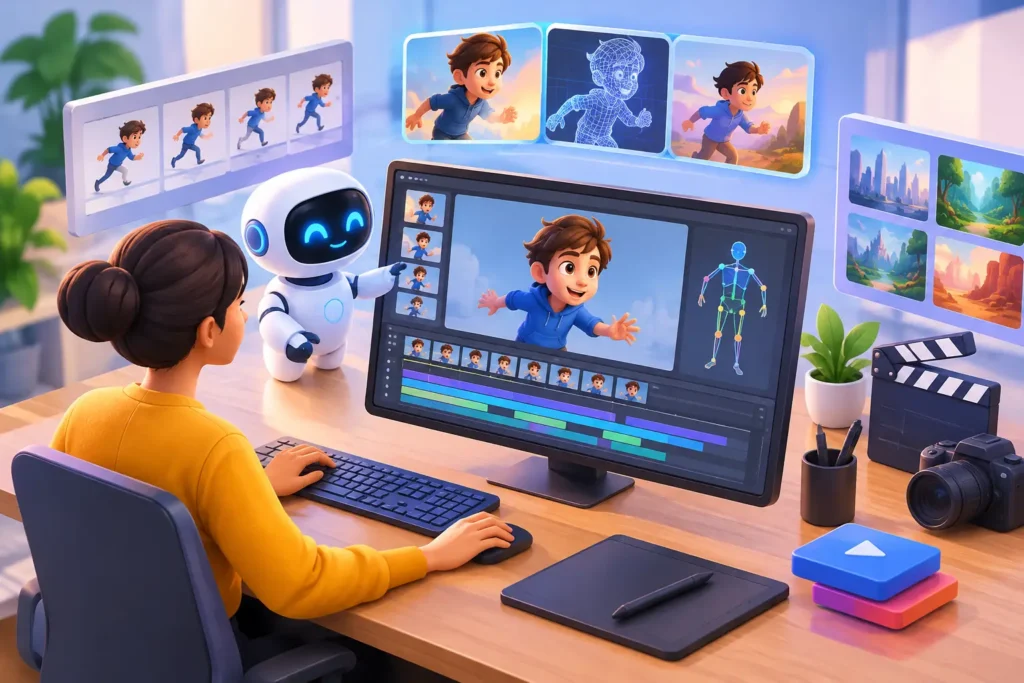
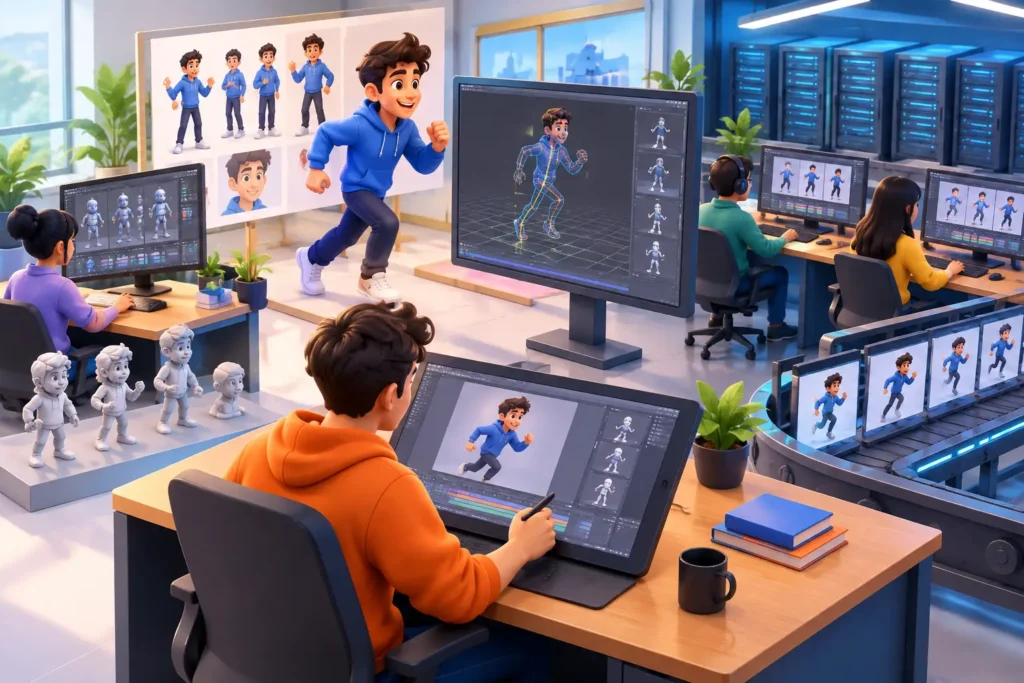
A high-quality visual effects shot is built through a sequence of interdependent steps. Modeling establishes form. Texturing and shading establish surface character. Animation establishes movement. Lighting, rendering, compositing, and color work establish whether the final image belongs in the same world as the footage.
Weakness in one stage can undermine the others. A perfectly modeled object will still look artificial if its reflections do not match the environment. Accurate tracking will not save a shot with unrealistic shadows. Fast rendering does not help if the composition does not support the message.
This is why specialist coordination matters. A production partner should be able to move work between modeling, rigging, animation, environment creation, compositing, and post-production without losing the original creative objective. The process needs clear ownership, version control, and review points that catch issues before they become expensive revisions.
Realism is a technical discipline
Audiences may not know the terms camera tracking, rotoscoping, keying, or compositing, but they recognize when a shot feels wrong. They notice when an object appears to float, when perspective shifts unnaturally, or when a digital surface reflects the wrong light source.
Realism comes from observation and accurate data. Camera lens characteristics, motion blur, depth of field, grain, color temperature, shadow softness, and material response all influence believability. For a product campaign, precise scale and edge detail can matter more than spectacle. For an environment extension, atmospheric depth and lighting continuity may carry the shot.
There is also a practical trade-off. Not every project needs photorealism. Stylized visual effects can be faster, more memorable, and better aligned with a brand identity. The right question is not, “Can this look real?” It is, “What level of realism will make this message persuasive for this audience and channel?”
Outsourcing VFX Without Losing Creative Control
Outsourcing visual effects gives organizations access to specialist capacity without maintaining a large internal team through every demand cycle. It is especially useful when deadlines overlap, project scope expands, or a production needs skills that are not available in-house.
The concern, understandably, is control. Clients need confidence that an external team will follow brand standards, protect source files, communicate clearly, and deliver work that fits into an existing production pipeline. Those concerns are addressed through process, not vague promises.
A capable outsourced partner establishes a production schedule, defines approval stages, confirms file formats, and identifies decision-makers early. Initial tests or look-development frames can validate the creative direction before the full production begins. Regular review cycles then keep feedback focused and prevent conflicting comments from slowing down the team.
At 3D Modeling Animation Studio, this production-first approach helps clients combine 3D modeling, animation, compositing, and post-production support according to the needs of each campaign or production. The advantage is not simply access to more artists. It is access to a coordinated delivery structure that can scale when internal capacity cannot.
How to Scope a Visual Effects Project More Accurately
The quality of a VFX estimate depends on the quality of the input. A short description such as “add a realistic background” can conceal major variables: the number of shots, camera movement, asset complexity, duration, required revisions, and final delivery formats.
Before requesting a quote, define the intended outcome in business terms. Is the project designed to increase product understanding, support a pitch, create a launch film, explain a technical process, or complete a production sequence? Then provide the materials available, such as storyboards, edit references, brand guidelines, CAD files, product photography, footage, and existing 3D assets.
Scope should also address revision expectations. Feedback is essential, but late changes to animation timing, camera movement, product design, or scene direction can affect several departments at once. A strong partner will distinguish between normal refinement and a change in approved scope, helping stakeholders make informed choices before timelines move.
Budget should be tied to the role of the shot. Hero visuals that carry a campaign may justify extensive look development and detail. Supporting shots may need a more efficient approach. Spending evenly across every frame is rarely the best use of production resources.
Choosing a Partner for Visual Effects Production
Showreels matter, but they are only one part of the evaluation. Look for evidence that the team can manage the type of work you need: product visualization, photorealistic compositing, character animation, architectural environments, technical animation, or high-volume post-production support.
Ask how the team handles briefs, feedback, source files, quality assurance, and delivery. Confirm who will manage the project and how changes will be documented. For ongoing work, assess whether the partner can maintain consistency across campaigns rather than producing one strong sample shot.
The best choice is a team that can balance creative ambition with operational discipline. Visual effects succeed when they make difficult production goals achievable without introducing avoidable uncertainty. Start with a clear message, plan the technical path early, and give your production team the structure to deliver images that earn attention and hold up under scrutiny.