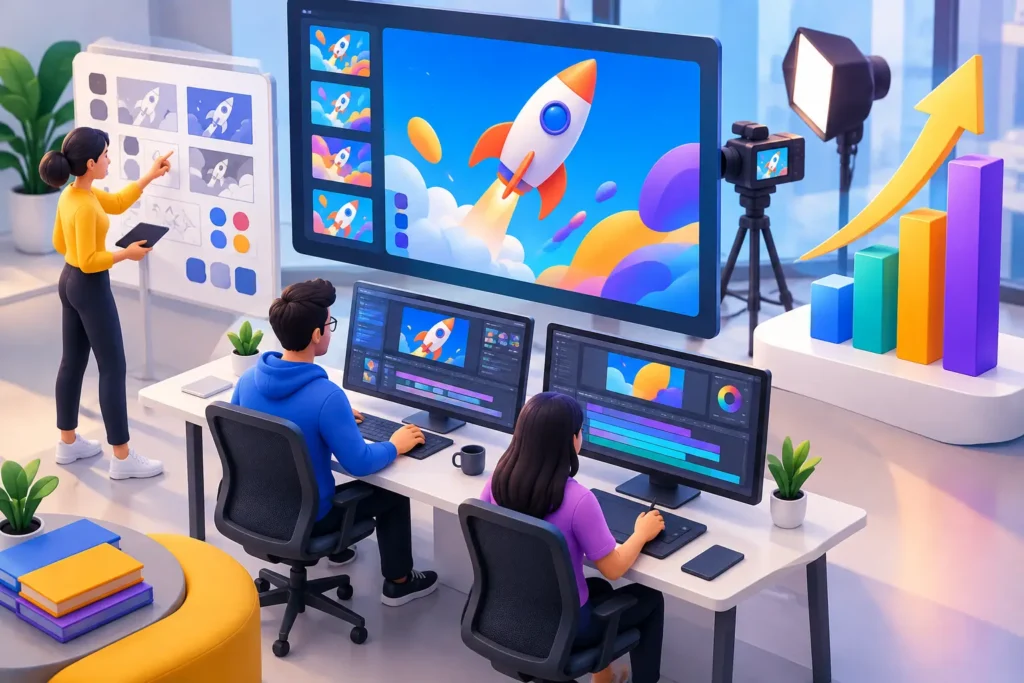
A product launch is weeks away, the campaign needs visual impact, and the internal team is already committed to other work. This is where a motion graphics agency becomes more than a creative supplier. The right partner gives brands and production teams the capacity to turn complicated messages into focused, polished video without slowing down the larger campaign.
Motion design can make an audience understand a product feature, a financial process, a medical mechanism, or an architectural concept in seconds. But commercial results depend on much more than attractive animation. They require sharp planning, technical accuracy, dependable production management, and assets built for the channels where they will appear.
What a Motion Graphics Agency Should Solve
A capable agency does not begin with software or visual effects. It begins with the communication problem. Is the goal to explain a new product, generate demand before a launch, improve training retention, support a sales presentation, or create campaign cutdowns for paid social? Each objective changes the creative approach, runtime, level of detail, and delivery requirements.
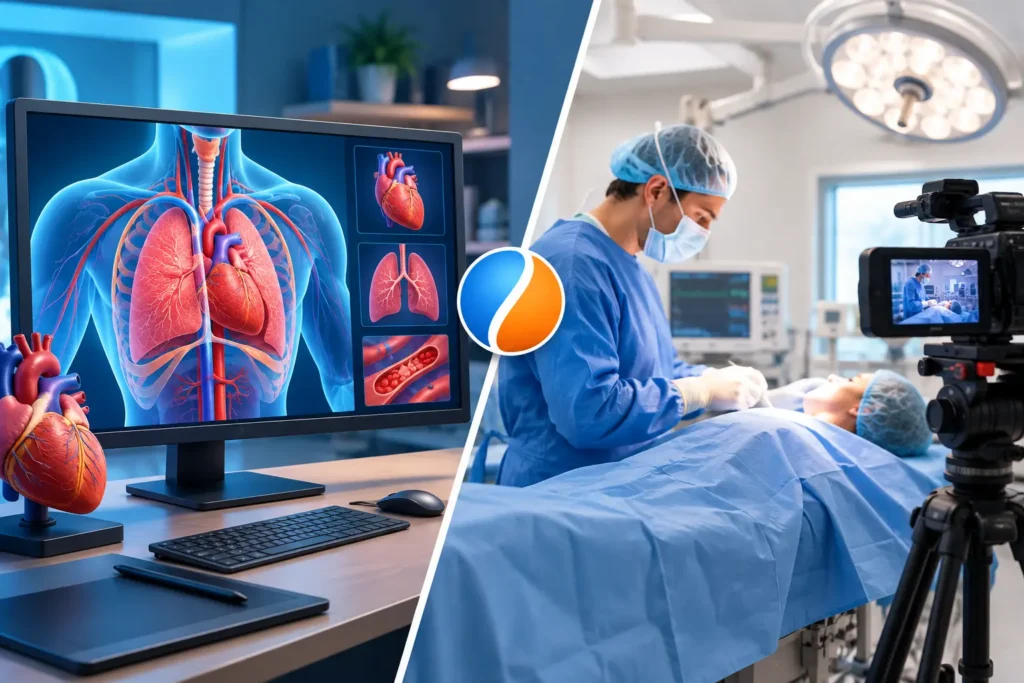
For example, a 15-second social ad needs a strong message in its opening frames, readable typography on a phone screen, and a clear visual hierarchy. A two-minute product explainer has more room to establish the problem, demonstrate benefits, and build trust. A medical animation may require scientific review, accurate anatomy, and a restrained visual treatment that makes complex information understandable without oversimplifying it.
The best choice is a production partner that can connect those decisions to business outcomes. That means asking practical questions early: Who is the viewer? What must they understand or do after watching? Where will the video run? What brand assets, product files, scripts, or reference materials already exist? Clear answers prevent expensive revisions later.
Motion Design Is Not Always the Same as 3D Animation
Motion graphics typically combine typography, illustrations, graphics, transitions, compositing, and animated brand elements. It is an effective format for explainers, data-driven content, product messaging, social campaigns, broadcast packages, and corporate communications.
However, some projects need more dimensional detail. A consumer product may require photorealistic 3D modeling and animation to show materials, mechanics, or interior components. An architectural campaign may need animated walkthroughs and realistic environments. A film or television sequence may require character rigging, simulations, lighting, and compositing. In those cases, a partner with both motion design and full 3D production capability can reduce handoffs and keep the visual language consistent.
When Outsourced Production Makes Commercial Sense
Building an in-house motion team can work for companies with a constant and predictable volume of content. It gives stakeholders close access to creatives and may suit brands with highly repetitive deliverables. The trade-off is fixed payroll, software costs, management overhead, and limited access to specialized skills when project requirements suddenly expand.
Outsourced production is often the stronger model when demand fluctuates or a campaign needs capabilities that are not available internally. A marketing department may need animated product visuals one month, a series of localized campaign versions the next, and a technically detailed 3D sequence later in the year. Hiring for every requirement is rarely efficient.
An external motion graphics team gives decision-makers flexible capacity without adding permanent headcount. It can also create a more reliable path through peak production periods, provided the agency has disciplined project management, documented review stages, and enough resources to meet the agreed schedule.
For studios and production houses, outsourcing can protect client relationships during heavy workloads. Rather than declining work or rushing it through a stretched team, they can bring in specialized support while maintaining creative control. The key is to choose a partner that understands white-label workflows, confidentiality, naming conventions, version control, and the importance of meeting delivery specifications exactly.
How to Evaluate a Motion Graphics Agency
A strong reel matters, but it should not be the only deciding factor. Fast cuts and impressive effects can hide weak storytelling or inconsistent execution. Review work that resembles your actual project in purpose and complexity, not simply in style.
Start by assessing whether the agency can translate strategy into a workable production plan. A credible partner should be able to explain how it will move from brief to script, storyboard, styleframes, animation, sound, feedback, and final delivery. If the process is vague at the start, timelines and budgets are likely to become vague later.
Look closely at these production signals:
- Relevant technical depth: The team should demonstrate experience with the required mix of 2D motion graphics, 3D modeling, rendering, compositing, editing, or visualization.
- Clear scope control: A detailed quote should identify deliverables, runtimes, revisions, formats, responsibilities, and assumptions rather than offering one broad promise.
- Review discipline: Defined approval points keep feedback focused and prevent major changes after animation is substantially complete.
- Scalability: The agency should be able to support alternate aspect ratios, language versions, campaign cutdowns, and additional assets without rebuilding the project from scratch.
- Reliable communication: A named point of contact, realistic status updates, and prompt issue escalation matter as much as creative talent when deadlines are tight.
Budget should be evaluated against the actual production scope. A simple kinetic typography video and a photorealistic 3D product animation may have similar runtimes, but they require very different levels of labor. Modeling, texturing, rigging, lighting, rendering, simulations, and advanced compositing all affect cost. The lowest quote may exclude work that is essential to the final result.
A Production Process That Protects Quality and Speed
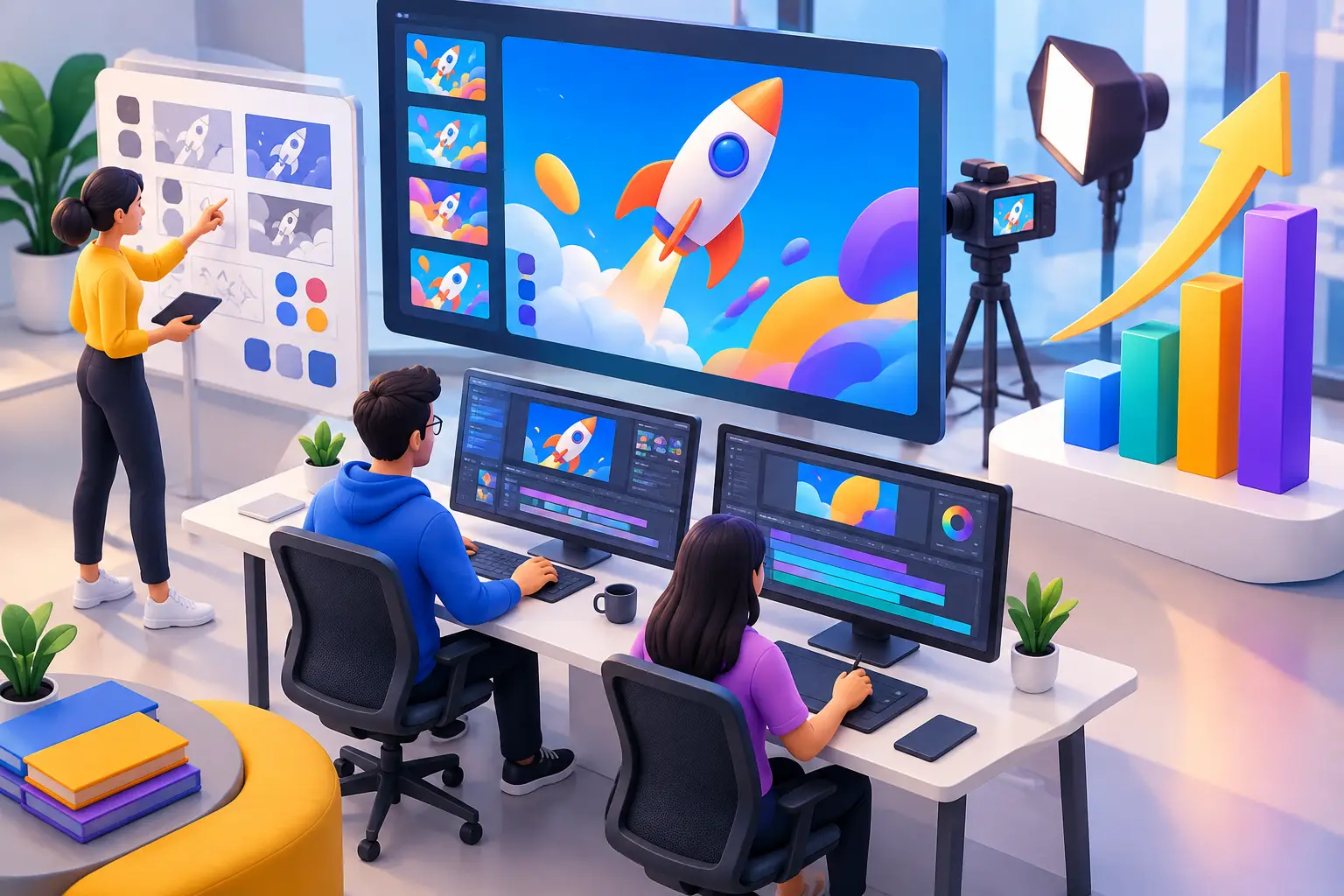
Efficient motion graphics production is structured around approvals. The brief establishes the objective, audience, required assets, visual direction, channels, and timeline. From there, scripting and storyboarding turn broad ideas into a sequence that stakeholders can evaluate before substantial production time is committed.
This early stage is where clients should focus their attention. Changes to the message, order of scenes, or core visual approach are fast to make in a script or storyboard. The same changes become slower and more expensive once scenes have been animated, rendered, and composited.
After the storyboard is approved, styleframes define the look. They may establish color treatment, typography, illustration style, 3D realism, lighting, transitions, and graphic elements. This is particularly valuable for brands that need a new campaign to align with existing identity standards while still feeling fresh.
Animation follows, then sound design, voiceover integration if required, editing, and final color and quality control. A professional team does not treat delivery as an afterthought. It confirms frame rate, resolution, codecs, aspect ratios, caption requirements, platform-safe areas, and master file needs before the final export. A campaign may require 16:9, 1:1, 9:16, and cutdown versions, each designed to perform properly in its intended placement.
At 3D Modeling Animation Studio, this end-to-end approach helps clients combine creative execution with scalable modeling, animation, post-production, and rendering support under one coordinated production workflow.
Build for the Full Campaign, Not One Video
A motion graphic should rarely be planned as a single isolated asset. If the core animation is designed with flexibility from the start, it can support multiple campaign needs: a hero video, short social edits, presentation loops, product-page clips, trade-show displays, paid advertising variations, and localized versions.
That does not mean every project needs every deliverable. A focused launch with one primary audience may benefit most from one high-quality hero asset. A large product rollout with several channels and markets needs a modular approach. The right scope depends on the campaign plan, available source materials, approval speed, and how long the content is expected to remain useful.
The practical advantage of planning ahead is consistency. The same visual system, motion behavior, product representation, and message hierarchy can carry across every version. It saves production time while giving the campaign a more unified and credible presence.
Choose a motion graphics partner that can make the first review feel intentional, not improvised. When the creative direction, technical requirements, and production workflow are aligned from day one, your team can spend less time managing uncertainty and more time putting a high-performing visual story in front of the right audience.