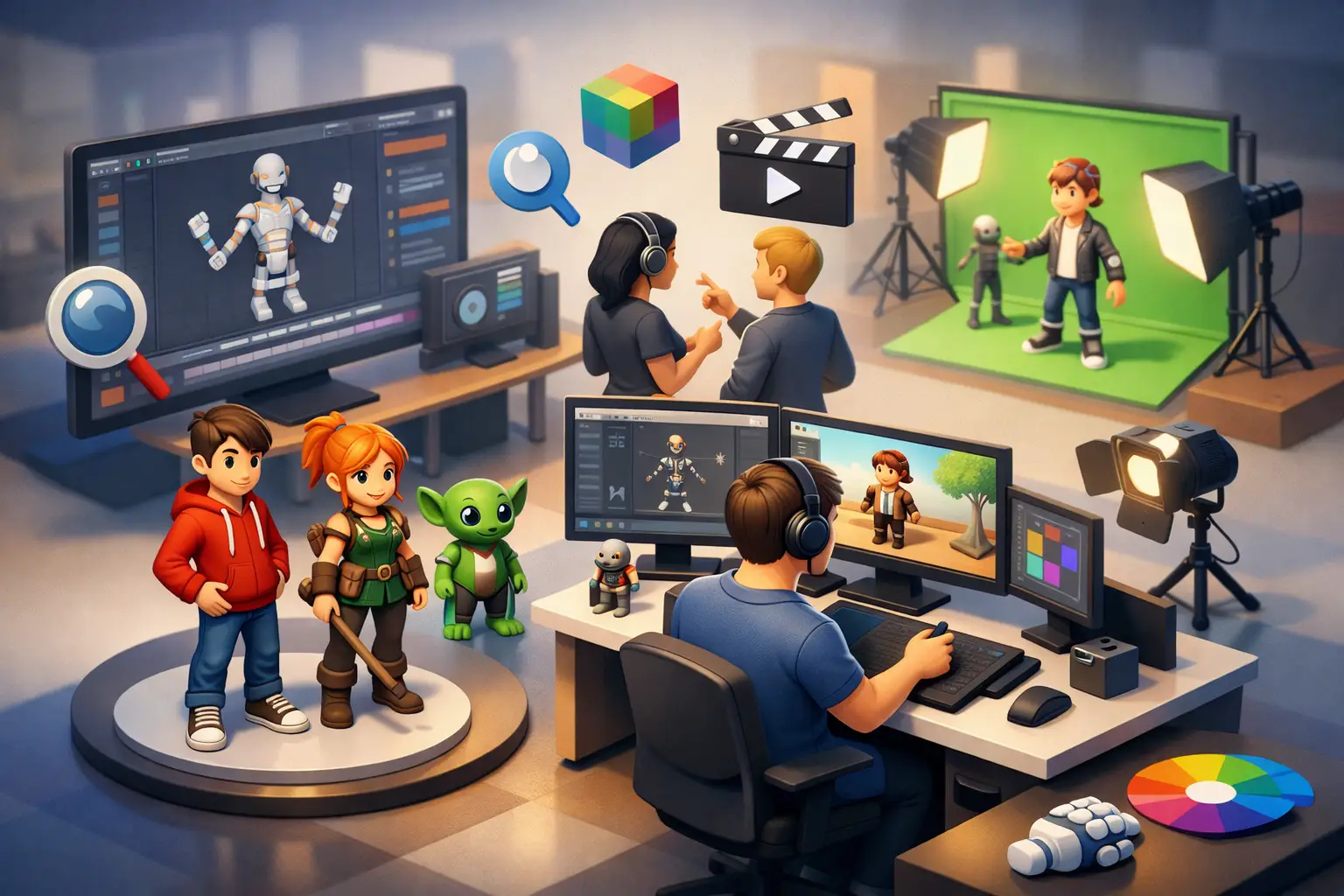
A delayed character animation project rarely fails because of one bad shot. It usually slips because the production partner cannot hold quality, hit milestones, and adapt when feedback starts stacking up. That is why choosing the right 3d character animation studio is less about finding a flashy reel and more about finding a team that can deliver consistent results under real production pressure.
For brands, agencies, entertainment producers, and companies managing complex visual content, the stakes are high. Character animation affects storytelling, product perception, audience engagement, and production schedules. If the studio is strong creatively but weak operationally, you feel it in missed deadlines, revision fatigue, and rising costs. If the studio is technically strong but creatively limited, the work may look polished without actually connecting with the audience.
The best partner does both. It combines artistic judgment, technical control, and a production system that supports fast, reliable execution.
What a 3D character animation studio should actually deliver
A capable 3D character animation partner does more than animate movement. It builds a structured pipeline around performance, design intent, and final delivery. That usually includes modeling support, rigging, look development, animation, lighting, rendering, compositing, and post-production coordination.
For business buyers, that matters because character animation rarely exists in isolation. A product campaign may need animated mascots, explainer assets, and short-form social edits. A production house may need help with hero characters, background animation, or overflow support during peak schedules. A medical company may need anatomically precise animated figures with controlled motion and review-ready revisions.
In each case, the value of the studio is not only the frames it produces. It is the ability to step into the workflow, understand the project requirements quickly, and keep production moving without forcing the client to manage every technical detail.
How to evaluate a 3D character animation studio
The reel matters, but it is only the starting point. A strong portfolio shows timing, weight, acting, polish, and visual quality. What it does not always show is whether the team can scale, communicate clearly, or maintain standards across a long production cycle.
That is why experienced buyers look past style alone. They ask how the studio handles scope changes, whether it can support multiple asset types, how feedback rounds are managed, and what happens when deadlines tighten. These questions reveal more than a highlight reel ever will.
Look for production depth, not just visual flair
A polished sample can come from a one-off success. What you need is evidence of repeatable capability. If a studio works across advertising, entertainment, architecture, product visualization, or technical sectors, that often suggests stronger internal systems and broader problem-solving ability.
This is especially important when projects involve multiple deliverables. A campaign may begin with a hero animation and expand into cutdowns, alternate formats, localization versions, or additional character scenes. A studio with real production depth can absorb that growth without losing control.
Assess rigging and technical foundations
Great character animation depends on what happens before animation starts. Weak topology, poor rigging, and limited facial controls create problems that show up later as awkward motion, expensive revisions, or restricted performance.
If your project depends on expressive characters, dialogue, stylized motion, or close-up performance, ask detailed questions about rigging workflows. The same applies if assets need to be reused across multiple deliverables or campaigns. A solid technical foundation improves consistency and reduces avoidable rework.
Review communication and approval structure
Fast production does not come from rushing. It comes from a clear review system. You want to know who manages the account, how approvals are staged, what file formats are delivered, and how revision rounds are organized.
Studios that perform well over time usually have a transparent process. They define milestones, confirm creative direction early, and keep feedback tied to specific production stages. That protects both schedule and budget. It also makes collaboration easier for internal marketing teams, producers, and external stakeholders who all need visibility.
Why outsourcing makes business sense
Many companies do not need a full in-house character animation department. They need reliable access to one when the project demands it. That is where outsourcing becomes a practical advantage rather than a compromise.
An outsourced studio gives you access to specialized artists, animators, and technical talent without adding permanent overhead. It also gives you flexibility. You can scale up for a product launch, cinematic sequence, explainer series, or broadcast package, then scale down when the delivery phase ends.
For internal teams, that flexibility is often the difference between a manageable production cycle and a strained one. Instead of hiring for short-term peaks or stretching a small team too far, you can bring in an external partner built for production capacity.
Speed matters, but controlled speed matters more
Many studios promise quick turnaround. The real question is whether speed comes with structure. A rushed pipeline can create bottlenecks in feedback, rendering, or final edits that erase the time saved upfront.
A dependable outsourcing partner balances speed with technical discipline. That means organized scene management, realistic milestone planning, clear version control, and enough bench strength to handle revision cycles. In commercial production, controlled speed is what keeps launch dates intact.
Industry experience changes the quality of the output
Character animation for a consumer brand is different from animation for film, healthcare, training, or architecture-related storytelling. The principles of motion remain the same, but the communication goal changes the execution.
A studio with cross-industry experience can adapt style, pacing, realism, and presentation to fit the business objective. A medical animation may require strict anatomical credibility. A branded character campaign may need stronger personality and faster visual readability. A cinematic sequence may prioritize emotional performance and continuity across scenes.
That range matters because it reduces ramp-up time. The team understands the context sooner and makes better decisions earlier.
Red flags to watch before signing a project
Some risks are easy to miss at the proposal stage. One is vague scoping. If the studio cannot define what is included, how revisions are handled, or what deliverables you will receive, budget friction usually follows.
Another red flag is overpromising. If every project is quoted as fast, easy, and unlimited in flexibility, there is a good chance the process is not being evaluated with enough rigor. Strong studios are confident, but they are also specific. They know where complexity lives and they explain it clearly.
You should also be cautious if the studio cannot show workflow transparency. You do not need every internal detail, but you should understand the production path, communication points, and delivery responsibilities. When that structure is missing, clients often end up doing more project management than expected.
What the right studio relationship looks like
The best studio relationships feel less transactional over time. The team learns your brand standards, visual preferences, review style, and production priorities. That familiarity improves speed and consistency across future work.
For many clients, this is where the real value appears. Instead of sourcing a new vendor for every campaign or content surge, you build a partnership with a team that can support ongoing animation needs across departments and formats. That could mean campaign assets, product storytelling, entertainment support, explainer content, or technical visualization delivered through one coordinated production resource.
This is also where a full-service provider has an advantage. When modeling, rigging, animation, environments, rendering, and post-production are aligned under one production framework, handoff issues are reduced. The project moves with fewer gaps and fewer conflicting assumptions.
A company like 3D Modeling Animation Studio is built around that model. The benefit for clients is straightforward: specialized 3D execution, scalable outsourced support, and a partner that understands both creative quality and delivery discipline.
Choosing for long-term value, not short-term price
Cost always matters, but the lowest quote is rarely the lowest-risk option. If cheaper production leads to revision loops, missed approvals, or inconsistent output, the total cost rises quickly. Time gets lost, internal teams get pulled into correction work, and launch schedules tighten.
A better decision is to choose a studio based on operational fit, technical strength, and the ability to support your project beyond the first delivery. That includes responsiveness, asset reusability, pipeline maturity, and confidence in handling commercial pressure.
The right 3d character animation studio should make your production life easier. It should give you room to move faster, present stronger visuals, and take on bigger creative goals without expanding internal headcount. When that happens, animation stops being a bottleneck and starts becoming a reliable growth tool.
If you are evaluating studios now, look past the reel for a moment and pay attention to how the team thinks. Strong character animation is visible on screen. Strong production partnership shows up everywhere else.