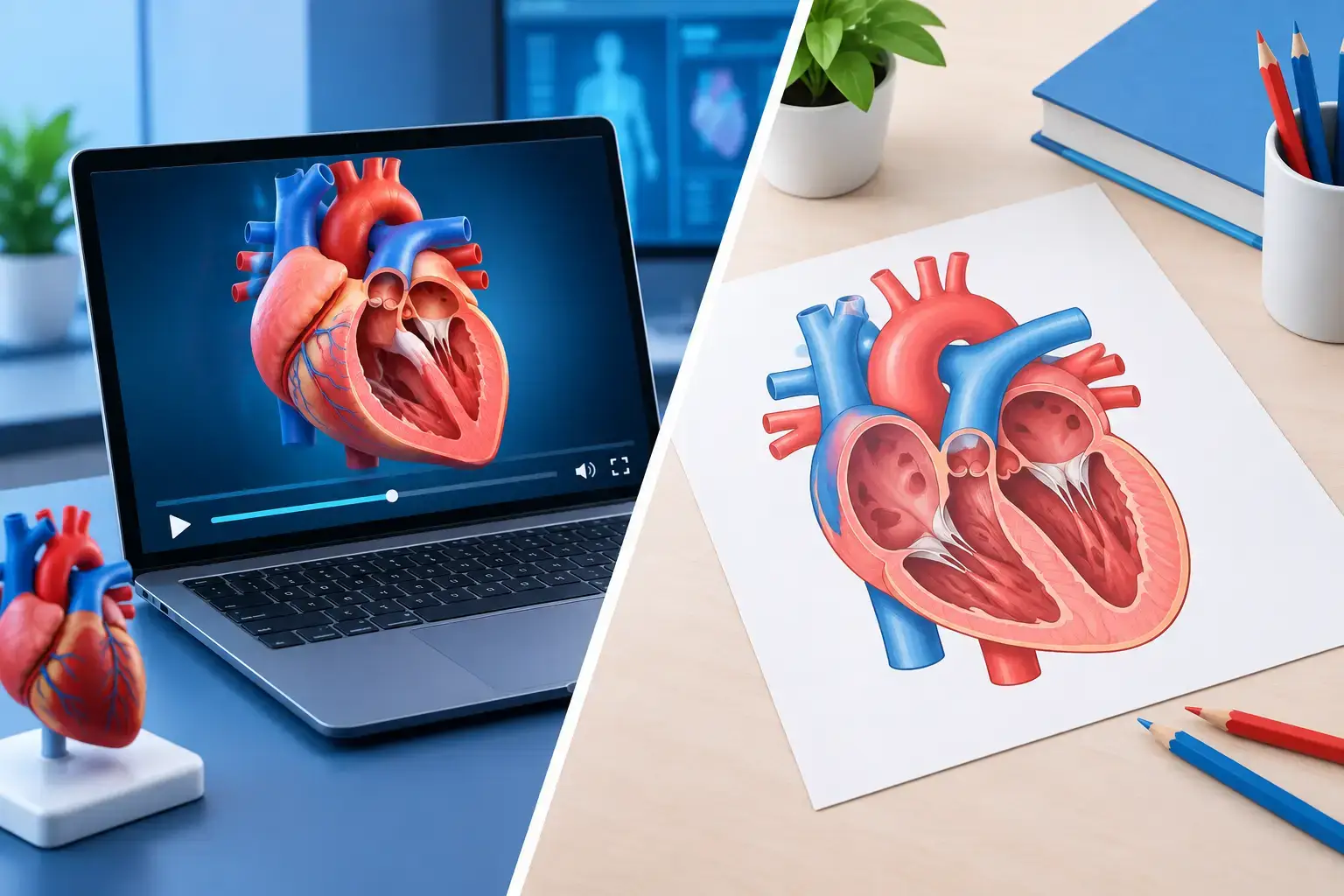
A static image can show where a stent sits. A well-planned animation can show it traveling through an artery, expanding at the target site, and restoring blood flow in seconds. That difference is why the medical animation vs illustration decision affects far more than visual style. It shapes what an audience understands, remembers, and does next.
For medical device companies, pharmaceutical marketers, healthcare providers, and production teams, the right format depends on the message, audience, approval requirements, distribution channel, and deadline. Neither option is automatically better. The best choice is the one that communicates clinical information accurately while meeting the commercial goal of the project.
Medical Animation vs Illustration: The Core Difference
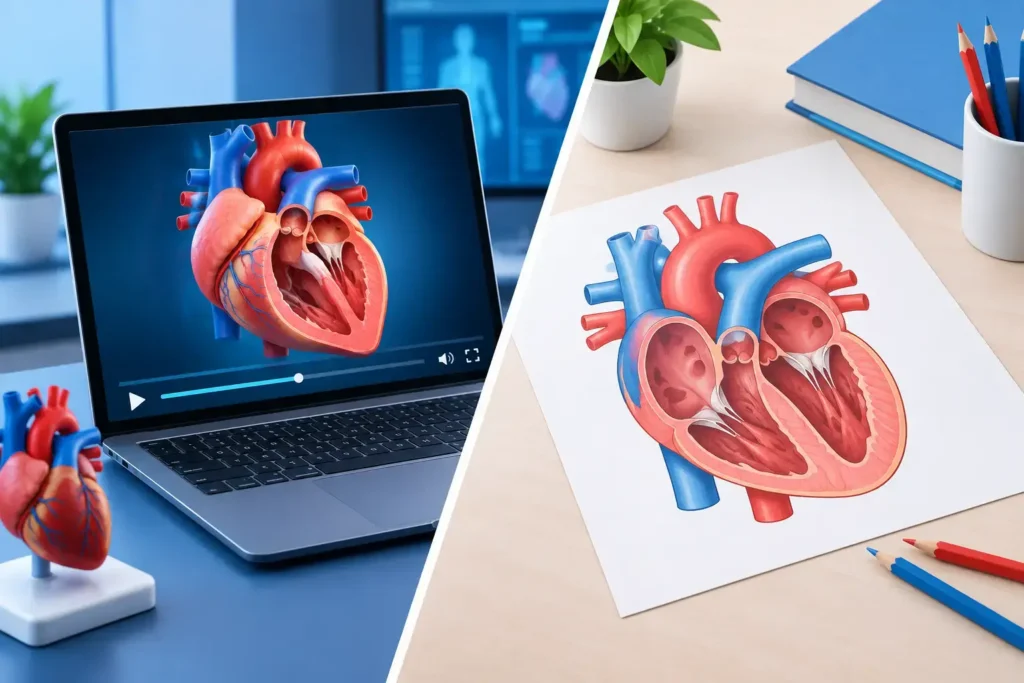
Medical illustration uses a single still image, or a series of still images, to explain anatomy, pathology, procedures, and product features. It may be created in 2D, 3D, or a hybrid style. The viewer controls the pace, making illustration especially effective for reference materials, labeling, comparison charts, clinical publications, patient handouts, and web pages that need fast visual comprehension.
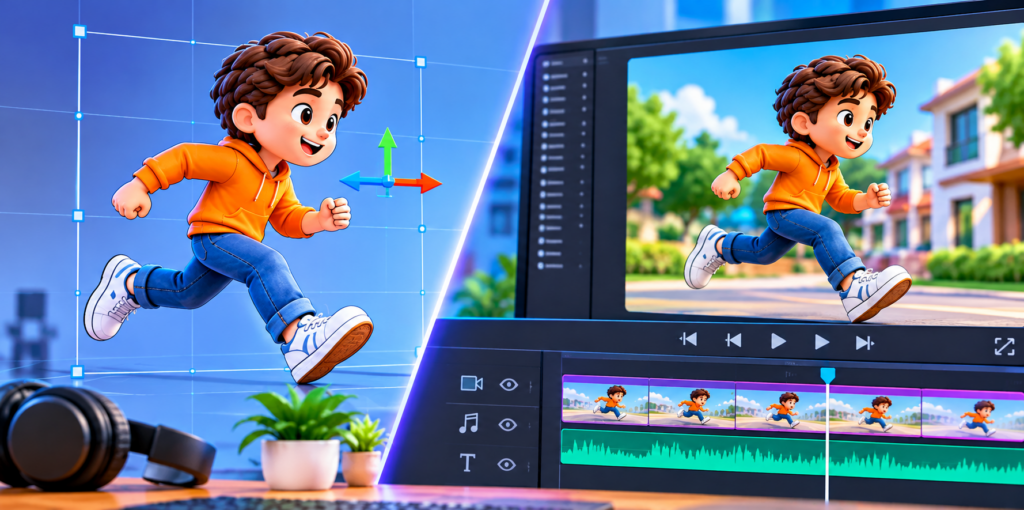
Medical animation uses motion, sequencing, camera direction, and often sound or narration to explain a process over time. It can depict cellular activity, a surgical technique, a mechanism of action, disease progression, or the use of a complex device. Animation is designed to guide attention. Rather than asking the audience to infer what happens between two states, it shows the transition directly.
The distinction matters because medicine is full of dynamic systems. Blood circulates, joints move, treatments bind to receptors, and devices deploy. When movement itself is central to the claim or explanation, animation has a clear communications advantage. When the audience needs a concise, searchable, or printable visual reference, illustration is often more efficient.
When Medical Illustration Is the Better Choice
Illustration is a strong option when the message can be understood at a glance. A labeled cross-section of the heart, a comparison between normal and diseased tissue, or an annotated device component can be more practical as a still visual than as a video.
It also works well when a project needs multiple deliverables across formats. One approved 3D model can support a hero illustration for a brochure, cropped website graphics, sales presentation slides, training materials, and trade show panels. This creates useful production efficiency, particularly when teams need a consistent visual system rather than one standalone asset.
For medical and legal review, still images can be easier to inspect because every claim, label, and anatomical detail is visible in a fixed frame. Stakeholders can comment directly on the image without having to identify a timestamp. This does not make illustration simpler from an accuracy standpoint, but it can make the review cycle more manageable.
Cost and timing can also favor illustration. A single polished image generally requires less production than a fully animated sequence, especially if the project does not require character movement, simulation, narration, music, or multiple versions. However, a highly detailed 3D medical illustration with custom anatomy, transparent materials, and technical cutaways can still be a substantial production effort. The real question is not whether it is static or animated. It is whether the level of detail serves the intended viewer.
When Medical Animation Delivers More Value
Animation is the best choice when sequence, motion, or cause and effect are essential to understanding. A medication’s mechanism of action is a common example. Showing molecules reaching a target receptor, blocking a signaling pathway, and changing a biological response can make an abstract scientific concept more accessible to both professional and patient audiences.
The same applies to surgical and procedural communication. A surgeon may understand an instrument immediately from a technical rendering, while a hospital procurement committee, sales team, or patient may need to see how it enters, positions, activates, and is removed. A concise animation reduces ambiguity by putting the process into a controlled visual narrative.
Medical animation is also valuable when attention is limited. Product launch presentations, conference displays, investor meetings, landing pages, and social media campaigns often have only a few seconds to establish relevance. Motion can create a stronger opening moment and make technical content easier to follow, provided the animation is focused. Excessive camera moves, decorative effects, or overly cinematic pacing can weaken clarity instead of improving it.
The trade-off is production scope. Animation requires planning beyond modeling and rendering. The team must define the script, visual sequence, camera angles, timing, transitions, labels, voiceover needs, and final output specifications. A 30-second animation may contain dozens of approved decisions. That upfront structure is what protects quality, accuracy, and timeline predictability later in production.
Choose Based on the Audience, Not the Asset Type
The same medical subject may need different formats for different audiences. A specialist physician may prefer an illustration that allows close review of anatomical landmarks and device components. A patient may respond better to a short animation with simple language and a calm, reassuring pace. A sales representative may need both: a high-impact animation to open a conversation and still visuals to support detailed follow-up.
Professional audiences usually expect scientific precision, appropriate terminology, and a level of anatomical realism that supports the claim being made. Patient-facing content requires a different balance. The goal is still accuracy, but visual complexity should not become a barrier to comprehension. Sometimes a simplified 3D animated explanation is more responsible than a highly realistic surgical view that distracts or causes unnecessary concern.
Distribution should influence the decision early. An illustration performs well in print, presentations, downloadable PDFs, and product detail pages. Animation is more suited to video platforms, event screens, digital campaigns, training modules, and sales meetings. If the asset must play silently on a trade show loop or mobile screen, on-screen captions and visual clarity become essential. If it will be shown in a presentation with a live speaker, the animation can be more concise and leave room for discussion.
Production Factors That Affect Cost and Timing
Budget conversations are more productive when they focus on scope rather than format alone. The number of anatomical structures, required scientific accuracy, style of realism, duration, number of revisions, output resolutions, and language versions all affect the final production plan.
A project also becomes more efficient when the medical review process is defined before production begins. Clinical subject matter experts should validate the scientific foundation, while marketing and brand teams should confirm audience, claims, visual tone, and calls to action. Combining every type of feedback into a single review stage often leads to conflicting revisions and avoidable delays.
For outsourced production, provide the team with available source material at the start: product CAD files, clinical references, brand guidelines, claims language, prior imagery, and any regulatory constraints. A capable external partner can then recommend whether existing assets can be adapted, whether new 3D modeling is needed, and where animation will add measurable value.
At 3D Modeling Animation Studio, this planning-first approach helps clients scale specialized production without building an internal medical visualization team for every campaign. The objective is not to produce motion for its own sake. It is to create the right visual asset for the message, channel, and business outcome.
A Practical Way to Make the Decision
Start with one direct question: does the audience need to understand change over time? If the answer is yes, animation should be the leading option. If the key information is structural, comparative, or reference-based, illustration may deliver the result faster and with less production overhead.
Next, consider how long the asset needs to work for your organization. A well-built 3D foundation can be repurposed into stills, short clips, alternate camera angles, localized versions, and future campaign assets. This can justify a higher initial investment when a product has a long marketing lifecycle or multiple sales channels.
Finally, do not treat the decision as strictly either-or. Many effective medical campaigns use animation as the primary explainer and illustrations as the supporting content. The motion introduces the mechanism or procedure; the still images give viewers a clear way to revisit the details. That combination often gives marketing teams more flexibility while giving clinical stakeholders the precision they expect.
Choose the format that removes the most uncertainty for the person watching. When the visual makes a complex medical idea easier to understand, easier to approve, and easier to act on, it is doing its job.