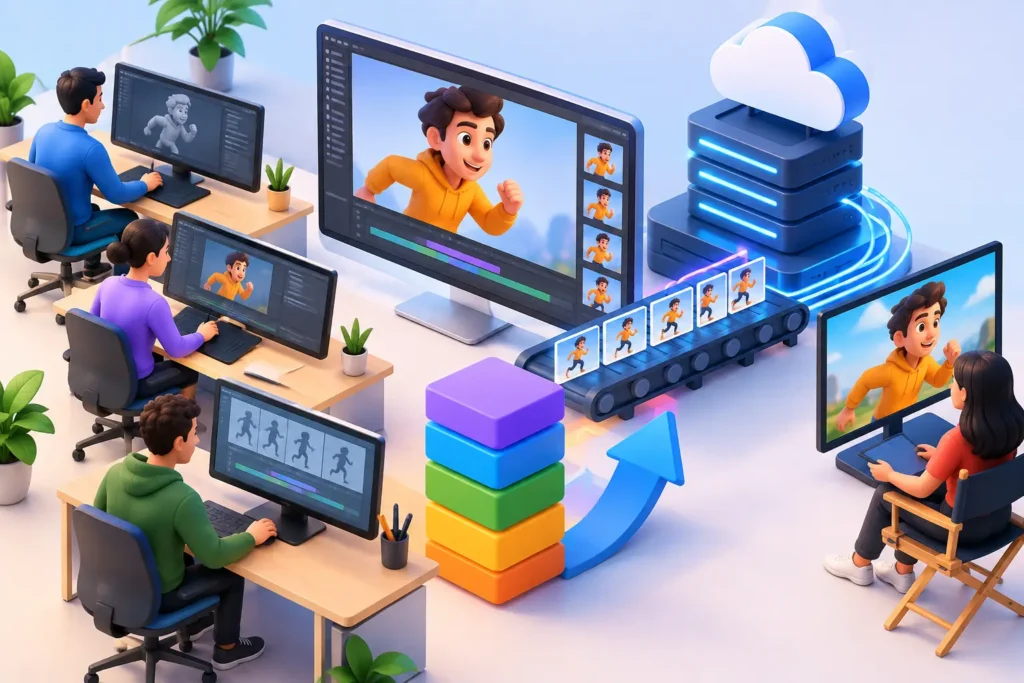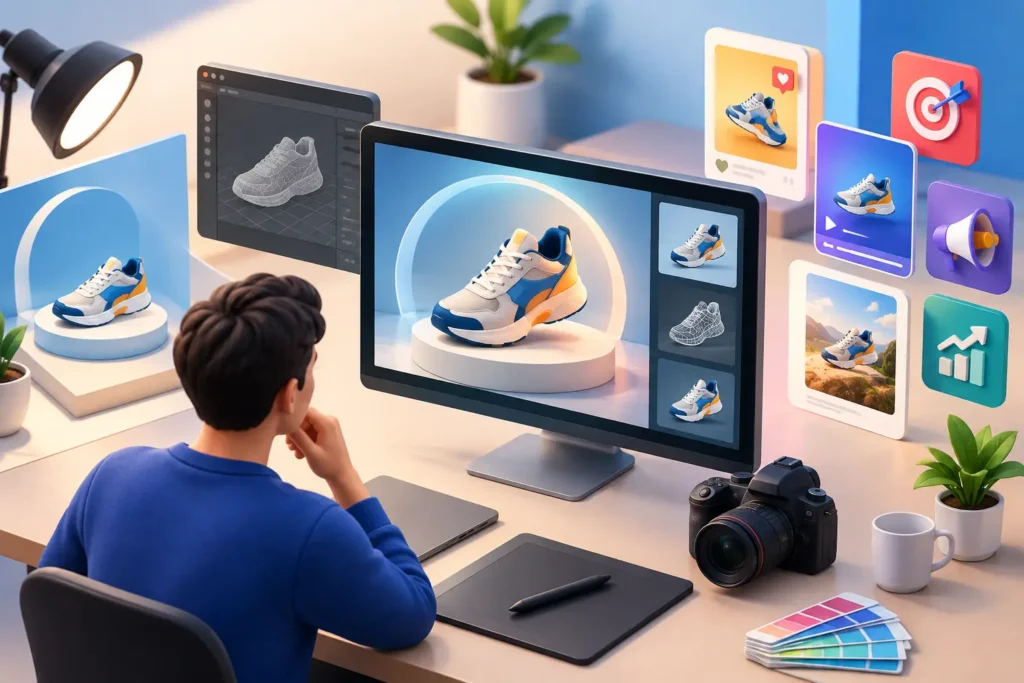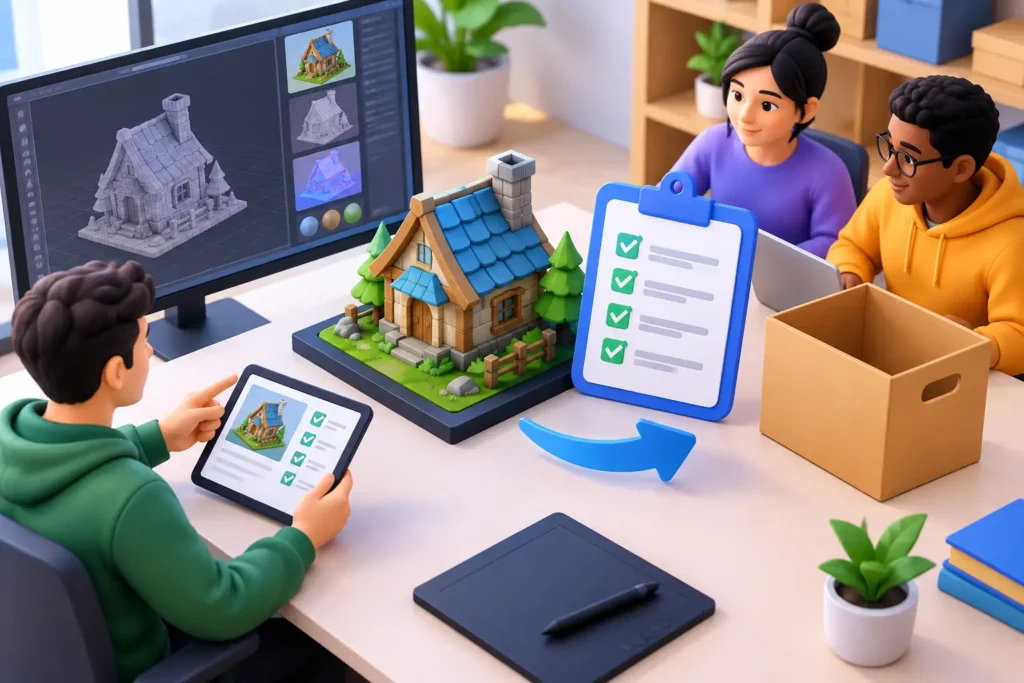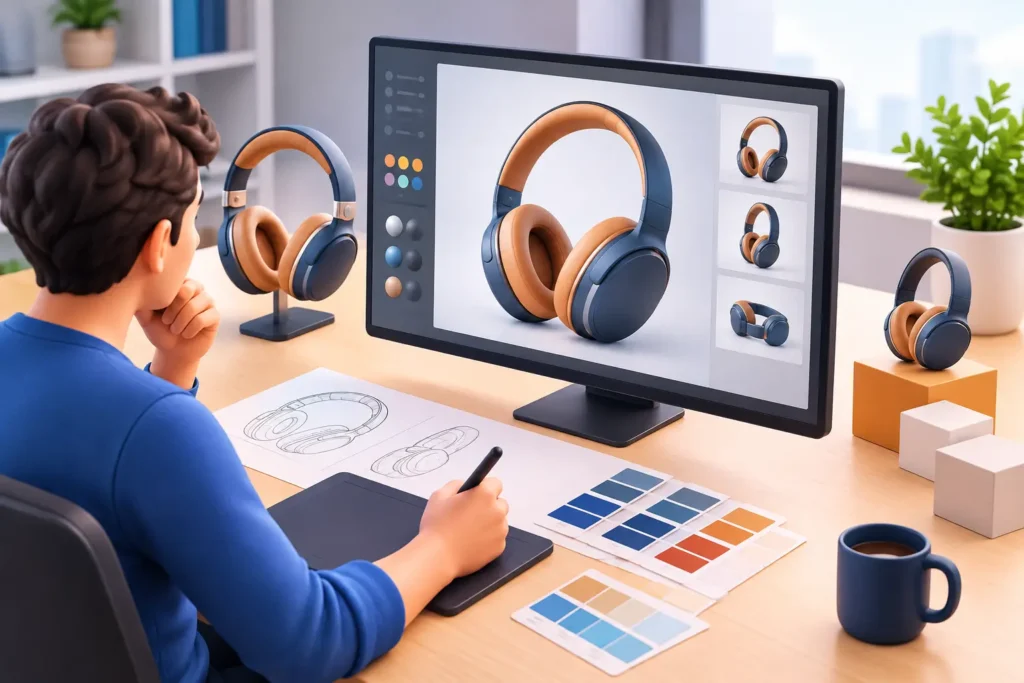

A delayed product launch, a backed-up animation pipeline, or an architectural presentation that still lacks final visuals usually points to the same issue – capacity. When internal teams are stretched, the right 3d modeling outsourcing company does more than fill a gap. It becomes a production partner that helps you keep deadlines, control costs, and maintain visual quality without expanding headcount.
For business buyers, that distinction matters. Outsourcing 3D work is not simply about finding lower-cost labor or offloading repetitive tasks. It is about building a reliable extension of your team that can handle technical requirements, creative standards, and production schedules with minimal friction. If the partner cannot deliver consistently, any short-term savings disappear fast.
What a 3D modeling outsourcing company should actually solve
The strongest outsourcing partners solve operational problems first. They reduce bottlenecks, give you access to specialized talent, and create flexibility when project volume changes. That is especially valuable for brands running product campaigns, studios managing episodic content, architects preparing high-stakes presentations, and medical or technical teams producing specialized visuals.
A capable provider should be able to step into different stages of production with confidence. That may include product modeling, environment modeling, animation support, rigging, rendering, post-production, and revisions tied to stakeholder feedback. The broader the production capability, the easier it becomes to keep work moving under one roof instead of managing multiple vendors.
That said, breadth alone is not enough. Some companies offer many services but lack process discipline. Others are highly organized but too limited in technical range. The best fit depends on your production goals, approval workflow, and how much oversight your team can realistically provide.
How to evaluate a 3D modeling outsourcing company
Most buyers make the same mistake at the start. They evaluate portfolios before they evaluate production reliability. Visual quality matters, but if delivery slips, revision rounds drag on, or files arrive in the wrong format, the project still fails.
Start with production readiness
Ask how the company manages intake, scoping, milestones, review rounds, and final delivery. A professional partner should be able to explain its workflow clearly. You should know what happens after kickoff, who manages communication, how changes are handled, and what is required from your side to keep the schedule on track.
This is where experienced outsourcing companies separate themselves from freelancers or loosely assembled teams. A structured production workflow reduces ambiguity, protects timelines, and makes large or ongoing engagements much easier to manage.
Look at technical fit, not just style
A beautiful portfolio does not guarantee the team can handle your type of project. Product marketing assets, film-ready models, architectural environments, and medical animation all require different technical standards. Polygon budgets, topology expectations, rigging requirements, material realism, file compatibility, and rendering outputs vary by use case.
If you need assets for multiple channels, ask whether the team can optimize for each one. A model built for a real-time application is not the same as one intended for cinematic rendering. A company that understands those trade-offs can help you avoid expensive rework later.
Assess communication under pressure
Most projects go smoothly until revisions arrive, priorities shift, or internal approvals slow down. That is the real test. A strong outsourcing partner communicates early, flags risks, and adapts without losing control of scope.
Fast response time is valuable, but clarity is even more important. Decision-makers need concise updates, realistic timelines, and straightforward answers when deliverables change. If communication already feels vague during the sales process, it rarely improves once production begins.
Why outsourcing works best for growing production demands
Outsourcing is often framed as a cost decision, but for many companies it is really a scaling decision. Hiring in-house artists for every surge in demand is expensive and slow. It also creates uneven utilization when workloads drop.
A 3d modeling outsourcing company gives you production elasticity. You can scale support up for launches, campaigns, seasonal work, or multi-phase development, then scale back when the workload changes. That flexibility is one of the main reasons outsourcing makes sense for both enterprise buyers and mid-sized teams.
There is also a specialization advantage. In-house teams are often strong in one lane, such as product content or architectural visuals, but less equipped for adjacent needs like rigging, animation cleanup, or post-production. An outsourced team with broader capabilities can close those gaps quickly.
Still, outsourcing is not always the right answer for every task. If the work involves constant internal iteration, highly sensitive proprietary development, or daily cross-functional collaboration, some parts may be better kept in-house. The most effective model is often hybrid – core strategy and approvals stay internal while execution-heavy production is handled externally.
The cost question and what buyers should watch for
Price matters, but cheap production usually becomes expensive somewhere else. Missed details, unclear geometry, weak texturing, or poor file organization can create delays across animation, rendering, editing, and final approval. That is why experienced buyers look beyond the initial quote.
A better question is whether the company can deliver predictable value. Can it hit deadlines consistently? Can it reduce management overhead for your internal team? Can it maintain quality across multiple deliverables instead of performing well on a single sample piece?
Transparent quoting is a positive signal. A professional company should explain what is included, what affects turnaround, how revision rounds are structured, and where scope expansion may change the budget. That level of clarity protects both sides.
Signs you are dealing with the right outsourcing partner
The best outsourcing relationships feel controlled, not chaotic. You know who owns the account, what the timeline looks like, and how feedback is incorporated. Files arrive organized. Deliverables match the brief. Questions are answered quickly and with technical confidence.
You should also see evidence of commercial awareness. A strong production partner understands that the project is tied to a larger business objective, whether that is selling a product, winning investor approval, supporting a broadcast timeline, or helping a client secure architectural buy-in. That perspective changes how the work is prioritized and executed.
For that reason, many companies prefer service partners that can support more than one visual need at a time. When modeling, animation, environment design, rendering, and post-production are aligned within the same production ecosystem, quality control improves and turnaround tends to be faster. That is a major reason businesses choose a full-service team such as 3D Modeling Animation Studio when they need both technical depth and scalable delivery.
Common mistakes when hiring a 3D modeling outsourcing company
One common mistake is choosing based on price alone. Another is assuming that sample work reflects the exact team you will get on your project. Buyers should confirm who will actually execute the work, how senior oversight is handled, and whether the company has enough capacity for the agreed schedule.
Another issue is weak briefing. Even an expert team needs clear inputs, reference material, technical specs, and approval criteria. Outsourcing works best when expectations are defined early. The better the brief, the fewer revision cycles you will need.
It is also worth checking whether the company can support long-term continuity. A vendor may perform well on one isolated job but struggle with consistency over several months. If you anticipate repeat work, ask about retention, documentation, and how they preserve visual standards across ongoing projects.
What the best results usually come down to
The companies that get the most from outsourcing treat it as a production strategy, not a one-off fix. They select partners with proven workflows, technical range, and the ability to support shifting demands without sacrificing quality. They also invest in a clear kickoff process so both teams are aligned from day one.
That is what turns outsourcing from a backup option into a competitive advantage. When the right external team is in place, you move faster, present better, and protect your internal resources for the work that matters most. If you are evaluating a 3d modeling outsourcing company, look for a partner that brings both creative precision and operational discipline – because deadlines are easier to meet when your production model is built to scale.
The real value is not just getting assets delivered. It is knowing your next project can start with confidence.