
A product page can explain dimensions and specifications. A virtual showroom can show buyers why the product belongs in their space, workflow, or next campaign. The best virtual showroom ideas turn static catalogs into guided visual experiences that help marketing teams create demand, sales teams qualify interest, and decision-makers approve products with greater confidence.
For brands managing complex product lines, high-value purchases, or limited physical display space, the goal is not to add 3D for its own sake. The goal is to create an environment that makes a commercial decision easier. That requires a clear audience, a defined conversion path, and visual production that holds up under close inspection.
Best Virtual Showroom Ideas for Commercial Results
1. Build a product configurator around the buying decision
A configurable product is one of the most effective showroom formats for furniture, automotive, consumer goods, industrial equipment, and architectural finishes. Let visitors select colors, materials, components, and optional features, then show those choices accurately in real time or through pre-rendered variations.
The best configurators do not offer every possible option just because the catalog contains them. Too many decisions can slow buyers down. Start with the options that affect price, fit, appearance, or performance, and make the result easy to save, share, or send to a sales representative.
2. Place products in realistic use environments
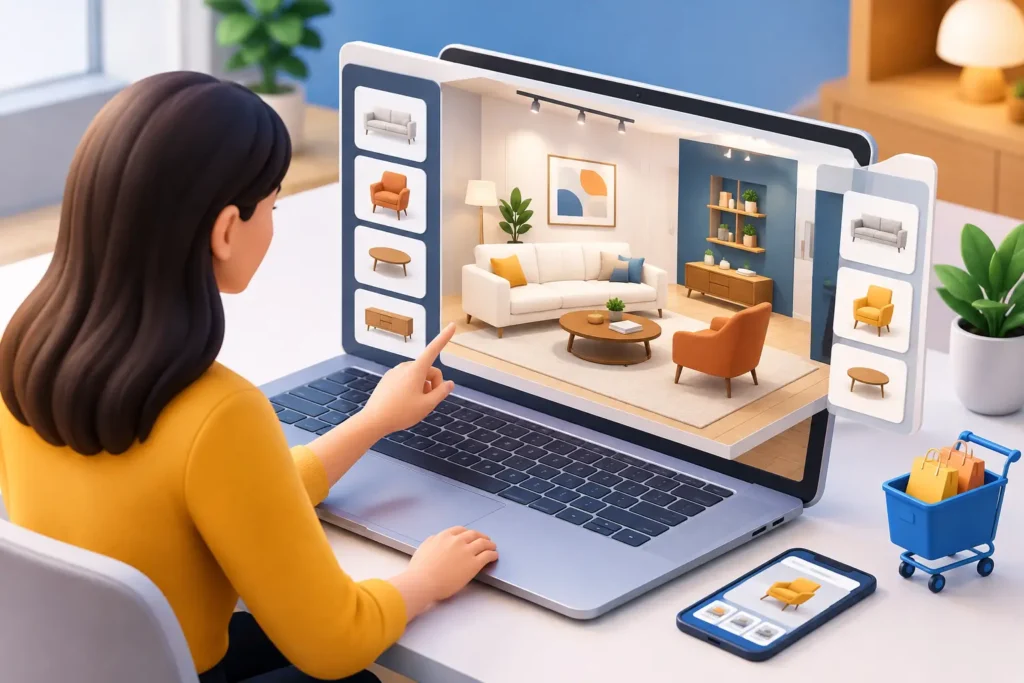
A clean studio render is useful for detail. A fully designed environment gives the product context. A kitchen appliance works differently in a compact urban kitchen than in a luxury home. A medical device needs a clinical setting. Commercial furniture should be seen in the lobby, office, hospitality, or retail environment where it will be specified.
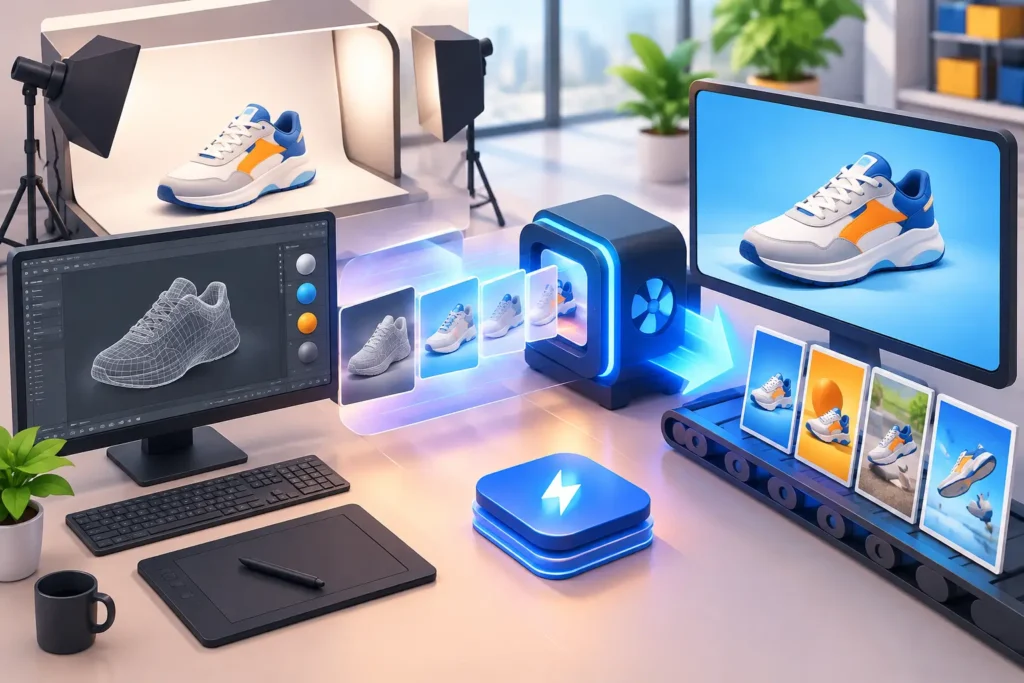
Environment modeling helps prospects understand scale, material response, lighting, and practical placement. It also gives marketing teams a reusable asset library for campaigns, presentations, launch videos, and sales collateral. The trade-off is production scope: a detailed environment needs more planning than a simple product viewer. For high-consideration products, that investment often produces a stronger case for purchase.
3. Create a guided showroom tour for complex catalogs
Large catalogs can overwhelm a visitor who lands on an open 3D space with no direction. A guided path solves that problem. Design a sequence of showroom zones around real buyer questions, such as new arrivals, solutions by industry, premium features, or products for specific room sizes.
Use visual cues, short on-screen prompts, and clear entry points rather than long blocks of copy. A guided experience is especially effective for trade show follow-up, distributor education, and account-based marketing because the same core showroom can be tailored to different customer segments.
4. Add explorable cutaways and animated product stories
Some of the strongest selling points are hidden beneath the surface. Cutaway views, exploded assemblies, and short technical animations can reveal how a mechanism works, where components sit, and why a design performs better than alternatives.
This approach is valuable for machinery, electronics, medical products, building systems, and engineered consumer goods. It replaces vague claims with visual proof. Keep the animation focused on the buyer benefit: faster installation, lower maintenance, safety, durability, hygiene, or performance. If every component moves at once, the message becomes harder to follow.
5. Use comparison zones instead of comparison tables alone
Side-by-side specification tables have a role, but 3D comparison zones give buyers faster visual understanding. Place two models next to each other, highlight changed features, and allow visitors to rotate, zoom, or isolate key components. For architectural products, compare finishes under the same lighting. For equipment, compare footprints, access points, and operating positions.
A comparison experience should be fair and precise. Avoid exaggerated scale, unclear labels, or visual tricks that undermine trust. The purpose is to help the buyer select the right option, not simply force attention toward the most expensive one.
6. Build a showroom around a product launch narrative
A launch showroom can work as a controlled reveal rather than a digital replica of a retail floor. Begin with the problem that prompted the product, then move visitors through the key design decisions, feature demonstrations, and available versions. End with the next action: request a quote, book a consultation, download specifications, or arrange a sample.
This format gives a new product more weight than a standard landing page. It is also practical for global launches, where sales teams, distributors, and media contacts need a consistent experience before physical inventory is widely available. High-quality 3D modeling and animation make it possible to launch the visual story while manufacturing, shipping, or installation timelines are still in progress.
7. Offer a virtual material library with true-to-product detail
For furniture, interiors, architecture, and luxury goods, material quality often decides the sale. A virtual material library can show fabric weave, wood grain direction, reflectivity, edge profiles, finish variations, and texture at close range. It should also show materials in context, because a swatch viewed alone does not communicate how it behaves across an entire product or room.
Accuracy is nonnegotiable here. If digital materials do not match approved samples, the showroom can create expensive expectation gaps. A disciplined production workflow should use verified references, controlled lighting standards, review rounds, and final client approval before assets go live.
8. Turn the showroom into a sales presentation tool
The best virtual showroom ideas do not stop at self-guided browsing. They give sales teams a reliable presentation environment for live calls. A representative can move through product zones, switch configurations, open feature animations, and respond to questions without juggling slides, browser tabs, and large image files.
This requires thoughtful interface design. The person presenting needs quick access to the right views, while the customer needs a clean, understandable screen. Build a simplified presenter path for meetings and a more exploratory version for independent visitors. These audiences have different needs, and treating them as identical can weaken both experiences.
9. Include scenario-based solutions, not only individual products
Many buyers are not searching for a single item. They are trying to solve a project problem: furnish a clinic, equip a production line, update a hotel room, or select materials for a multifamily development. Organize part of the showroom around these scenarios.
For example, an architectural showroom might feature a hospitality suite, healthcare reception area, and modern workplace. Each scenario can show coordinated products, material combinations, and practical notes on performance. This raises the conversation from individual SKU selection to solution planning, which is often where larger orders begin.
10. Capture useful intent without interrupting the experience
A virtual showroom should generate business intelligence, but aggressive forms at the entrance can reduce exploration. Let visitors engage first. Then offer relevant next steps after they configure a product, view a technical animation, save a collection, or revisit a specific area.
The information collected should help the sales team act intelligently. Knowing that a prospect repeatedly reviewed a particular configuration or environment is more useful than receiving an email address with no context. Connect showroom actions to clear follow-up processes, including ownership, response times, and approved sales materials.
How to Choose the Right Virtual Showroom Format
The right format depends on what buyers must understand before they move forward. If customization is the obstacle, prioritize configuration. If product scale and placement are difficult to picture, invest in environment visualization. If the value proposition is technical, use animated explanations and cutaways. If the sales cycle is consultative, design for live presentations and shared review.
Budget should follow commercial value, not novelty. A high-detail interactive showroom may be justified for a product line with long sales cycles, high order values, or global distribution. For a focused campaign, a smaller set of cinematic 3D rooms and clickable product hotspots may produce better returns with less production time.
Production Details That Protect Quality
A showroom experience is only as credible as the assets inside it. Product dimensions, surface materials, labels, and moving parts need to be correct. For regulated or specialized categories, technical review is essential before release. A polished visual that misrepresents a product creates risk rather than trust.
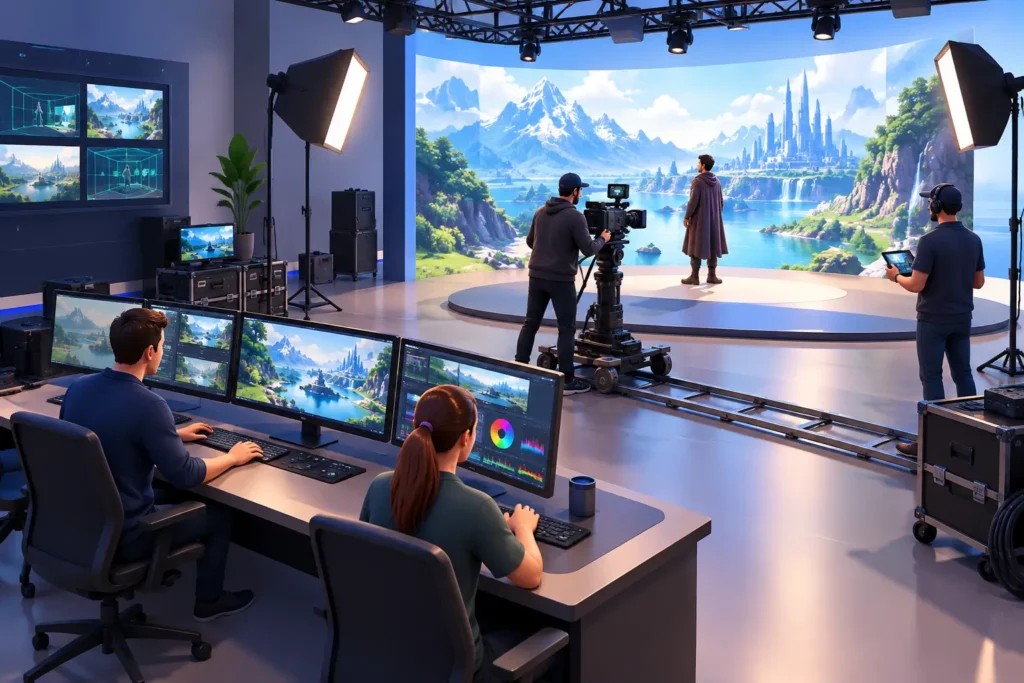
An outsourced 3D production partner can help internal teams scale without adding permanent headcount. The most effective workflow starts with approved references and a defined asset list, moves through modeling and material validation, then adds animation, environments, interaction design, and quality assurance. Clear milestone reviews prevent late-stage changes from affecting delivery dates.
Performance also matters. Heavy files, slow load times, and difficult navigation can erase the benefit of premium visuals. Decide early whether the showroom needs real-time interaction, browser-based walkthroughs, video-led presentation, or a hybrid approach. The answer depends on audience devices, distribution channels, asset complexity, and how often the experience will be updated.
A virtual showroom earns its place when it gives buyers a clearer reason to act. Start with the decision your audience needs to make, then build the visual experience that lets them make it with confidence.