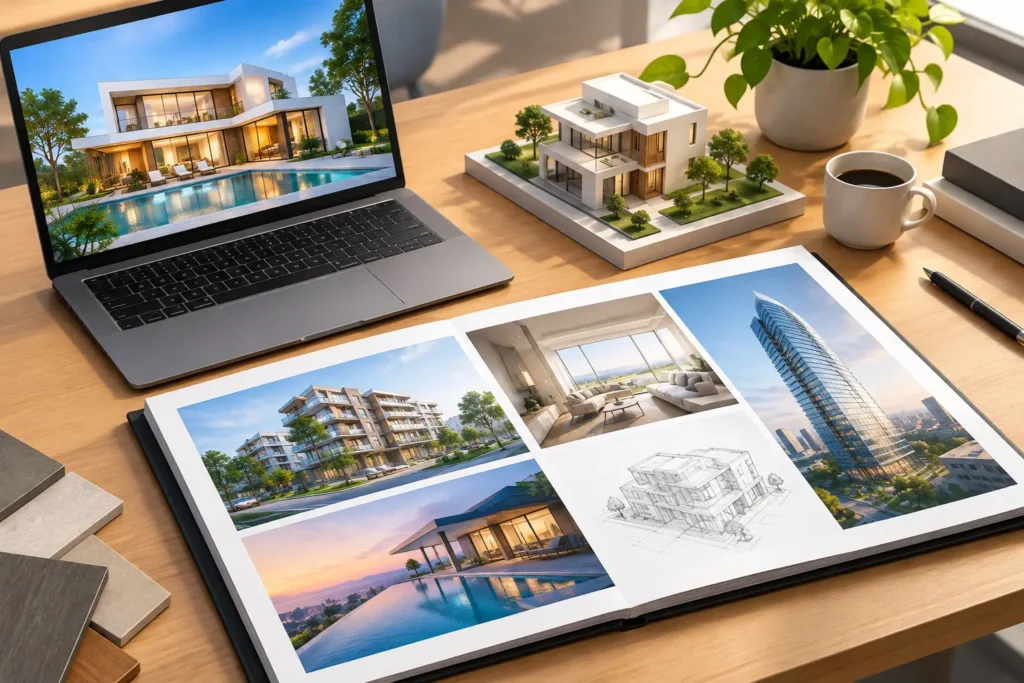

A floor plan rarely wins a room full of stakeholders on its own. What gets decisions made is clarity – the kind that lets a developer see leasing potential, a hospitality brand see guest experience, or a homeowner see whether the design actually feels right. That is where interior design rendering services move from nice-to-have to business-critical.
For architects, developers, interior designers, and marketing teams, renderings do more than make a concept look polished. They reduce uncertainty, improve communication, and help projects move forward with fewer revisions and fewer expensive surprises. When the visuals are built with technical discipline and design intent, they become a working tool for approvals, presentations, and sales.
What interior design rendering services actually deliver
Interior design rendering services turn drawings, mood boards, material selections, and design concepts into photorealistic or stylized visuals of an interior space. Depending on the project, that output may include still images, 360 views, animated walkthroughs, or staged variations showing different layouts, finishes, and lighting conditions.
The value is not limited to appearance. A strong rendering team helps translate design information into visuals that are useful for different audiences. A real estate team may need market-ready images that support pre-sales. An interior design firm may need concept visuals that help clients approve finishes. A commercial brand may need consistent imagery across multiple locations before construction starts. The format changes, but the business purpose is the same – make the design easier to evaluate, approve, and promote.
That distinction matters because not every rendering vendor works at the same level. Some produce attractive images that break down under scrutiny. Others understand scale, material behavior, lighting logic, and camera composition well enough to support actual project decisions.
Why businesses invest in interior design rendering services
The main reason is speed of understanding. Most stakeholders do not read plans the way designers and technical teams do. Even sophisticated clients can misread spatial relationships, material contrast, or how natural and artificial light will affect a room. A rendering closes that gap quickly.
It also protects momentum. When teams rely on verbal explanations and flat drawings alone, review cycles tend to stretch. Questions multiply, assumptions creep in, and revisions become harder to control. With accurate visuals, conversations become more specific. Instead of debating what a lobby might feel like, stakeholders can react to what they see and request targeted changes.
There is also a commercial angle. For residential developments, hospitality launches, office leasing, senior living, retail rollouts, and branded environments, renderings are often part of the sales engine. They allow marketing to start before the space is complete. That can shorten time to market and improve campaign readiness across digital, print, and presentation channels.
Where rendering adds the most value
Not every project needs the same level of visualization. It depends on the complexity of the interior, the number of decision-makers, and the cost of ambiguity.
High-end residential projects benefit because clients are emotionally invested and detail-sensitive. They want confidence in millwork, furniture placement, lighting mood, and finish combinations before construction dollars are committed.
Commercial interiors often see an even stronger return. Corporate offices, multifamily amenity spaces, restaurants, hotels, clinics, and retail environments involve multiple stakeholders with different priorities. Design leadership may care about aesthetics and brand expression. Operations may care about usability. Ownership may care about leasing, occupancy, or investor confidence. Renderings give those groups a shared reference point.
They are especially valuable in projects with custom elements or brand standards. If a concept must be repeated across locations, visuals help establish consistency before execution scales.
What separates good renderings from usable renderings
A visually impressive image is not automatically a productive one. The strongest rendering work balances realism, design accuracy, and communication purpose.
Material definition is one of the first signals of quality. Stone, wood veneer, brushed metal, upholstery, and glass should respond to light in believable ways. If every surface reflects the same or textures feel generic, confidence drops. Viewers may not identify the technical problem, but they notice that something feels off.
Lighting is just as important. Interior scenes fail when lighting is overdramatized, physically inconsistent, or disconnected from the actual architecture. Good rendering teams understand how daylight enters a space, how fixtures shape mood, and how to keep the image aspirational without misrepresenting the design.
Then there is composition. The camera angle should support the decision the image is meant to drive. A sales image for a luxury residence may prioritize atmosphere and focal points. A design review image may need clearer sightlines, scale cues, and spatial hierarchy. One image style does not fit every use case.
The outsourcing advantage for design and development teams
Many firms do not have enough in-house visualization bandwidth to support every deadline. Even teams with internal talent run into workload spikes, presentation crunches, and projects that require specialized rendering support.
That is where outsourcing becomes practical, not just economical. A capable external partner gives you scalable production without the overhead of hiring, training, and managing a larger permanent team. It also gives access to artists and technical specialists who already know how to build for architecture and interiors.
The advantage is strongest when the partner is structured for production reliability. Fast turnaround means little if files are inconsistent, revisions are disorganized, or communication slows the schedule. The best outsourced teams work with a clear pipeline: intake, asset review, modeling, look development, draft renders, revision rounds, and final delivery. That process reduces friction and makes deadlines easier to manage.
For firms handling multiple property types or regions, global production capability matters too. It creates flexibility across time zones and helps keep delivery moving when schedules are tight.
What to look for in an interior design rendering partner
Start with portfolio relevance. A team that is excellent at product visualization or exterior architecture may not automatically understand interior storytelling. You want evidence of interior work with strong material realism, furniture accuracy, lighting control, and an eye for lived-in spatial presentation.
Next, look at process clarity. A professional vendor should be able to explain exactly what they need to start, how feedback is handled, how many revision rounds are included, and what affects timing and cost. Vague process usually leads to scope drift.
Technical flexibility is another factor. Some projects begin with CAD drawings and finish schedules. Others start with sketches, references, or partially developed models. A capable studio can work across different input conditions and still maintain output quality.
It also helps to ask how the team balances realism with marketing goals. In some cases, pure photorealism is the right move. In others, a slightly polished visual style may perform better in presentations or campaigns. The right answer depends on audience and use case.
Common mistakes that slow down rendering projects
The biggest issue is incomplete input. When teams send fragmented drawings, unresolved finish selections, or conflicting references, renderings stall or require preventable revisions. That does not mean every detail must be finalized before production begins, but core decisions should be clear enough to avoid rework.
Another common problem is treating rendering as a last-minute add-on. If visuals are only requested days before a client pitch or launch, quality usually suffers. Good rendering takes coordination, especially when custom furniture, branded details, or multiple design options are involved.
There is also a tendency to ask one set of images to do too many jobs. A planning visual, a design approval visual, and a marketing hero image may need different levels of polish and different camera logic. Defining the purpose of each image early keeps production focused.
Why rendering quality affects more than presentation
When interior visuals are done well, they improve decision quality across the project lifecycle. Design teams can validate intent. Clients can approve with confidence. Marketing teams can prepare campaigns earlier. Sales teams can present a space that feels tangible before construction is complete.
That has a direct impact on time, cost, and coordination. Fewer misunderstandings usually mean fewer late-stage changes. Better communication means reviews move faster. Stronger visual assets mean a project can begin building market interest sooner.
For businesses that depend on outsourced visualization support, the right partner is not just producing images. They are helping protect schedules and support revenue goals. That is why experienced studios such as 3D Modeling Animation Studio position rendering as part of a broader production solution, not an isolated creative task.
Interior spaces are expensive to build and difficult to revise once work is underway. The more clearly you can see them before that point, the better your decisions tend to be. Good renderings do not replace design expertise – they make it easier for everyone else to understand, approve, and act on it.