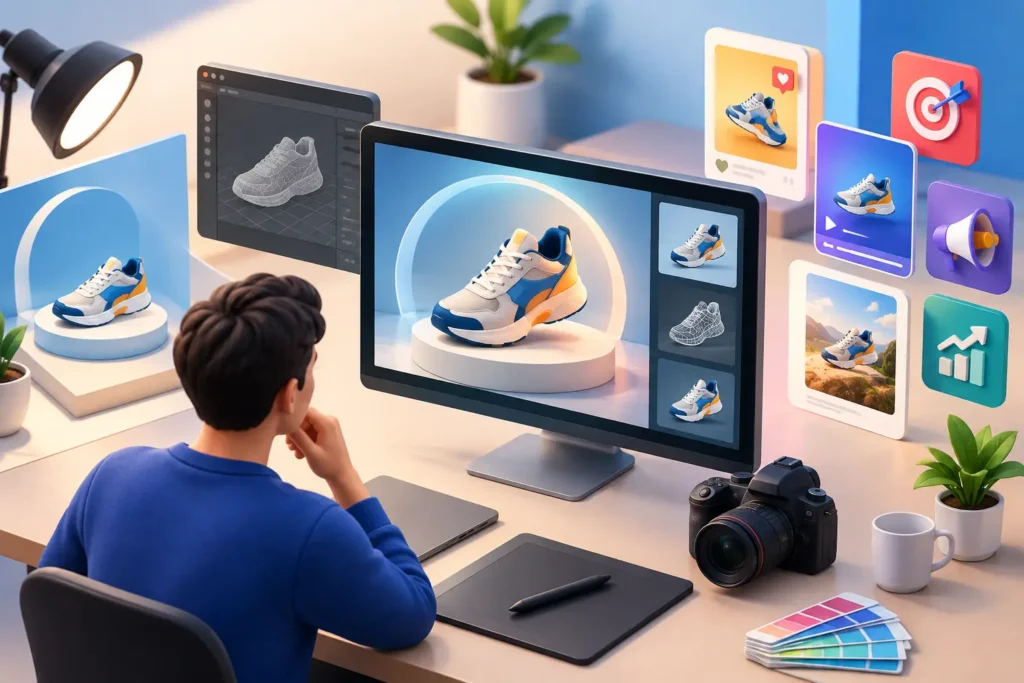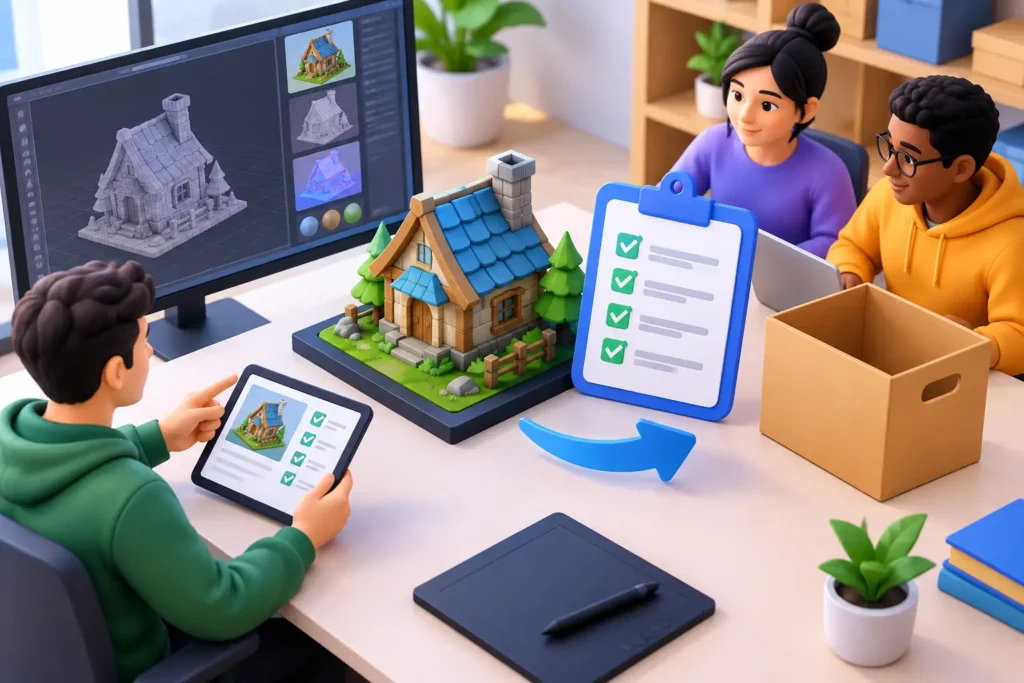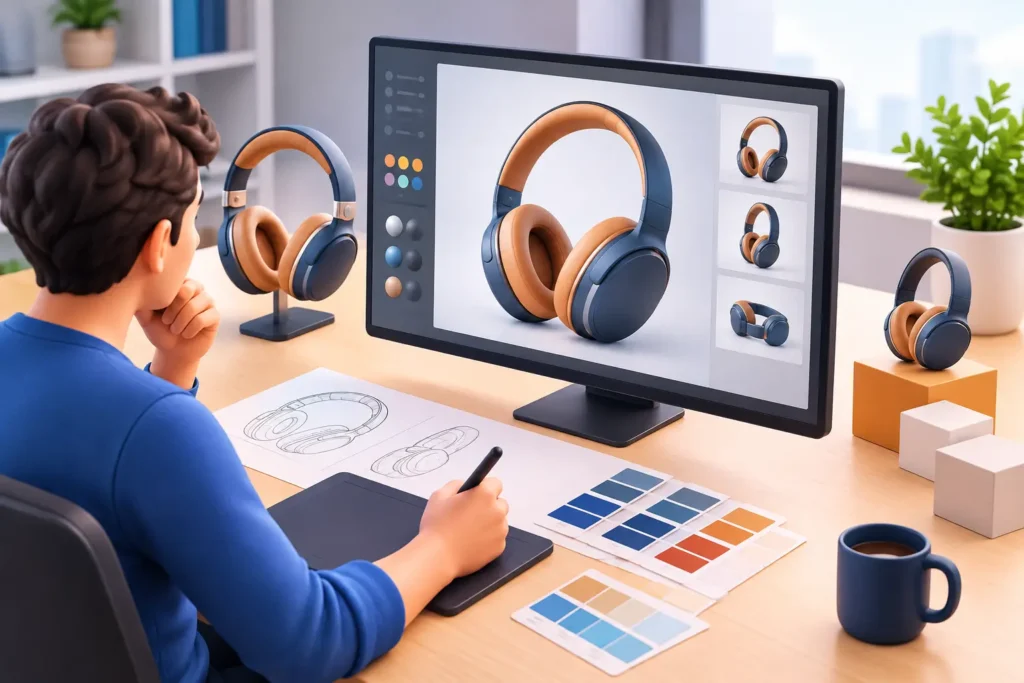
A product launch is six weeks away, the final packaging is still changing, and the campaign needs hero images, social cutdowns, retail visuals, and a product film. That is the moment the question of when should brands use CGI becomes a commercial decision, not simply a creative one. CGI gives teams a way to produce controlled, polished visual assets before every physical condition is perfect.
For marketing leaders, creative directors, and production teams, the value is not that CGI replaces every photo shoot or live-action production. The value is that it removes specific production constraints: unavailable products, difficult locations, limited reshoot windows, technical demonstrations, and campaign demands that outgrow a single set of source assets.
When Should Brands Use CGI? Start With the Constraint
Brands should use CGI when conventional production creates more cost, delay, or risk than a 3D workflow. This often happens when a product is not yet manufactured at final quality, when it needs to appear in multiple colors or configurations, or when the creative concept would be expensive or impossible to capture practically.
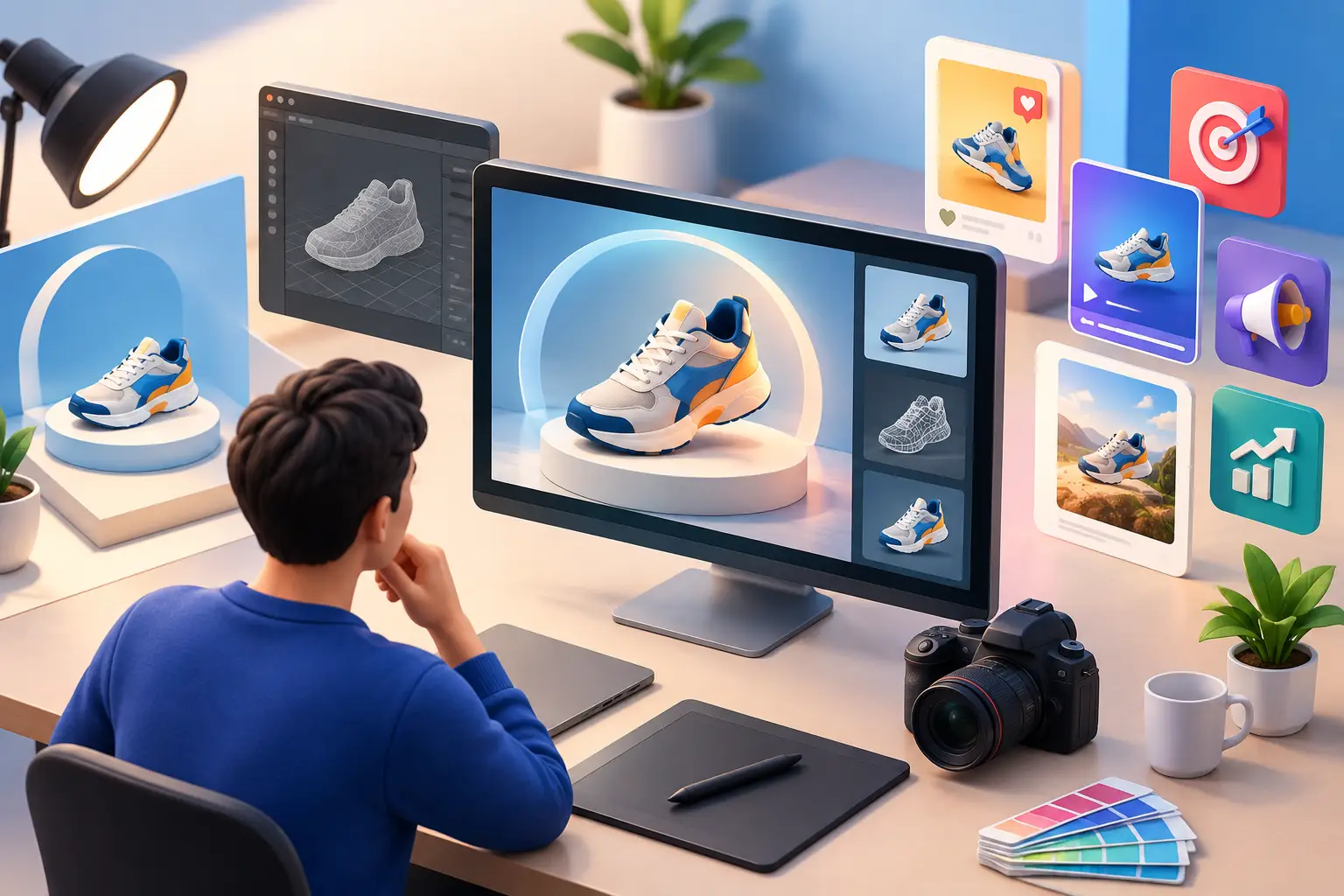
A well-built 3D asset is more than a single image. It can become a reusable production resource for stills, animation, ecommerce content, launch films, product explainers, and future campaign updates. That flexibility is particularly valuable for businesses with frequent product revisions, broad catalogs, or global marketing requirements.
CGI is also the best choice when visual accuracy matters as much as visual appeal. Medical devices, industrial equipment, architectural spaces, electronics, and engineered consumer products often require details that a conventional camera cannot show clearly. With 3D animation, a brand can isolate internal components, demonstrate a mechanism, visualize material layers, or move through a space before it exists.
The decision is not about choosing digital visuals because they look more advanced. It is about choosing the production method that gives the campaign the right level of control.
Use CGI Before the Product Is Camera-Ready
Product development and marketing schedules rarely move at the same pace. A physical prototype may be incomplete, finished in the wrong color, unavailable for shipping, or too fragile to use for a full-scale shoot. Waiting for final samples can compress the campaign timeline and limit the number of assets a team can produce.
CGI allows brands to begin visual production from CAD files, technical drawings, reference photography, material specifications, and approved design data. Once the model is built, teams can refine finishes, labels, lighting, and environments without restarting an entire shoot.
This is especially useful for launch campaigns. Instead of waiting until inventory arrives, a business can prepare approved product imagery, animation, sales presentations, and advertising formats in advance. The result is more time for creative review and media planning, rather than a last-minute rush to capture basic product shots.
There is a practical condition: the source information must be reliable. If dimensions, surface finishes, or branding elements are still changing daily, CGI can still support concept work, but final marketing output should wait until key design decisions are locked.
Choose CGI When One Product Needs Many Versions
A traditional shoot is efficient when the product is stable and the required output is limited. It becomes less efficient when a brand needs the same item shown in ten colors, five materials, three regional packaging versions, and several seasonal environments.
With CGI, the core asset can be adjusted without reconstructing a physical set or organizing additional photography. A furniture manufacturer can show a sofa in different fabrics and room styles. An electronics brand can update screen content for multiple markets. An automotive supplier can visualize component variations without producing and shipping each version to a studio.
This does not mean every variation should be created automatically. Marketing teams still need a clear content plan. The advantage is that once the 3D scene is established, approved changes are faster, more consistent, and easier to manage than repeated physical production.
For brands managing ecommerce at scale, this can be a major operational benefit. Consistent camera angles, lighting, shadows, and product proportions create a more organized catalog experience, while the production team can generate new approved variants as the assortment changes.
Use CGI for Visuals That Cannot Be Filmed Well
Some ideas are possible to shoot, but not sensible to shoot. Others cannot be filmed at all.
CGI is a strong option when the campaign needs to show an invisible process, a dangerous environment, a microscopic detail, or a future-facing concept. Medical animation can illustrate how a treatment interacts with the body. Industrial animation can reveal internal machinery during operation. Architectural visualization can show a completed development while construction is still underway.
It also gives creative teams freedom to control physics, scale, and perspective. A camera cannot travel through a sealed device, pause an assembly process mid-motion, or present a building across changing seasons without considerable cost. A 3D environment can do all three while keeping the visual language consistent.
For film, television, and advertising production, CGI is equally valuable when a location is unsafe, inaccessible, or too expensive to build. Environment modeling and compositing can extend practical footage, replace unfinished backgrounds, or create a setting that would be impossible to capture on location.
The strongest work often combines methods. Live action can provide human performance and real-world texture, while CGI handles the product, environment extension, technical visualization, or post-production enhancement. The right answer may be a hybrid workflow rather than an all-CGI campaign.
Consider CGI When Consistency Has More Value Than Spontaneity
Photography brings natural imperfections that can be desirable for lifestyle storytelling. A handheld food campaign, a documentary-style brand film, or an editorial fashion shoot may benefit from the energy of real people and real conditions.
CGI is more suitable when brand consistency is non-negotiable. It gives teams precise control over lighting, reflections, camera placement, product scale, and color treatment. That is critical for premium product imagery, technical presentations, retailer asset libraries, and campaigns that will run across multiple channels for months or years.
Consistency also protects accuracy. A product’s proportions, finish, and configuration can be reviewed against approved technical references before final rendering. This reduces the risk of publishing visuals that show an outdated feature, incorrect material, or unsupported product claim.
For global brands, control can also simplify localization. The same core scene can be adapted for local language, packaging, display requirements, and format specifications without losing the campaign’s visual identity.
The Budget Question: Compare Total Production, Not Day Rates
CGI is sometimes treated as the expensive option because 3D modeling and rendering require specialist skills. That view misses the full production equation.
A live shoot can involve product shipping, studio hire, sets, props, talent, crew, travel, insurance, retouching, and reshoots. If a campaign needs only a few straightforward images of a finished product, photography may be the faster and more economical route. CGI should not be used simply because it is available.
However, when the brief includes many variants, ongoing revisions, complex motion, inaccessible locations, or a large volume of outputs, CGI can offer stronger long-term value. The initial asset build may require more planning, but the model can support future content rather than being discarded after one shoot day.
The key is to define the asset lifecycle before requesting a quote. Ask how many channels, product variations, formats, markets, and planned updates the visuals must support. A production partner can then recommend whether to build a reusable 3D library, produce a focused set of campaign assets, or combine CGI with photography.
Prepare the Brief So CGI Delivers Commercial Results
The quality of CGI depends on more than rendering capability. It depends on a brief that connects visual production to business use.
Provide the available CAD data, product specifications, material references, brand guidelines, packaging artwork, and target output sizes. Clarify whether the work is for ecommerce, paid advertising, a trade show, a product launch, investor communication, or a technical demonstration. Each use case affects modeling detail, animation length, camera choices, and delivery requirements.
It also helps to establish approvals early. Decide who signs off on product accuracy, creative direction, materials, and final outputs. Small changes to a 3D scene are usually manageable, but late-stage changes to an approved product design can affect modeling, textures, rigging, animation, and rendering schedules.
An experienced outsourced team should make this process visible: asset intake, modeling, look development, previews, revision rounds, final rendering, and delivery. That structure gives internal stakeholders confidence without adding unnecessary management overhead.
Build CGI Into the Campaign Plan, Not Just the Production Plan
The best time to consider CGI is before the creative concept is finalized. When 3D is introduced only after a shoot becomes difficult, the team may be forced to make rushed compromises on quality, scope, or timing.
Bring CGI into planning when your campaign needs flexibility, technical clarity, repeatable product accuracy, or content that a camera cannot deliver efficiently. With the right source files, approval process, and production partner, it becomes a dependable extension of your marketing operation – ready to support the next launch, variation, or visual challenge.