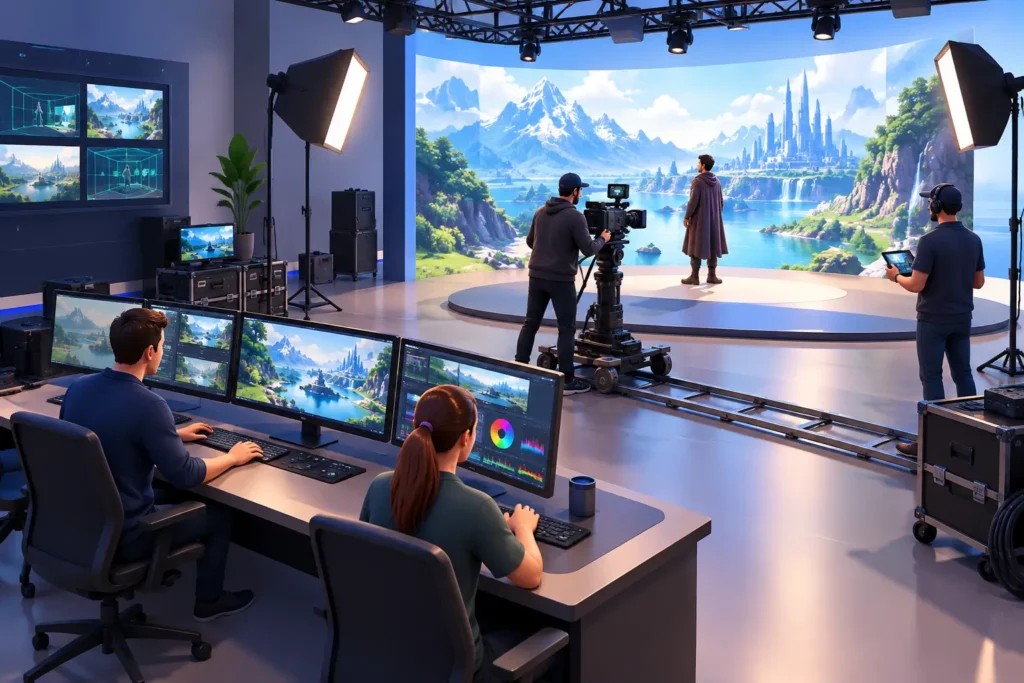

A product launch can be delayed by a missing prototype, a location that cannot be booked, or a packaging update that arrives days before the shoot. CGI advertising production removes many of those constraints. It gives marketing and creative teams a controlled way to create product visuals before physical assets, final sets, or ideal shooting conditions are available.
For brands competing across ecommerce, social, broadcast, retail, and out-of-home media, that control has commercial value. A single approved 3D asset can support multiple campaign formats, product variants, seasonal environments, and regional adaptations without restarting the production process every time. The result is not simply a polished image or animation. It is a production system built to help campaigns move faster while protecting visual quality.
What CGI Advertising Production Changes
Traditional advertising production is often limited by the physical world. Products must be manufactured, shipped, styled, and photographed. Sets require space, crews, lighting, permits, and weather contingencies. Those elements can still be the right choice for a campaign, especially when live performance or genuine human interaction is central to the message. But they also create dependencies that can make revisions expensive and timing difficult.
CGI changes the equation by turning the product into a flexible digital asset. Once a 3D model is built accurately, artists can adjust materials, colors, camera angles, lighting, labels, and environments with a level of precision that is difficult to reproduce in a studio shoot. A beverage bottle can appear in a frozen mountain scene, a luxury vehicle can be shown in an impossible camera move, and a medical device can reveal internal functionality without relying on a physical cutaway.
That flexibility matters most when the campaign requires variation. A consumer electronics company may need the same hero product in five colors, 12 marketplace angles, a 15-second social spot, a launch film, and technical close-ups for its sales team. Producing each asset separately creates repeated work and greater risk of inconsistency. Building from a validated 3D product asset creates a more efficient foundation.
The advantage is not that CGI is automatically cheaper than every live-action alternative. Highly detailed simulations, photoreal characters, complex environments, and late-stage creative changes require time and specialist talent. The real benefit is control over the variables that usually disrupt advertising production: product availability, reshoots, set access, visual consistency, and the volume of deliverables needed across channels.
Where CGI Delivers the Strongest Commercial Value
CGI is especially effective when a campaign needs to show what conventional photography cannot. Product beauty shots benefit from perfect reflections, controlled surfaces, and repeatable lighting. Exploded views and cutaways help audiences understand internal components. Architectural visualizations can show a property before construction is complete. In sectors such as healthcare, animation can communicate mechanisms, procedures, and scientific concepts with clarity that is not possible with a camera alone.
It also supports pre-launch marketing. Teams do not need to wait for final inventory to begin creating campaign material, provided they have reliable CAD data, engineering drawings, reference photography, or approved design files. This can bring creative development forward and give marketing departments more time to plan media placements, retailer assets, and launch calendars.
For global brands, the strongest case is often localization. A core product animation can be adapted for regional packaging, language, legal messaging, climate, or market-specific imagery. Rather than rebuilding the campaign from scratch, the production team updates defined elements while preserving the approved visual direction. That approach reduces duplicated effort and helps brand managers maintain consistency across markets.
The Production Decisions That Determine Quality
A convincing CGI campaign begins long before final rendering. The quality of the source material affects every stage that follows. A product model must match real-world proportions, materials, manufacturing details, and branding. For a high-consideration product, even small inaccuracies in a logo, seam, surface finish, or interface can undermine credibility with customers who know the product well.
The first decision is the level of realism required. Some campaigns need true-to-life product visualization that can stand beside premium photography. Others need a more stylized visual language designed for social content, motion graphics, or brand storytelling. Both approaches can work, but the direction must be agreed upon early. Trying to turn a stylized concept into photorealism late in production usually creates avoidable revisions.
Animation planning is equally important. A fast-moving camera may make a product feel dynamic, but it can hide essential features. A slow, technical sequence may explain function clearly, but it may not hold attention in a six-second ad. The best treatment aligns the visual approach with the media placement, audience knowledge, and campaign objective. A product film for a trade event can carry more information than a mobile-first social advertisement.
Materials and lighting deserve the same level of attention as modeling. Metal, glass, fabric, transparent plastics, liquids, and glossy painted surfaces all respond to light differently. Good CGI does not rely on adding shine everywhere. It recreates the physical behavior that makes a material believable, then uses lighting to direct the viewer toward the product’s most valuable details.
A Reliable Workflow for CGI Campaign Production
Effective CGI advertising production is built on a clear approval process. The project should begin with a practical creative brief that identifies the target audience, campaign channels, key product claims, visual references, required formats, and delivery deadline. It should also establish who has final approval. A campaign can lose time quickly when feedback arrives from multiple stakeholders with conflicting priorities.
Next comes asset preparation. The production team reviews available CAD files, product samples, photography, packaging artwork, logos, and brand guidelines. Not all CAD files are ready for animation or rendering, so they may need optimization, cleanup, or rebuilding. This is a technical stage, but it has a direct impact on schedule and visual accuracy.
Before final animation begins, teams should approve style frames or still renders. These early images confirm the product appearance, camera language, color treatment, lighting, and environment. Approving these decisions in still form is faster and less costly than correcting them after a full animation has been rendered.
The animation, simulation, compositing, sound integration, and final grading then move forward from an approved direction. At delivery, assets should be prepared for actual use, not merely handed over as one master video. A campaign may require horizontal, vertical, and square versions; short cutdowns; high-resolution print frames; transparent-background product renders; and platform-specific compression settings. Planning these outputs early prevents an approved master from becoming a bottleneck.
When Outsourcing Makes Strategic Sense
Many brands and agencies have talented in-house designers, but their internal teams may not have the capacity or specialist skills for product modeling, rigging, fluid simulation, photoreal rendering, or large-scale versioning. Outsourcing gives them access to a broader production bench without hiring for a temporary demand spike.
The best external partner operates as an extension of the creative team, not as a disconnected vendor. That requires organized communication, documented feedback rounds, transparent scheduling, and technical quality control. It also requires the ability to scale. A small campaign may need a handful of key visuals, while a major launch may demand hundreds of retailer-ready assets and multiple video versions within the same production window.
3D Modeling Animation Studio supports this model with end-to-end 3D production capability, from product and environment modeling through animation, post-production, and final asset delivery. For clients, the goal is straightforward: gain expert production capacity without adding unnecessary operational overhead.
Choosing the Right Scope Before Production Starts
The most successful CGI campaigns do not begin by asking for the most elaborate possible animation. They start by identifying what the audience needs to see, what each channel requires, and which assets can be reused after launch. A hero film may establish the visual language, while a library of stills, loops, technical shots, and product variations extends its value long after the initial media buy.
Treat the 3D asset as a long-term commercial resource rather than a one-time campaign expense. When it is built accurately, approved carefully, and organized for reuse, it gives your team a faster way to respond to the next product update, sales request, market launch, or creative opportunity.