A product launch moves forward. A pitch is approved. A series enters production. Then the demand for finished visual assets outpaces the team available to create them. Scalable animation production support gives brands, agencies, studios, and production houses a practical way to meet that demand without rushing work, lowering standards, or hiring permanent staff for a short-term peak.
The challenge is not simply finding more artists. It is finding a production partner that can enter an established workflow, understand the brief, maintain technical consistency, and deliver work that is ready for review, revision, and final use. When that support is structured correctly, external capacity becomes an extension of the internal team rather than another moving part to manage.
What Scalable Animation Production Support Means
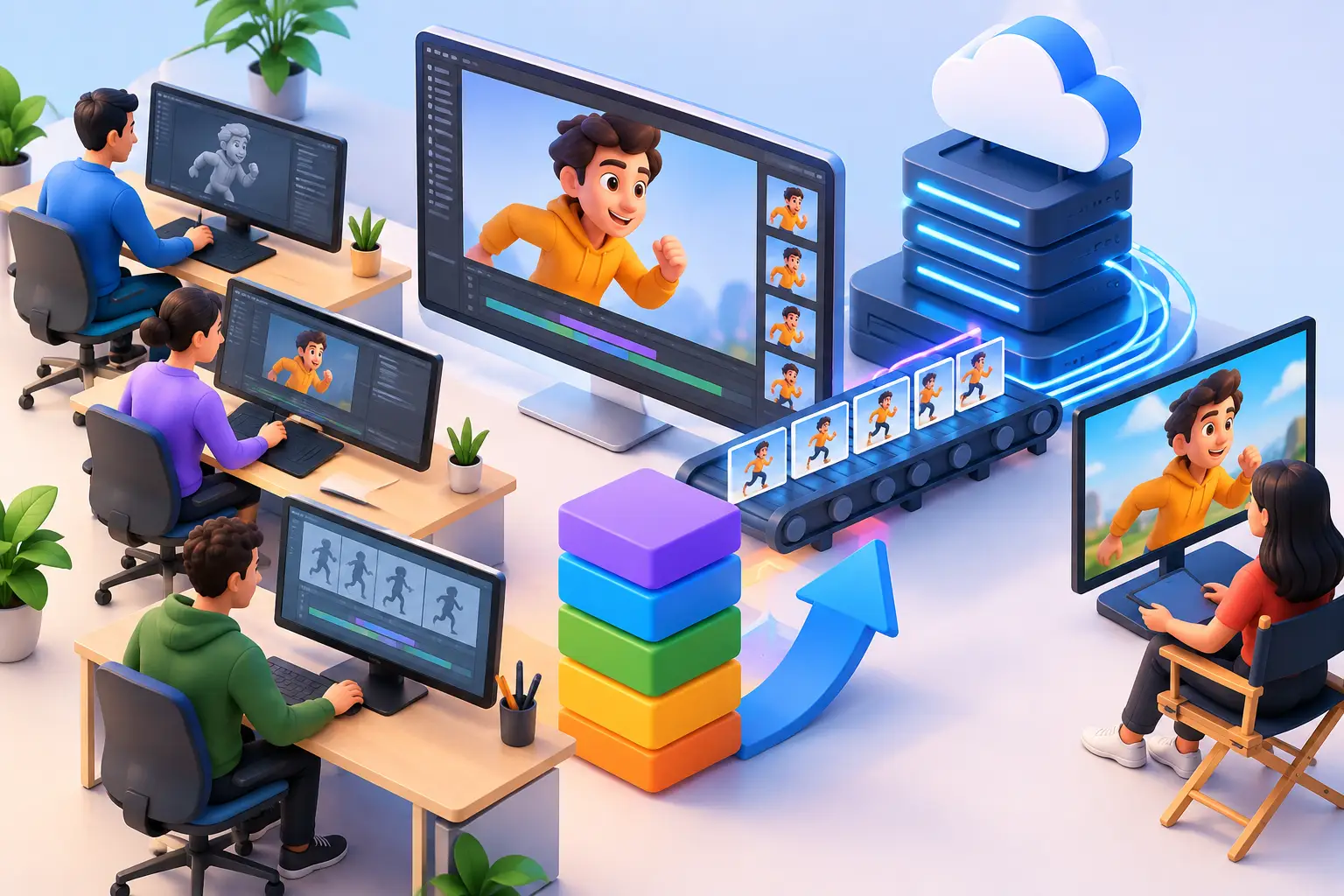
Scalable support is the ability to increase or reduce production capacity according to the actual needs of a project. A company may need a single specialist for rigging, a dedicated team for product animation, or end-to-end production across modeling, animation, lighting, rendering, compositing, and editing. The right engagement model adjusts to those requirements.
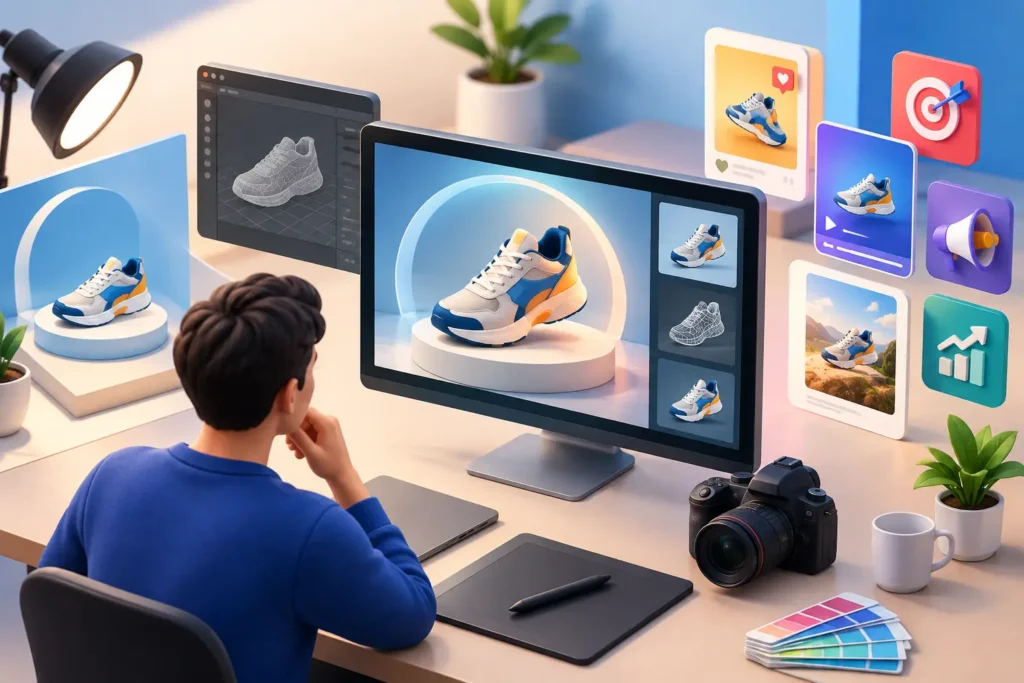
For a marketing team, this could mean producing a library of product visuals for a campaign launch. For an animation studio, it may mean bringing in experienced animators and environment artists to clear a production backlog. For an architectural firm, it can mean creating photorealistic walkthroughs and renderings while internal designers remain focused on design development.
The commercial advantage is clear: businesses gain access to specialized 3D talent without carrying the cost, recruitment cycle, and management overhead of a larger full-time department. However, capacity alone is not enough. Scalable production must also protect visual quality, scheduling visibility, and file reliability.
Why Internal Teams Reach Their Limit
Most in-house creative teams are built around normal operating demand, not the largest workload they may face in a year. That is sensible from a budget perspective, but it creates pressure when several high-priority projects arrive at once. Product launches, client approvals, seasonal campaigns, investor presentations, and production changes rarely wait for staffing plans to catch up.
Hiring can solve a long-term capacity problem, but it is not always the right answer for project-based demand. Recruiting skilled 3D artists takes time. Onboarding requires attention from senior staff. A new hire may be highly capable but still need to learn brand standards, software conventions, approval processes, and technical requirements before contributing at full speed.
External production support offers a different route. It enables teams to bring in the exact capabilities required for the current workload, whether that is hard-surface modeling, character rigging, medical visualization, motion graphics, compositing, or video editing. The internal team retains creative direction while a qualified external team handles defined production tasks.
The Production Functions That Scale Best
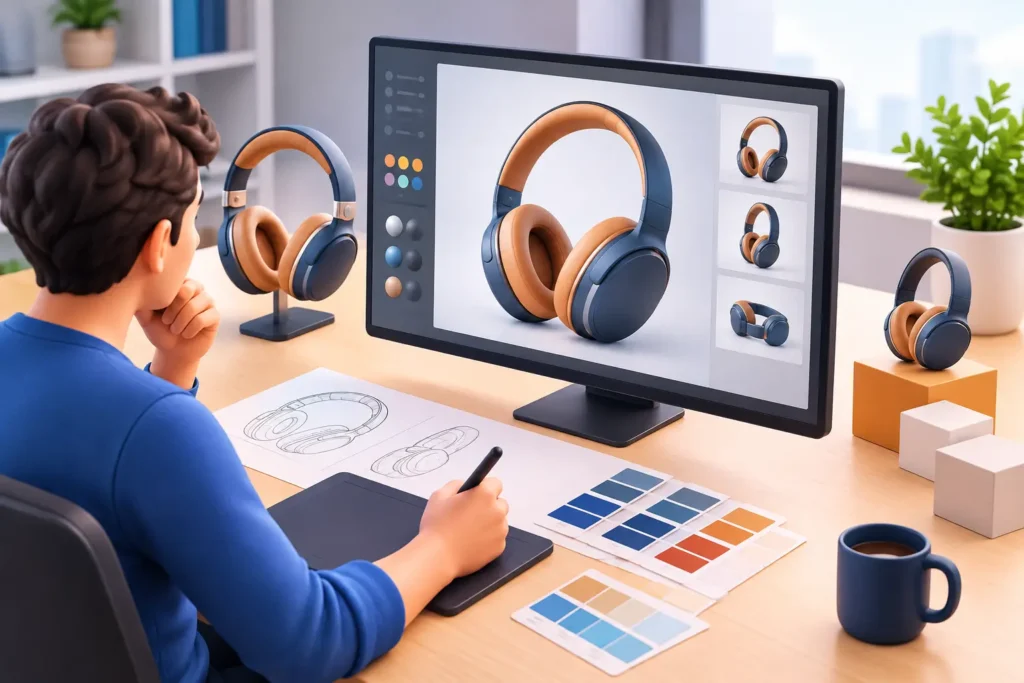
Some stages of 3D production are particularly well suited to outsourced support because they can be planned, assigned, reviewed, and integrated within a clear pipeline. Modeling is a common example. Once references, dimensions, topology standards, and intended use are defined, an external team can create product models, environments, architectural assets, or characters at meaningful volume.
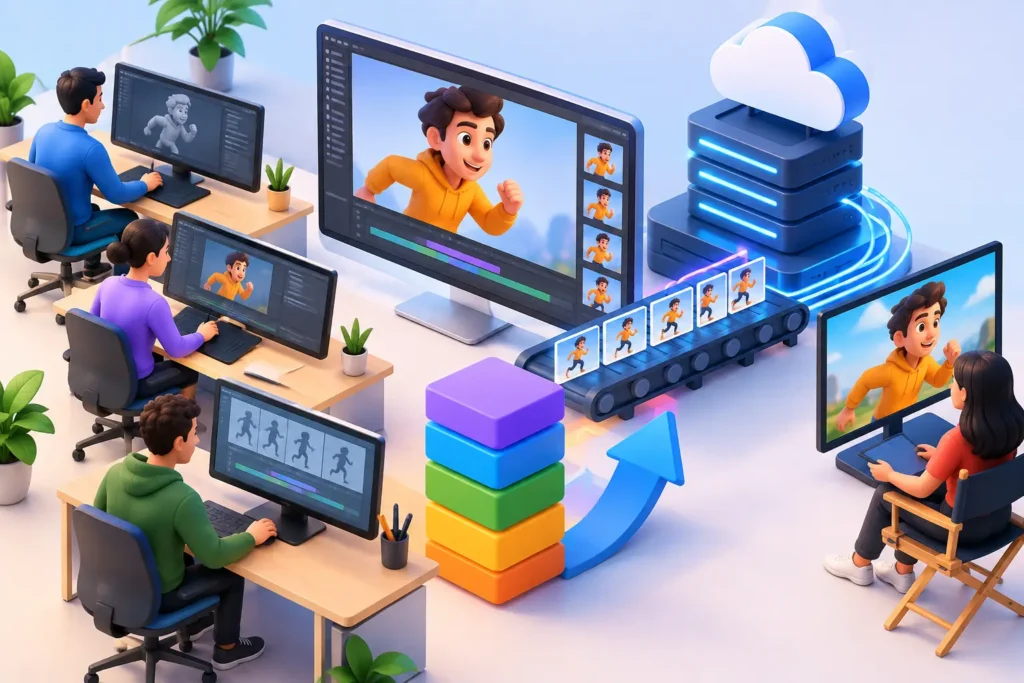
Animation also scales effectively when the creative brief is specific. A partner can produce product demonstrations, technical sequences, explainer animations, architectural flythroughs, and character shots while following approved storyboards, animatics, and timing references. For film and television work, outsourced teams can support shot production under the supervision of an internal animation lead.
Rendering, compositing, and post-production often provide immediate relief during deadline-driven work. These stages require technical discipline as much as artistic judgment. Color management, render settings, asset versions, passes, frame ranges, and delivery specifications must be controlled carefully. A production partner that understands these details can help shorten turnaround without creating expensive revisions later.
Rigging deserves special attention. It is not always a high-volume requirement, but it is foundational when character or mechanical assets need to perform reliably. A poorly constructed rig slows every animator who touches it. Expert rigging support can therefore improve downstream efficiency as well as final movement quality.
Scale Without Losing Control
A frequent concern is that external support will reduce visibility or dilute a brand’s visual language. That risk exists when the partner receives incomplete briefs, unclear approvals, or no agreed production process. It is not an unavoidable feature of outsourcing.
The strongest engagements begin with scope definition. Before production starts, both teams should align on deliverables, reference files, software and version requirements, asset naming, frame rates, resolution, formats, milestones, and the number of revision rounds. This level of preparation may feel detailed, but it prevents uncertainty from becoming rework.
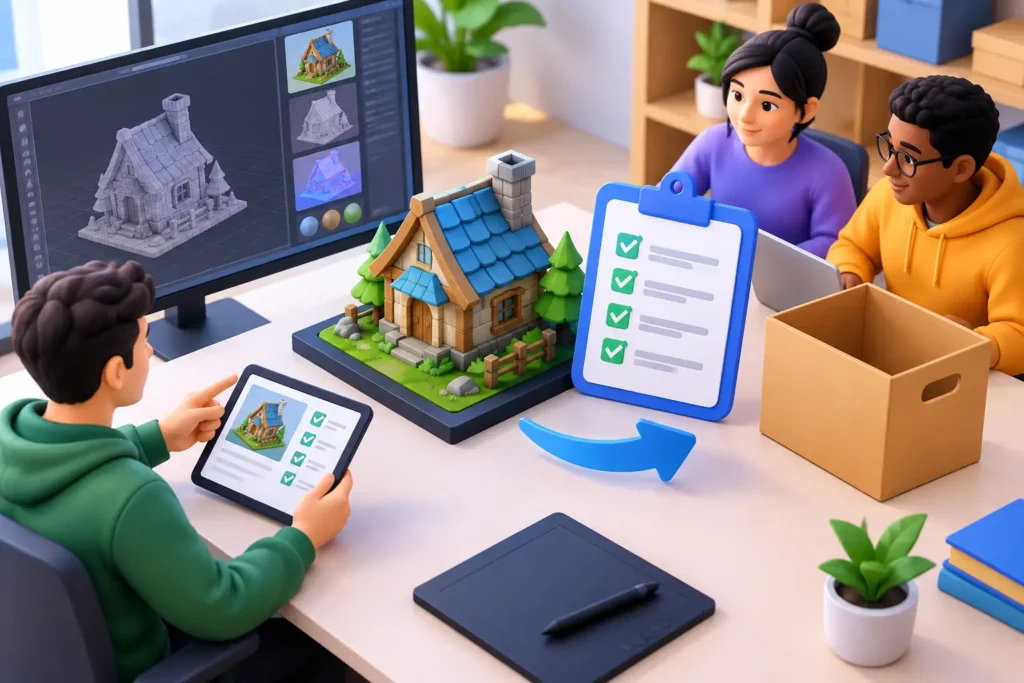
A practical workflow usually includes a kickoff, a test asset or look-development stage, scheduled review points, and final quality control. The test stage is especially valuable for larger projects. It confirms that modeling standards, materials, lighting, animation style, and compositing direction are aligned before the full production volume begins.
Communication should be simple and accountable. Project managers need clear points of contact, predictable status updates, and a process for flagging questions early. Fast delivery does not mean skipping review. It means organizing production so decisions are made at the right time, not after a full batch of work is complete.
Choosing the Right Support Model
Not every project requires the same type of engagement. A one-off asset may be best handled as a fixed-scope project with clear deliverables and a defined delivery date. This model works well for a product animation, architectural rendering package, or medical visualization sequence with a stable brief.
Ongoing production support is more effective when workload fluctuates month to month or when a business needs consistent access to external capacity. In this arrangement, the partner becomes familiar with the brand, technical standards, asset library, and approval preferences. That familiarity can reduce ramp-up time on future assignments.
For complex work, a phased approach is often the best choice. The project may begin with concept development and modeling, then move into rigging and animation, followed by rendering and post-production. Dividing work into approved stages gives stakeholders greater control over budget and direction while keeping the production schedule moving.
The right choice depends on how defined the work is, how often demand changes, and how much creative oversight the client needs to retain. A dependable provider should be able to recommend the engagement structure that supports the business goal rather than forcing every request into the same service package.
What to Look for in an Animation Production Partner
Portfolio quality matters, but it should not be the only evaluation factor. A visually impressive reel does not automatically prove that a team can manage production at scale. Decision-makers should assess whether the provider has relevant experience, a documented workflow, and the technical range to support the project from start to finish.
Ask how the team handles source files, asset handoff, version control, revisions, and quality checks. Confirm which software the project will use and whether the partner can work within existing pipeline requirements. For specialized industries, such as medical animation or manufacturing, verify that the team can interpret technical reference materials accurately and translate them into clear visuals.
Turnaround claims should be tested against the actual scope. Fast output is valuable, but a compressed schedule requires realistic approvals, available references, and timely client feedback. The best production partners are confident about delivery while being direct about dependencies that can affect timing.
3D Modeling Animation Studio supports this model by bringing modeling, rigging, animation, environment creation, rendering, post-production, and video editing under one production roof. For clients, that breadth reduces the need to coordinate separate vendors when a project requires multiple 3D disciplines.
Build Capacity Before the Deadline Arrives
The most effective time to establish scalable support is before a critical deadline creates pressure. A small pilot project can reveal how well a production partner communicates, interprets feedback, manages files, and meets quality expectations. It also gives both teams the chance to refine the workflow while the stakes are manageable.
When larger demand arrives, the relationship is already in place. The external team understands the visual standards, the client knows what information to provide, and production can begin with fewer unknowns. That preparation turns outsourced animation from an emergency solution into a dependable operating advantage.
For organizations balancing ambitious visual goals with tight schedules and controlled budgets, scalable animation support is not about giving away creative control. It is about building the production capacity to bring more of the right ideas to market, on time and at the level of quality the business expects.