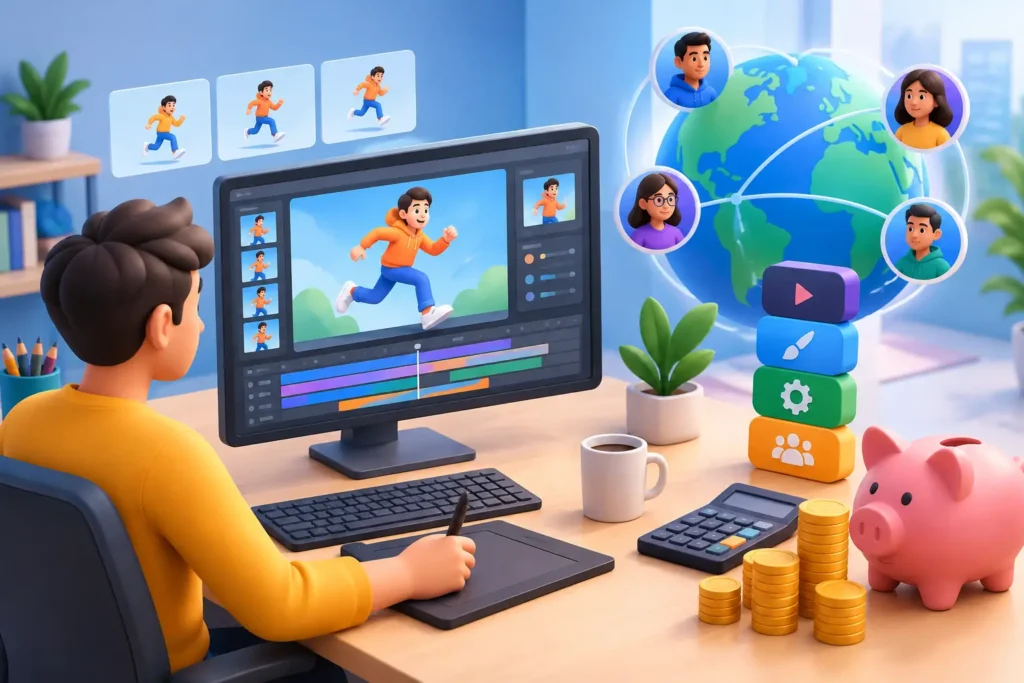
A 30-second product animation can cost less than a trade-show display, while a 30-second medical sequence may require a substantially larger investment. The difference is not arbitrary. If you are asking, “what does animation outsourcing cost,” the useful answer is tied to the production scope, technical requirements, quality standard, and approval process behind the final frames.
For brands, studios, architects, and production teams, outsourcing is often the most efficient way to access specialized talent without carrying the cost of a permanent internal department. A credible animation quote should show what you are paying for, what is included, and where decisions can affect the final budget.
What Does Animation Outsourcing Cost?
Animation outsourcing can range from a few thousand dollars for a simple, tightly scoped asset to tens of thousands of dollars or more for a detailed 3D campaign, character-driven sequence, architectural film, or medically accurate visualization. Cost is best evaluated by project complexity rather than runtime alone.
As a practical starting point, a simple 2D explainer or motion graphics project may fall around $2,000 to $10,000. A polished 3D product animation commonly ranges from $5,000 to $30,000, depending on whether product models, materials, simulations, and multiple versions are required. High-end character animation, visual effects work, medical animation, and cinematic production can move beyond $30,000 and scale significantly from there.
These ranges are directional, not fixed rate cards. A five-second shot containing a realistic liquid simulation, a mechanical cutaway, or a photoreal close-up can require more production time than a longer sequence with simple camera movement. The right question is not only how long the video will be. It is what needs to be built, animated, rendered, reviewed, and delivered.
The Production Elements That Shape Your Budget
A reliable outsourced team breaks the work into clear production stages. This creates cost transparency and helps decision-makers prioritize the elements that have the greatest impact on the result.
Pre-production sets the efficiency of everything that follows
Creative direction, scripting, storyboarding, shot planning, style frames, and technical planning are often treated as preliminary expenses. In reality, they protect the production budget. Clear decisions at this stage reduce late-stage revisions, which are typically the most expensive changes because they can affect animation, lighting, rendering, compositing, and editing at once.
A straightforward product video with an approved script and brand guidelines will cost less to launch than a concept that still needs its narrative, visual language, and key messages defined. For complex work, investing in a detailed storyboard and animatic before full production is one of the smartest cost-control measures available.
Asset creation can be a major cost driver
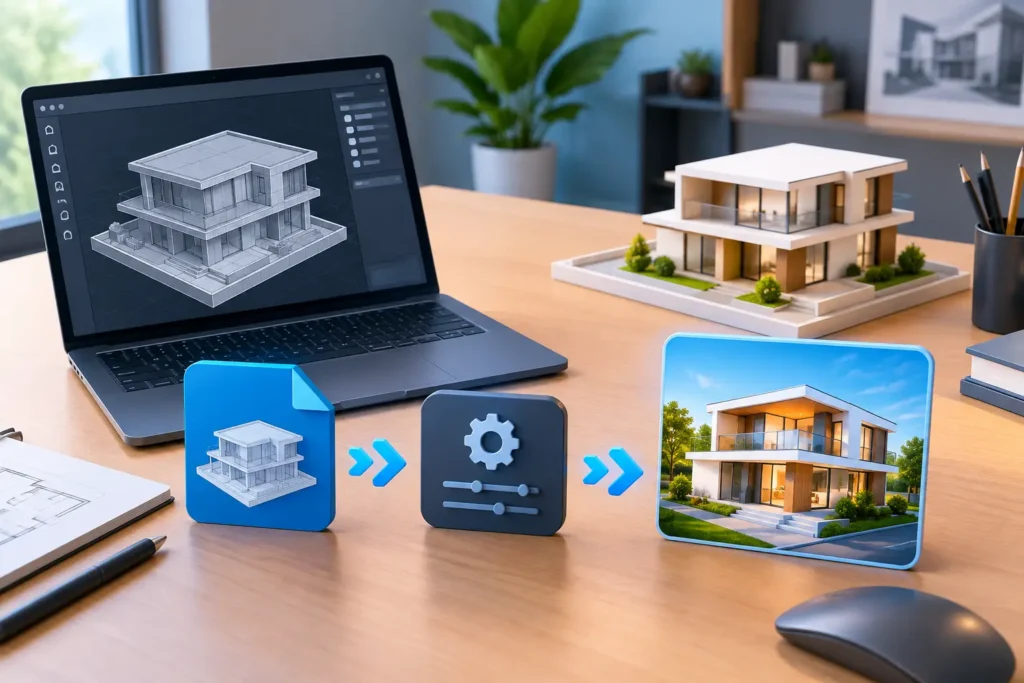
Does the project begin with production-ready 3D files, or does every object need to be modeled from reference images, CAD data, or sketches? This distinction matters. CAD files can speed up modeling, but they often need cleanup and optimization before they are suitable for animation and rendering.
Custom character work adds another layer of effort. Modeling, UV mapping, texturing, rigging, facial controls, hair, clothing, and skin shading all influence the quote. Environment modeling also varies widely, from a clean studio background to a fully built architectural interior, factory floor, operating room, or natural landscape.
For product companies, a reusable asset library can reduce costs across future campaigns. A carefully built hero product model may support launch videos, product configurators, social cutdowns, sales presentations, and still renders. The initial investment becomes more valuable when the asset is planned for long-term use.
Animation complexity determines labor intensity
Basic object movement and camera animation are relatively efficient. A product rotating against a clean background is fundamentally different from a sequence that shows parts assembling, internal mechanisms functioning, particles reacting, or a character performing emotional dialogue.
Rigging is especially relevant for characters, creatures, medical anatomy, and mechanical systems. A strong rig gives animators the controls needed to create believable motion. It also takes time to build and test. When a project requires repeat animation or several sequences using the same asset, that rigging investment is easier to justify.
Physics simulations, cloth, fluids, smoke, destruction, and crowds add realism but also increase setup, testing, and render requirements. They should be used where they serve the story or commercial objective, not simply because they look impressive in a production reel.
Rendering and post-production affect final quality
High-resolution output, photoreal materials, global illumination, motion blur, depth of field, and complex effects all increase render time. A project intended for a large event screen or broadcast delivery may need more rendering capacity than an animation designed for a web landing page.
Post-production includes compositing, color work, editing, sound design, music, voiceover integration, titles, and versioning. These finishing stages are where a technically capable animation becomes a polished marketing or communications asset. They also need to be included in the scope from the beginning, especially if the campaign requires different aspect ratios, languages, product variants, or regional compliance edits.
Why Two Quotes Can Look So Different
A lower quote is not automatically a better value, and a higher quote is not always evidence of better execution. The difference often comes down to scope definition, team structure, quality controls, and what each provider assumes is included.
One vendor may quote for a single video with one review round, while another includes creative development, multiple approval stages, project management, custom asset creation, final sound, and several deliverable formats. If these details are not compared line by line, the numbers can be misleading.
Turnaround time also changes cost. Rush work may require a larger team, extended production hours, or prioritized rendering resources. If the deadline is genuinely fixed, an experienced outsourcing partner can build a production plan around it. But a compressed schedule usually leaves less room for exploratory creative work and repeated revisions.
Geography can affect rates, yet it should not be the only buying criterion. Lower-cost production may be attractive until communication gaps, inconsistent quality, weak file management, or missed deadlines create downstream costs for your internal team. The best choice is a partner with clear workflow controls, technical depth, and the capacity to scale when demand increases.
How to Build a More Accurate Outsourcing Brief
The fastest way to receive a usable quote is to provide enough information for the studio to estimate the real workload. You do not need a complete production bible, but ambiguity should be reduced before production begins.
Share the intended use of the animation, target audience, runtime range, required formats, brand assets, references, and final deadline. If you have existing CAD files, product photography, architectural plans, medical references, or prior assets, identify their availability and condition. Explain whether you need a single hero film or a broader group of deliverables.
It also helps to state your approval process. A project with one empowered decision-maker can move very differently from a project that requires review by marketing, legal, product engineering, and executive leadership. A professional studio can account for those checkpoints, but only if they are known early.
For budget planning, ask for a phased estimate. Separating concept development, asset creation, animation, rendering, and post-production gives you options. You may decide to simplify a background, reduce simulation work, or produce a shorter launch version first while preserving the core visual quality.
Choosing Value Over the Lowest Number
The most productive outsourcing relationship is built around predictable delivery, not just a one-time price. Look for a team that can explain its assumptions, identify risks before they become delays, and recommend practical alternatives when a creative request exceeds the available budget.
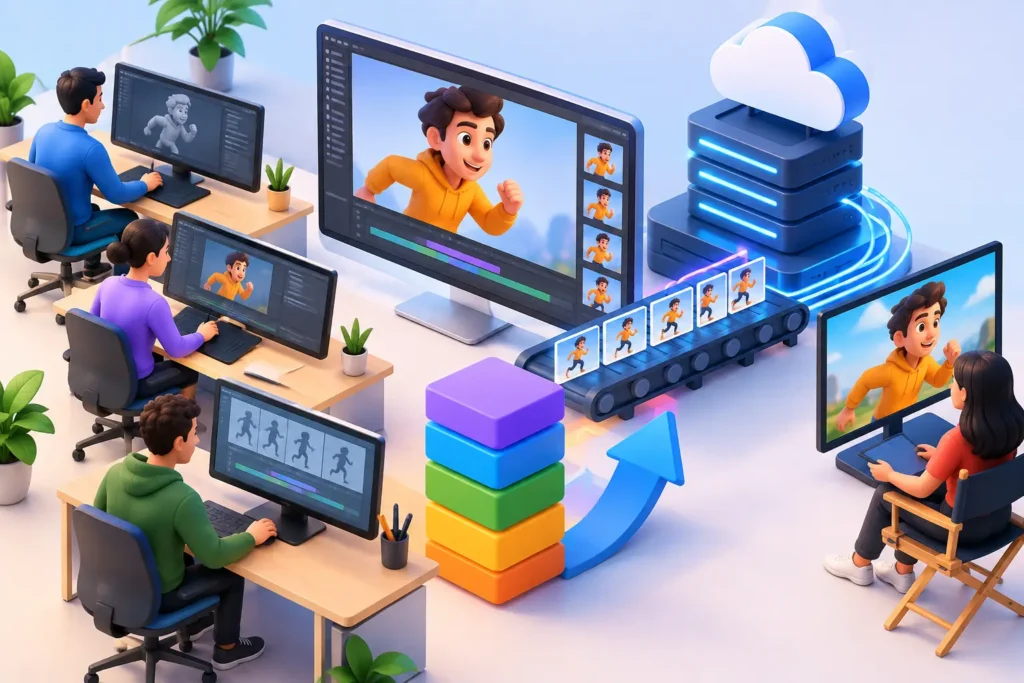
3D Modeling Animation Studio approaches this work as a managed production partnership, combining modeling, rigging, animation, rendering, and post-production under one coordinated workflow. That structure is valuable when teams need technical precision, consistent visual standards, and additional capacity without expanding internal headcount.
A well-scoped animation budget is not merely a cost estimate. It is a plan for converting a product, process, place, or story into visuals that help people understand and act. Start with the outcome your audience needs to see, then fund the production choices that make that outcome credible.