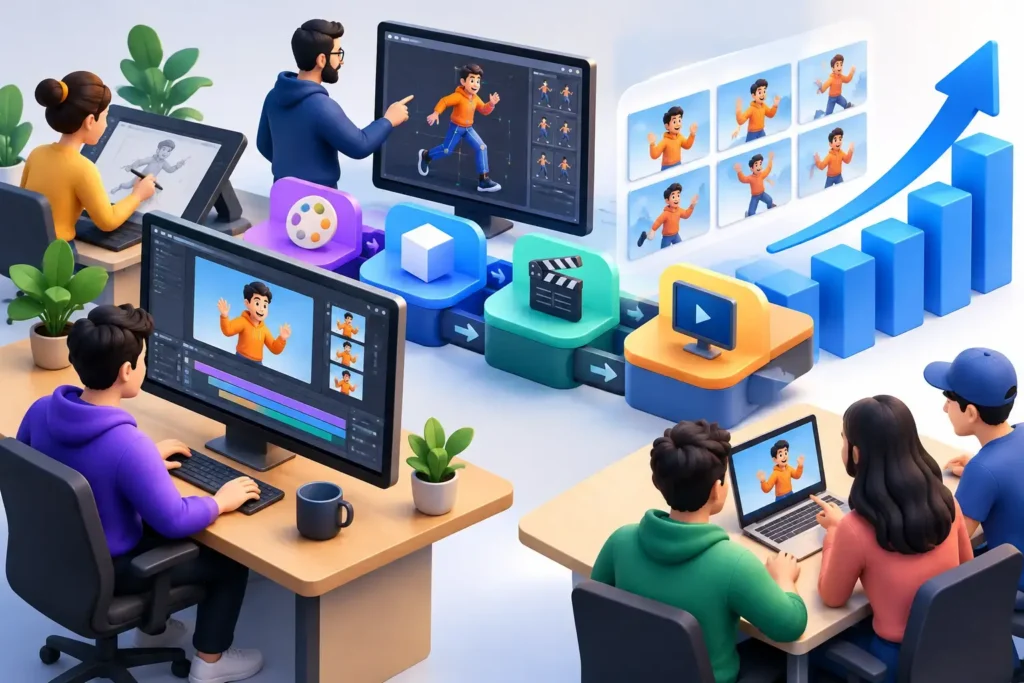
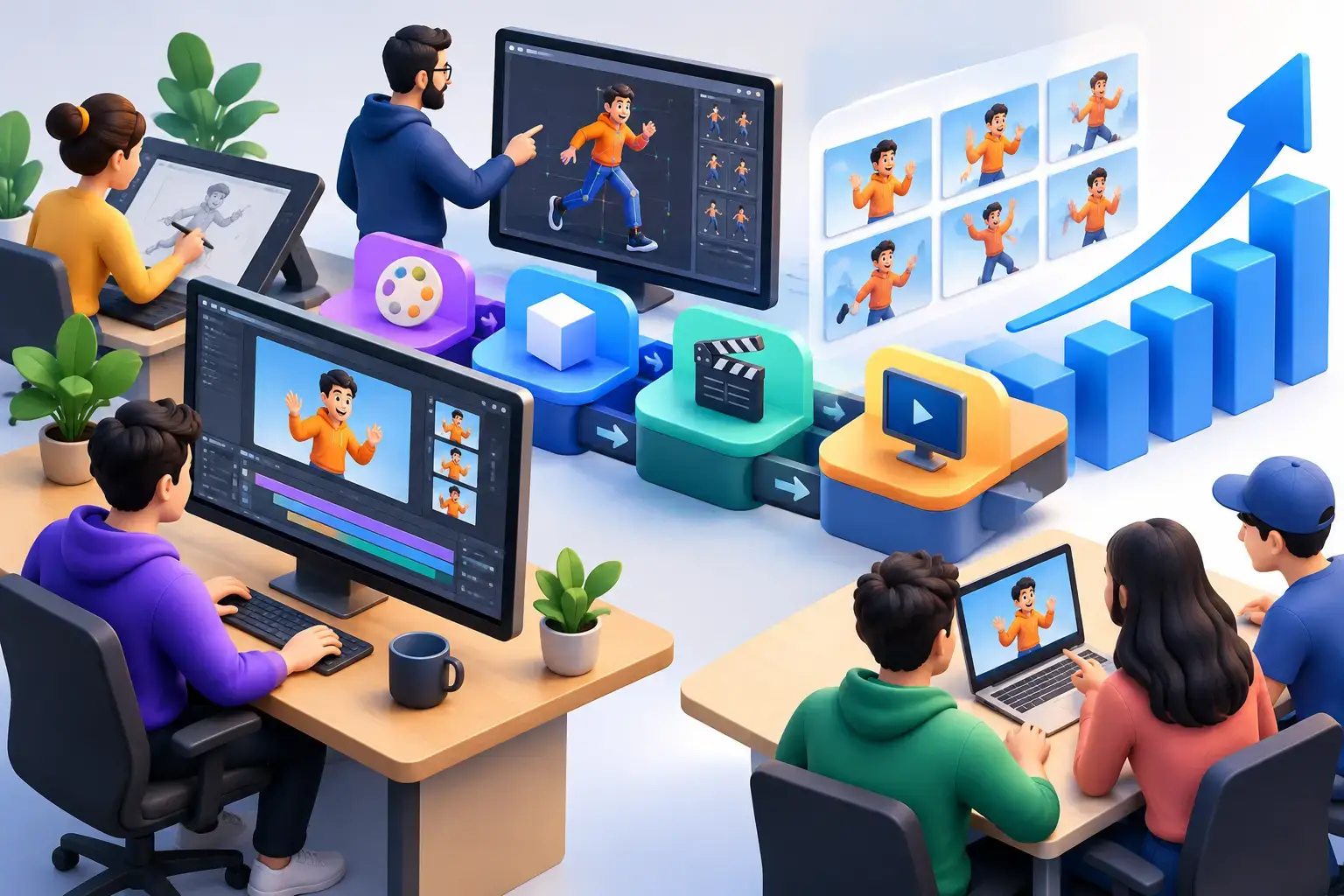
When a product launch, campaign calendar, or production schedule keeps generating visual work, project-by-project outsourcing can become the bottleneck. Animation retainer services give businesses reserved access to experienced 3D talent, a defined production workflow, and predictable support without the cost and commitment of expanding an internal team.
For creative directors, marketing leaders, studios, and production houses, the value is not simply having more animators available. It is having a production partner that understands the brand, files, technical standards, approval process, and delivery expectations before the next urgent request arrives. That familiarity reduces ramp-up time and gives teams a practical way to scale visual output when demand changes.
What Animation Retainer Services Actually Cover
An animation retainer is an ongoing service agreement that reserves a set level of production capacity over a defined period, usually monthly or quarterly. Instead of issuing a new brief, quote, contract, and onboarding package for every animation request, the client and production team establish a working framework for recurring needs.
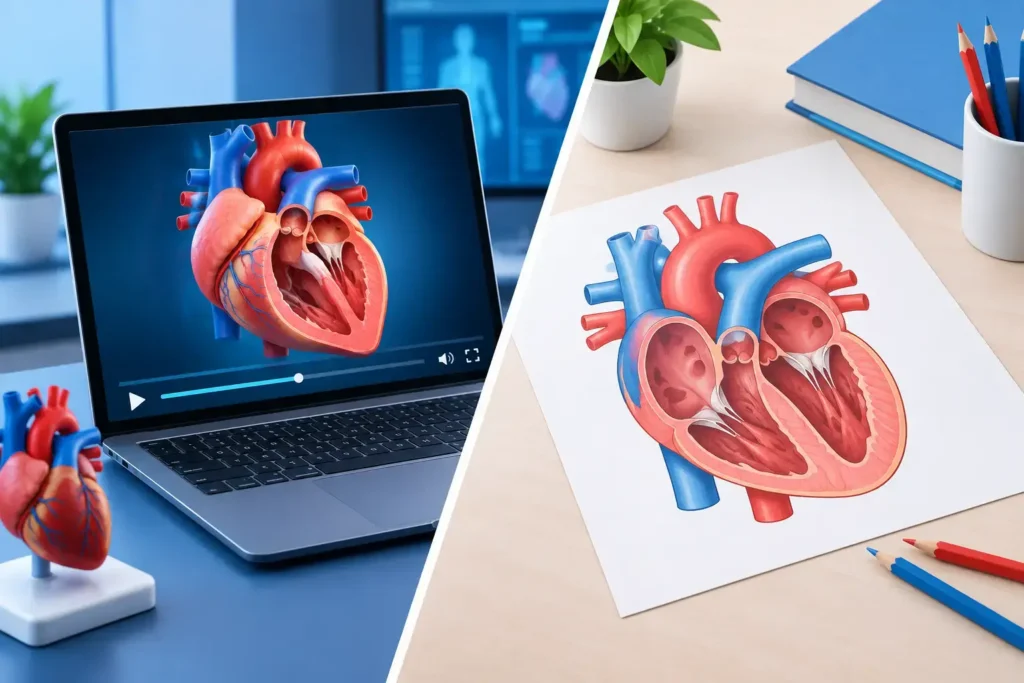
The scope can include 3D modeling, product visualization, character rigging, environment creation, animation, simulation, rendering, compositing, video editing, and final delivery formatting. For an architecture firm, that may mean a steady pipeline of animated walkthroughs and design updates. For a product company, it may mean launch films, product feature clips, social cutdowns, and revised renders as packaging or specifications change. A medical organization may need accurate anatomical models, procedure animations, and compliance-conscious revisions.
The best retainer is not a vague promise of unlimited work. It defines available capacity, included disciplines, expected turnaround ranges, revision rules, communication channels, and how unused or additional hours are handled. Clear boundaries protect quality on both sides.
Why Recurring Animation Work Needs a Different Model
A single animation project has a clear beginning and end. Recurring content operations are different. They require teams to react to changing priorities while keeping visual consistency across assets, channels, and markets.
Under a project-only model, every new request can introduce friction: vendor selection, scope clarification, estimates, purchase orders, asset transfers, and technical alignment. Those steps are reasonable for a large one-time production, but they can slow down a marketing team that needs three product clips, revised renders, and an event-loop animation within the same month.
A retainer reduces that administrative cycle. The external team already knows the approved lighting style, camera language, materials, animation pacing, file naming conventions, and export requirements. It can begin with production rather than rediscovery.
This model also creates better resource planning. Internal teams can build campaign calendars around known creative capacity instead of hoping a preferred vendor has availability at the exact moment demand spikes. For companies that cannot justify hiring full-time specialists in rigging, simulation, medical visualization, or post-production, it provides access to specialized skills when they are needed.
The Business Advantages of a 3D Animation Retainer
The most immediate benefit is speed, but speed is only valuable when it does not lower the production standard. A dedicated outsourced team can move faster because it has context. It does not need to relearn the visual system or wait for repeated technical approvals on every assignment.
A retainer can also make budgets easier to manage. Rather than facing unpredictable bids for every new request, clients work with a planned monthly investment and an agreed method for approving work that exceeds the reserved capacity. This is especially useful for teams managing quarterly marketing budgets or multiple stakeholder groups.
Consistency is another major advantage. Product animations, architectural films, social content, trade-show loops, and sales presentations should feel like they belong to the same brand. When the same production partner maintains the source files, models, textures, rigs, and style references, visual continuity is far easier to maintain.
For studios and production houses, a retainer can function as flexible white-label capacity. It helps cover periods of high demand without rushing permanent hiring decisions or overloading internal artists. The client-facing studio retains creative control while gaining reliable production support behind the scenes.
How to Structure Animation Retainer Services
A successful agreement starts with the production reality, not a generic monthly package. The right level of support depends on the volume, complexity, and urgency of the planned work.
Define capacity before defining deliverables
Some clients need a fixed number of production hours each month. Others need a dedicated pod that can handle a mix of modeling, animation, rendering, and editing. A campaign-heavy brand may prefer capacity that is concentrated around launch dates, while an architecture practice may need a steadier cadence for design reviews and client presentations.
Capacity-based retainers are often more flexible because animation tasks vary. A short product clip with existing assets may be fast to produce, while a 30-second film that requires new models, fluid simulation, voice synchronization, and multiple render passes will demand far more effort. Defining capacity allows priorities to change without rewriting the entire agreement.
Establish a production workflow
A dependable workflow should identify who briefs the work, who gives consolidated feedback, and who has final approval. It should also set review milestones, such as storyboard approval, animation preview, lighting and rendering review, and final output sign-off.
Clients should provide brand guidelines, existing CAD files or models, approved product references, technical documentation, and examples of preferred visual styles at the beginning of the relationship. A production partner should organize those materials into an accessible asset library, then maintain version control as the work evolves.
One consolidated feedback round is usually more efficient than separate comments from multiple stakeholders. When feedback conflicts, the client-side project owner should resolve it before sending revisions to the animation team. This prevents avoidable rework and keeps the retainer capacity focused on production.
Plan for overflow and urgent requests
Not every request will fit neatly into a monthly allocation. Product changes, event deadlines, executive presentations, and late-stage campaign decisions happen. The agreement should state how additional work is approved, priced, and scheduled.
A strong production partner can reserve some flexibility for urgent needs, but no retainer should imply that every rush request is automatically possible. Complex rendering, new asset creation, and extensive revisions still require time. Transparent scheduling is better than promising impossible turnaround times.
When a Retainer Is the Right Choice
Animation retainers work best when visual production is ongoing and strategically important. Companies with recurring product releases, active paid media programs, frequent sales presentations, regular design updates, or a content calendar across multiple channels are strong candidates.
They are also useful when the internal team has direction but lacks specialist execution. A marketing department may know exactly what it needs to communicate but not have an in-house 3D modeler, rigger, motion designer, or compositor. A retainer turns those skills into available production capacity without adding payroll, software costs, recruiting time, and management overhead.
However, a retainer is not automatically the best choice for every organization. If a company needs one highly defined animation with no expected follow-on work, a fixed-scope project may be more cost-effective. The same applies when the brand has not yet established its visual direction or cannot provide timely approvals. A retainer performs best when there is a real pipeline and a client team prepared to make decisions.
Measuring Retainer Performance
Retainer success should be measured by more than the number of videos delivered. Useful indicators include turnaround time, percentage of work delivered on schedule, revision volume, asset reuse, response time, and the amount of internal coordination saved.
Quality should remain visible in the review process. Are product details accurate? Are renders consistent with approved references? Do animation timing and camera movement support the intended message? Is the final output formatted correctly for web, broadcast, social, presentation, or event display? These questions matter because faster delivery without technical precision creates more work later.
Regular planning sessions help maintain value. A monthly review can examine completed work, upcoming priorities, asset gaps, and expected peak periods. This allows the production team to prepare early rather than responding only when a deadline becomes urgent.
Choosing the Right Production Partner
Look for a partner with broad technical capability and a clear process for managing recurring production. The team should be able to explain how it handles files, approvals, revisions, rendering capacity, source asset management, and delivery formats. Strong portfolios matter, but operational reliability matters just as much in a retainer relationship.
Ask whether the provider can support the full pipeline or only one stage. A team that can handle modeling, rigging, animation, post-production, and final editing reduces handoffs and makes accountability clearer. For specialized work, such as medical animation or architectural visualization, relevant technical experience is equally important.
3D Modeling Animation Studio structures outsourced production support around the level of capacity and technical expertise each client needs, helping teams maintain momentum without building a larger in-house department.
The right retainer should make your production calendar feel more controlled, not more complicated. Start with the work already arriving every month, define the capacity required to deliver it well, and build a partnership that gives your team room to move when the next opportunity appears.