A product launch can miss the mark for one simple reason: the audience still does not understand what the product does, why it matters, or what makes it different. That is where a strong product animation production guide becomes useful. It turns animation from a creative add-on into a structured production asset that supports marketing, sales, investor pitches, ecommerce, and technical communication.
For business teams, product animation is rarely just about making something look impressive. It needs to explain features clearly, match the brand, hit deadlines, and stay within budget. If the process is not planned correctly, even a visually polished animation can fall short because it highlights the wrong details, runs too long, or creates unnecessary revision cycles.
What product animation needs to achieve
Product animation sits at the intersection of design, communication, and production efficiency. A good result does more than show a rotating object on screen. It demonstrates form, function, scale, material quality, movement, and user benefit in a way that static images often cannot.
That matters across industries. Consumer brands use product animation to increase conversion and improve launch campaigns. Manufacturers use it to explain complex assemblies or internal mechanisms. Medical and technical companies use it to simplify information that would otherwise take pages of copy to describe. In each case, the goal is not identical, and that is the first production decision that needs to be made.
Before any modeling or animation starts, the team should define the business job of the piece. Is it meant to sell, educate, train, or support a pitch? A marketing animation for social media will be paced differently from a trade show loop or a technical explainer for distributors. If that goal stays vague, the entire production tends to drift.
Product animation production guide: start with scope
The most reliable productions begin with scope control. That means identifying what will be shown, what level of realism is required, how many shots are needed, and where the animation will be used.
This is the point where many teams either save time or lose it. A 15-second hero product teaser with dramatic lighting is one kind of project. A 90-second animation with exploded views, material callouts, and multiple product variations is a different production entirely. Both can be valuable, but they require different schedules, budgets, and approval structures.
A practical scoping discussion usually covers the product version, dimensions, reference files, brand guidelines, target audience, aspect ratios, voiceover needs, and delivery format. It should also account for what has not been finalized. If the industrial design is still changing, that affects timing. If packaging is pending, that may affect final render decisions. Clear inputs reduce surprises later.
Pre-production is where speed is won
Most project delays do not begin during rendering. They begin when pre-production is rushed. In product animation, pre-production is the stage that aligns stakeholders before high-effort production work starts.
Script and messaging come first, even for highly visual pieces. The animation needs a narrative structure, whether that is feature-led, problem-solution-based, or purely visual. Then comes storyboard development or shot planning. This does not need to be overly elaborate for every job, but it should be specific enough to answer two questions: what will the viewer see, and why are they seeing it in that order?
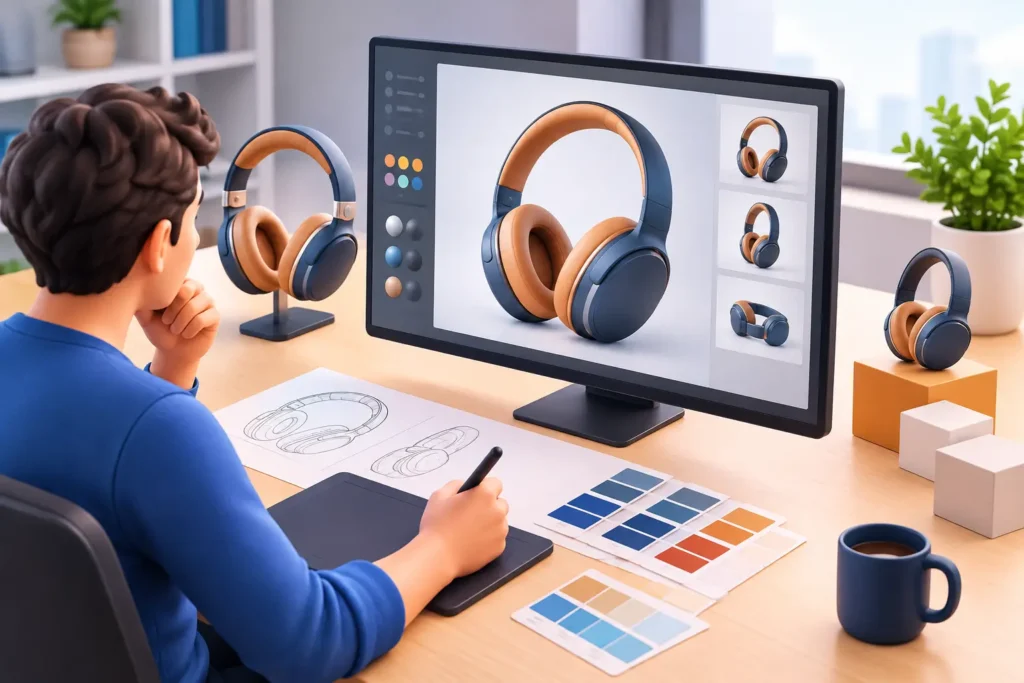
Style framing is also critical. Teams should agree early on whether the look is photoreal, stylized, technical, minimal, cinematic, or a mix. A technically perfect model rendered in the wrong visual style still misses the commercial target.
When outsourced production is involved, this phase becomes even more important. A strong external partner can move quickly, but only if the brief is precise. That does not mean clients need to hand over a perfect plan. It means the production team should help define the plan before full execution begins.
Modeling, materials, and motion need to support the message
Once the project moves into production, the 3D asset itself becomes the foundation. Accurate modeling matters because viewers notice when proportions, part relationships, or assembly logic feel off. That is especially true for technical products, medical devices, and premium consumer goods where credibility is tied directly to visual precision.
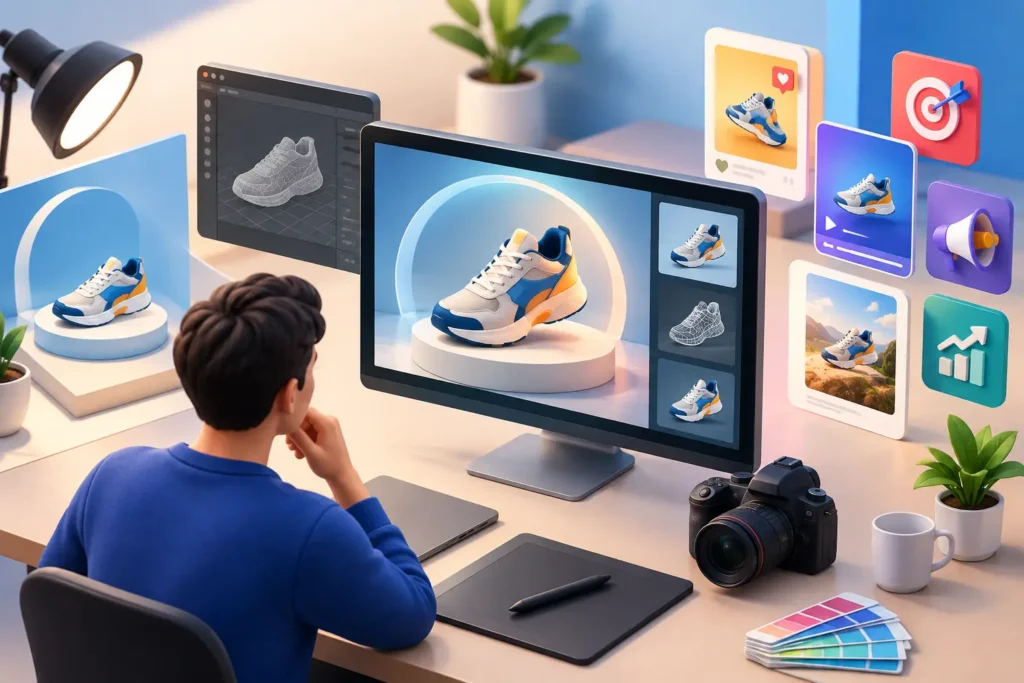
Materials and textures should serve both realism and brand presentation. Some products need clean, idealized surfaces that feel controlled and premium. Others need more tactile realism, including manufacturing detail, translucency, or wear characteristics. The right choice depends on the audience and placement. Ecommerce ads often benefit from clarity and contrast. Investor or trade presentation pieces may need more technical fidelity.
Motion design is where many product animations either become persuasive or become generic. Camera movement, part reveals, exploded views, and transitions should be purposeful. Too much movement can make the product harder to read. Too little movement can make the piece feel flat. The balance depends on the product’s complexity and the viewer’s attention window.
For example, a beauty product might rely on slow, premium camera moves and close-up material detail. An industrial valve system may need cutaways and sequence logic to explain function. The same production approach should not be applied to both.
Rendering decisions affect cost, timing, and usability
Rendering is not just a technical finish line. It is a business decision. Resolution, frame count, lighting complexity, simulation requirements, and revision expectations all affect timeline and budget.
Photoreal rendering is often the best choice for product marketing, but not always. If the product is still in development, highly realistic imagery may create problems when design changes occur. In those cases, a more controlled visual treatment can protect the schedule while still looking premium.
Output planning also matters. Many clients need more than one final file. They may require landscape versions for websites, square cuts for social campaigns, vertical edits for paid media, and shorter variants for retargeting. Building that into the production plan at the start is far more efficient than retrofitting after final approval.
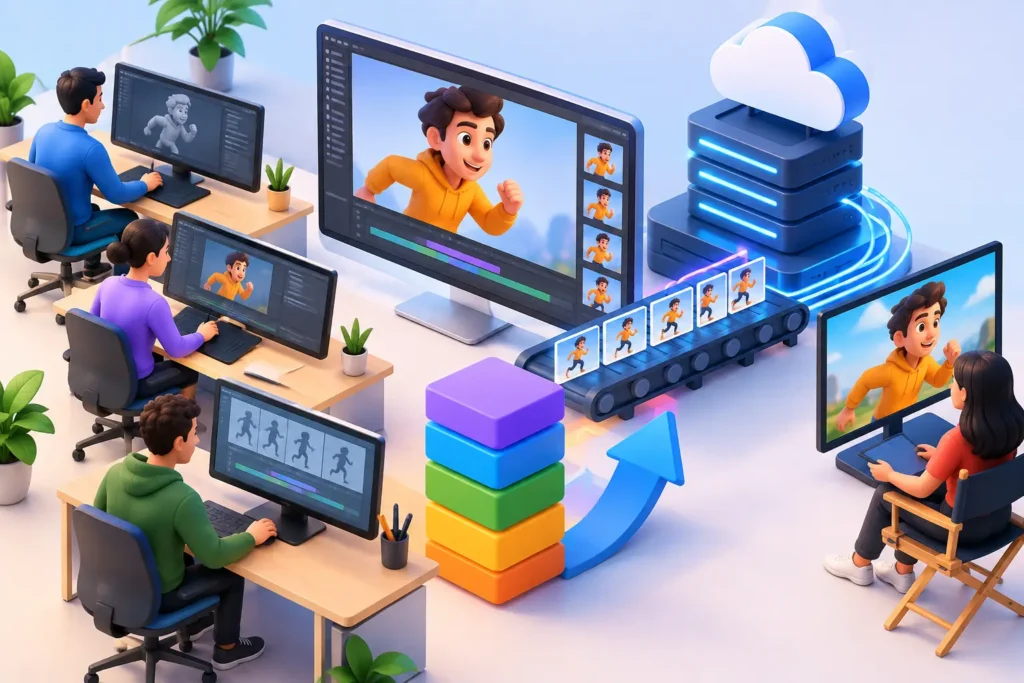
This is one reason outsourced teams can create strong value. A studio with dedicated modeling, animation, lighting, and post-production capabilities can structure the pipeline around asset reuse, versioning, and scalable output. That improves both consistency and turnaround.
Reviews and revisions need a controlled process
A product animation can lose momentum when too many stakeholders review too late. The fix is not fewer reviewers. The fix is staged approvals.
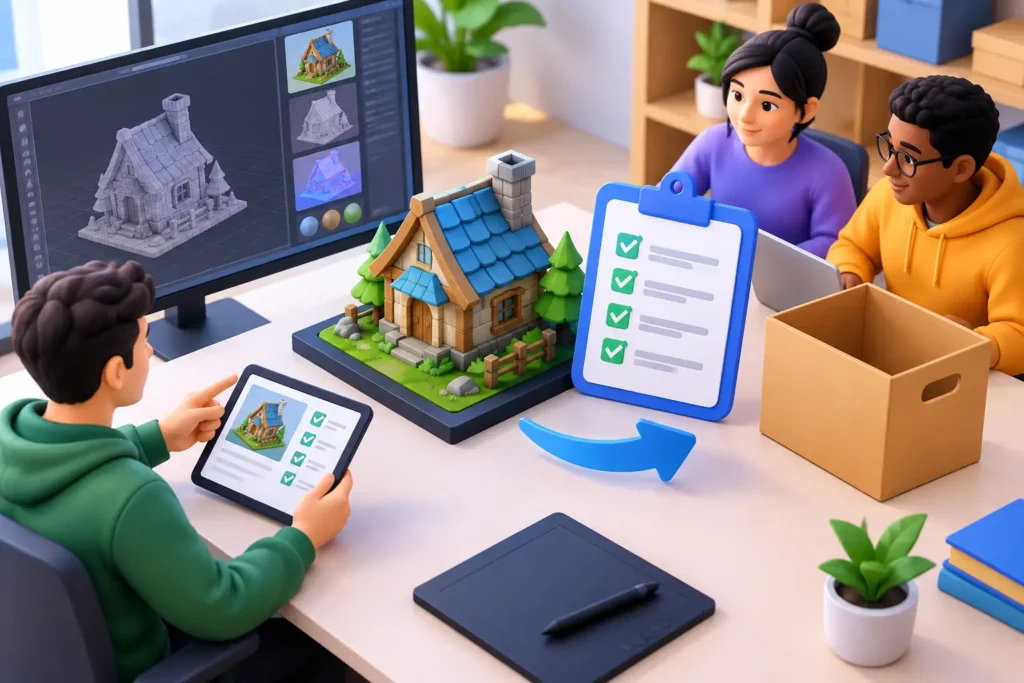
Clients should review concept direction before detailed animation begins. They should review animatics or previews before final rendering. They should confirm product accuracy before polish stages. That keeps changes proportional to the stage of work.
Not all revisions cost the same. Swapping a text card is minor. Changing product geometry after materials, animation, and lighting have been built can trigger significant rework. A production partner should make those trade-offs clear early so decision-makers understand the impact of late changes.
It also helps to centralize feedback. Conflicting comments from marketing, product, and leadership can slow approvals dramatically. One consolidated response per round keeps the project moving and protects the visual quality from fragmented direction.
When outsourcing makes the most sense
For many businesses, the real question is not whether to produce product animation. It is whether to build internally or outsource. The answer depends on volume, complexity, and deadlines.
In-house teams can be effective when product output is constant and the required skill set is already available. But many companies face uneven demand. They may need one large launch film this quarter, a set of ecommerce animations next quarter, and nothing major the month after that. Hiring full-time specialists for that pattern is often inefficient.
Outsourcing is usually the stronger option when the project requires specialized 3D talent, fast turnaround, or scale across multiple deliverables. It also reduces the management burden on internal teams that already have full calendars. A capable studio can handle modeling, rigging, animation, rendering, and finishing under one production structure, which reduces handoff friction.
That is especially useful for brands and agencies managing multiple SKUs or localized content versions. Instead of rebuilding assets from scratch, a professional pipeline can support repeatable output with consistent quality. For companies that need reliability without expanding headcount, that model is often the best fit. This is where an experienced partner such as 3D Modeling Animation Studio can support both creative goals and production capacity.
Common mistakes that weaken product animation
The most common mistake is prioritizing visual flair over communication. A beautifully rendered sequence that does not explain the product clearly will not perform the way decision-makers expect. Another frequent issue is underestimating the importance of source materials. Poor CAD files, missing references, and unclear dimensions create delays that no amount of post-production can fix.
Some teams also try to pack every feature into one animation. That usually leads to an overlong piece with diluted messaging. It is often better to create one core animation and then build shorter edits around specific use cases or audience segments.
There is also a timing mistake that shows up often in product marketing. Teams wait until launch is too close, then expect animation to function as a last-minute asset. Strong product animation needs planning time, especially if the visuals are expected to carry a major campaign.
Measuring whether the production worked
A finished animation is not the real endpoint. The real question is whether it did its job. That could mean stronger click-through rates, longer page engagement, better sales enablement, cleaner trade show communication, or fewer explanations required from the sales team.
Success should be tied back to the original production goal. If the purpose was product education, watch whether viewers understand the mechanism faster. If it was launch marketing, track whether the asset improves campaign performance against static alternatives. If it was investor communication, ask whether the animation reduced friction in presenting the concept.
The strongest product animation projects are not built as one-off visuals. They are built as reusable business assets. A well-made 3D product can support future edits, still renders, variant rollouts, and regional campaigns with far more efficiency than starting over each time.
If you are planning your next launch, sales tool, or technical explainer, treat animation as part of the production strategy from day one. The right process saves revisions, protects budgets, and gives your team a visual asset that works as hard as the product itself.