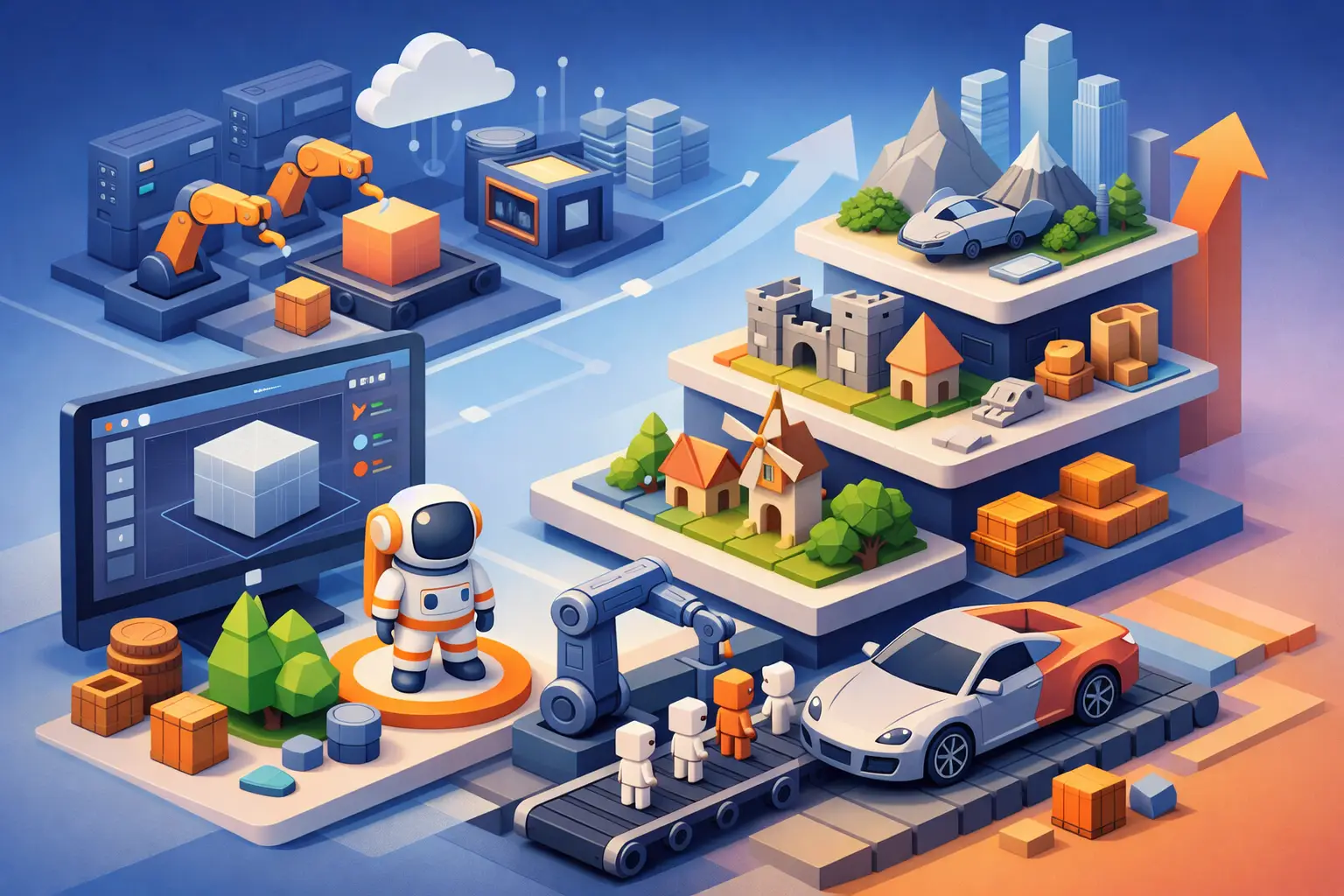
A delayed launch rarely happens because one render took too long. It usually happens because the asset pipeline breaks under pressure. A product team needs ten variants instead of two. A studio needs environment updates after layout changes. A marketing department wants the same visual asset adapted for web, video, retail, and social. That is where custom 3d asset production becomes a business decision, not just a creative task.
For companies managing deadlines, approvals, and budget control, custom work solves a problem that stock assets and fragmented freelancers often cannot. You are not just buying a model. You are investing in accuracy, consistency, version control, and production support that fits your actual commercial goals.
What custom 3d asset production really means
Custom 3D asset production is the process of creating original 3D models, textures, rigs, animations, environments, and rendered outputs for a specific brand, product, campaign, or production need. The key difference is fit. These assets are built around your dimensions, materials, technical requirements, and intended use.
That matters because the same asset may need to perform across multiple channels. A product model for eCommerce may also need to support an animation for paid media, close-up renders for packaging, and interactive views for sales presentations. If the asset is built correctly from the start, those downstream uses become faster and more cost-effective.
Custom production also gives you control over style and technical standards. In film and TV, that may mean topology built for deformation and rigging. In architecture, it may mean environment accuracy and lighting realism. In medical visualization, it often means a higher level of anatomical precision and review discipline. Different industries require different production logic.
Why businesses choose custom over stock
Stock assets can help in concepting or background use, but they often create problems once a project becomes client-facing or technically demanding. A generic asset may look acceptable in a test frame, then fail under close inspection, animation, or brand review.
The most obvious issue is uniqueness. If your product visuals look similar to competitors, the content loses value quickly. Less obvious is the technical mismatch. Many off-the-shelf assets are built for speed of sale, not for your pipeline. Geometry may be messy, textures may not match your material references, and scale may be inconsistent. That leads to rework, which erodes any savings you thought you had.
Custom 3d asset production avoids those compromises. It gives decision-makers a cleaner path from brief to final delivery, especially when campaigns evolve or production needs expand. Instead of adapting your goals to fit available assets, the assets are built to fit the goals.
Where custom asset production creates the most value
The return on custom production is strongest when visuals need to do more than look good. They need to sell, explain, persuade, or integrate into a larger production workflow.
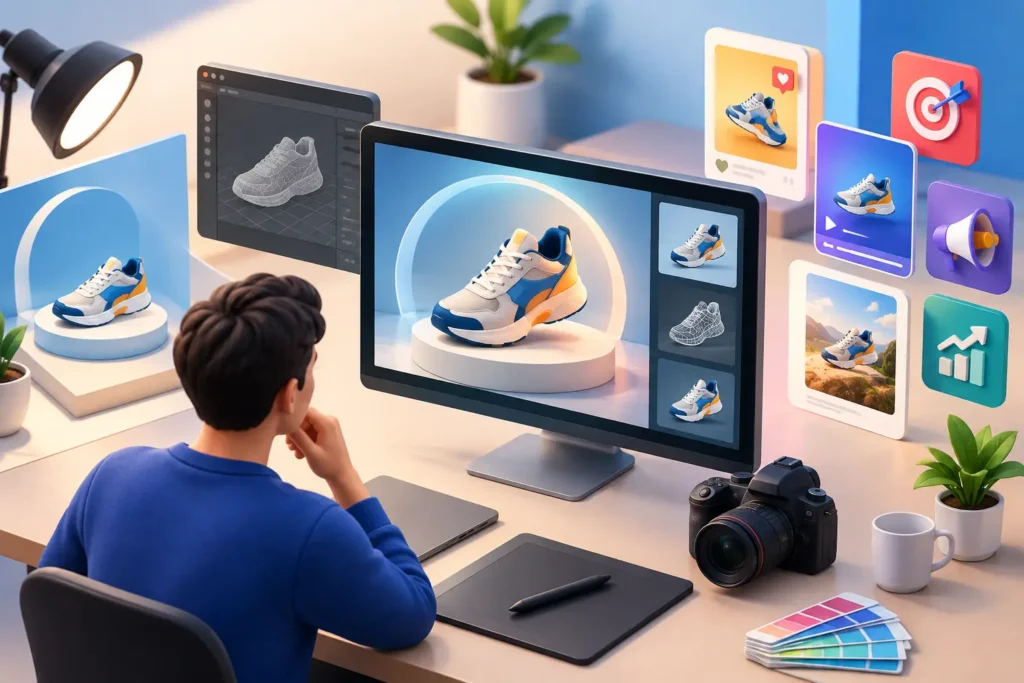
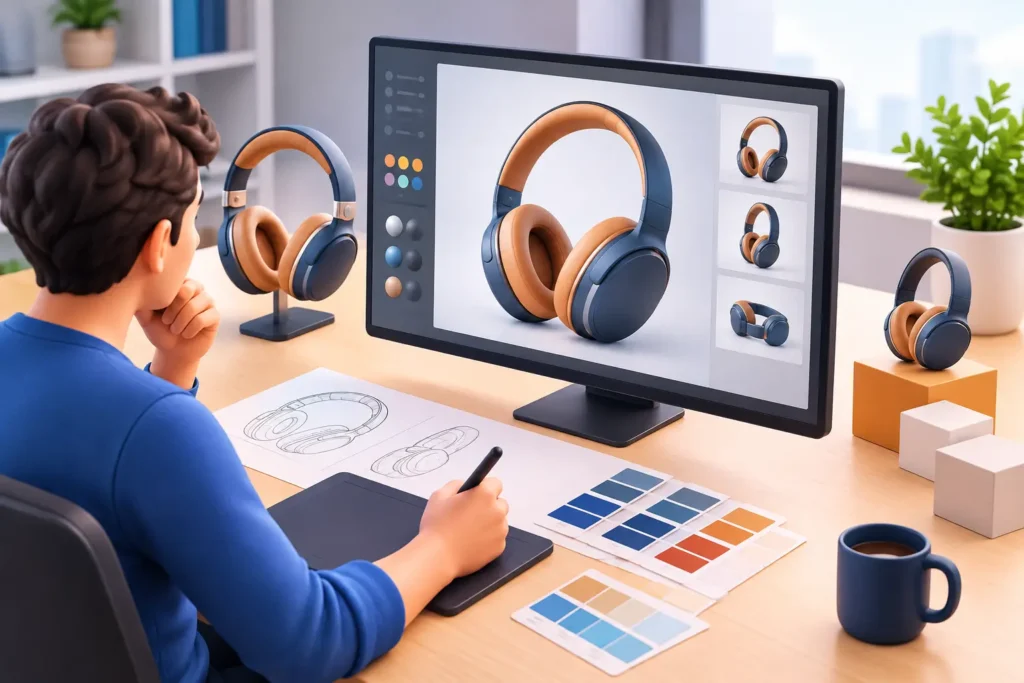
For product companies, custom assets support launch content, feature demonstrations, exploded views, packaging previews, and visual updates before physical photography is practical. This is especially useful when products are still in development or when multiple SKUs must be shown consistently.
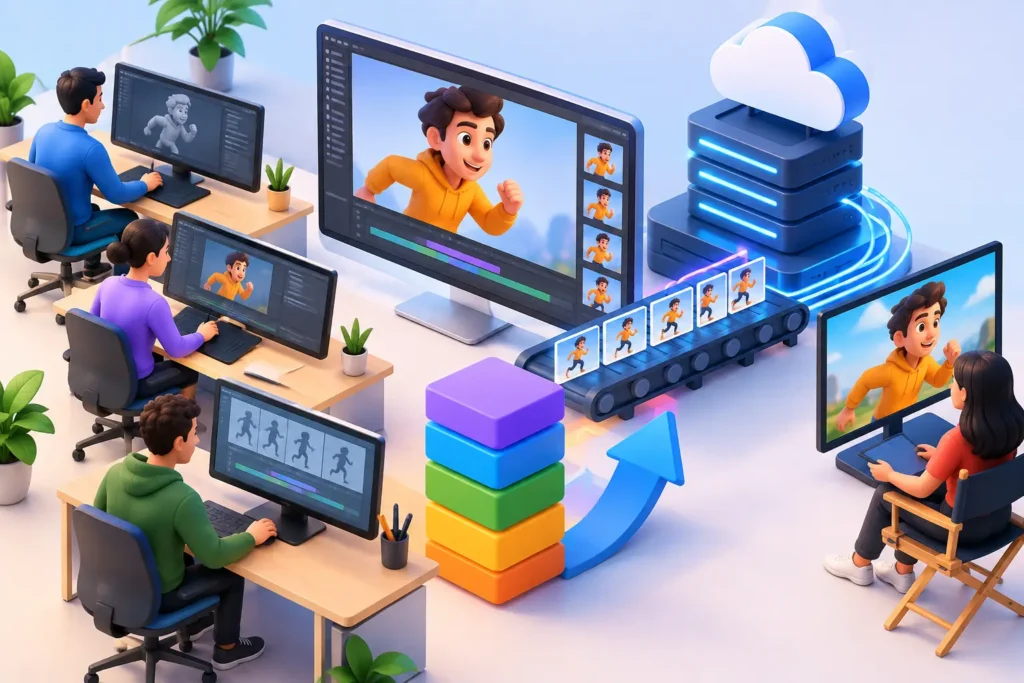
For entertainment and media teams, the value is in production continuity. Characters, props, and environments need to hold up across shots, revisions, and often multiple vendors. Strong asset planning reduces downstream issues in rigging, animation, lighting, and compositing.
For architecture and real estate, custom assets bring accuracy and presentation quality together. Fixtures, landscaping, interior details, and environmental context all affect whether a rendering feels credible enough to support design approvals or marketing.
For medical and technical sectors, precision is non-negotiable. Assets must communicate clearly, often to specialized audiences, while still meeting visual standards for presentations, training, or promotional use.
What a reliable production process looks like
The quality of the final asset depends as much on process as artistic talent. Clients often focus on portfolio samples first, which makes sense, but execution reliability is what protects timelines and budgets.
A strong production process starts with a clear brief. That includes scope, intended use, visual references, technical specifications, file requirements, milestones, and revision expectations. If this stage is rushed, the project usually pays for it later.
Briefing and technical alignment
At the start, the production team should define what the asset needs to achieve. Is it for real-time use, cinematic rendering, product marketing, or all three? Does it need rigging? Are there CAD files, sketches, or material callouts available? What level of realism is expected? Early clarity reduces preventable revisions.
Modeling, look development, and validation
Once requirements are confirmed, modeling and surfacing begin. This stage is not just about visual likeness. It is about building assets to the right standard for their intended use. A model built only for still rendering may not be suitable for animation or interactive deployment. That is where experienced outsourcing teams add value – they plan for usage, not just appearance.
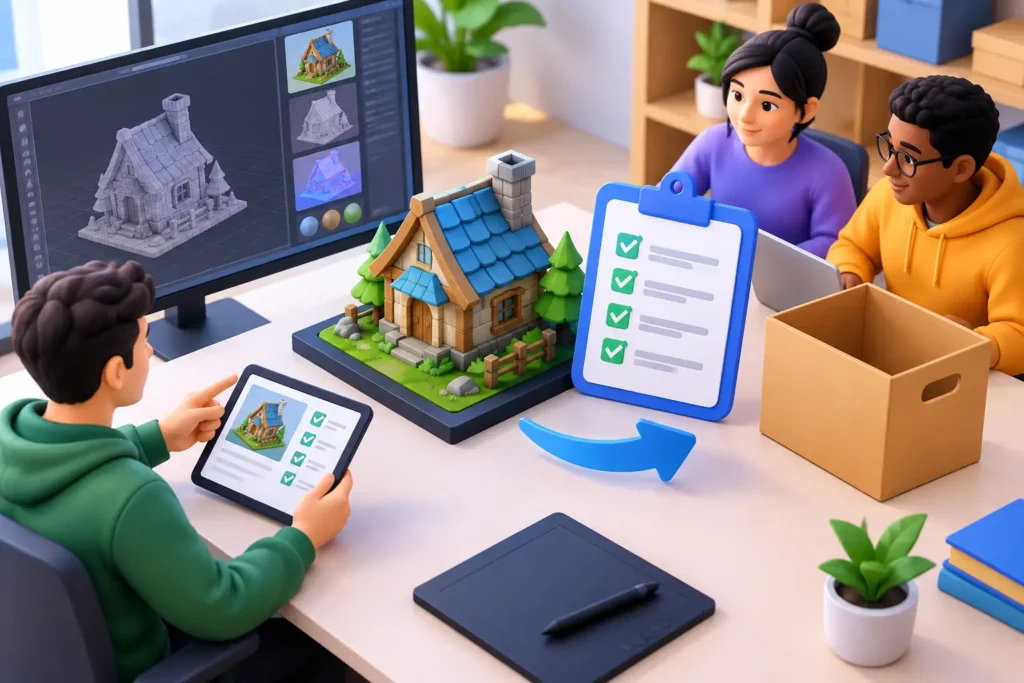
Validation checkpoints are equally important. Clients should see work-in-progress reviews before assets move too far downstream. It is faster to adjust modeling logic early than to revise final renders after approval issues surface.
Delivery built for reuse
The best custom assets are not one-off files that disappear after a campaign. They are structured for reuse, adaptation, and extension. That means organized naming, clean scene files, consistent scale, and output formats that support the next phase of production.
For growing brands and studios, this creates long-term efficiency. A properly built asset library can reduce turnaround time for future launches, updates, and regional content variations.
The trade-offs clients should understand
Custom production is not the cheapest option in every scenario, and experienced buyers know that. If you need a simple background object for a low-priority internal mockup, custom work may be unnecessary. But when the asset sits close to the camera, represents your product, or feeds a wider content pipeline, custom usually pays for itself.
The main trade-off is between upfront investment and downstream savings. Custom assets take more planning at the beginning. In return, you get better brand alignment, fewer technical issues, and more flexibility across future deliverables.
There is also a speed trade-off. A rushed custom asset can still outperform a stock asset if the team is structured well, but speed depends on scope clarity and review discipline. Fast turnaround is realistic when the pipeline is managed correctly. It becomes risky when requirements keep changing without production controls.
Why outsourcing custom 3d asset production works
For many companies, the issue is not whether they need custom assets. It is whether they can produce them consistently without overloading internal teams. That is why outsourcing remains a practical model for brands, agencies, and studios with fluctuating production demand.
An outsourced partner gives you access to specialized modelers, texture artists, riggers, animators, and post-production support without the cost of maintaining a large full-time team. It also helps reduce bottlenecks when internal departments are already stretched across campaigns or client work.
The strongest outsourcing relationships feel less like vendor management and more like production extension. You want a team that can follow brand standards, adapt to your review process, and scale output without losing quality. That combination is what makes outsourced support commercially valuable.
A capable partner such as 3D Modeling Animation Studio can also bridge multiple service needs under one production structure. That matters when a project moves from product modeling to animation, environment work, and final edits on a tight schedule.
How to evaluate a production partner
If you are buying custom 3d asset production, ask practical questions before awarding the work. Can the team show category-specific samples? Do they understand your delivery environment? How do they handle revisions, versioning, and file organization? Can they support scale if the project expands halfway through?
You should also look beyond visuals. Communication speed, quoting clarity, and milestone discipline tell you a lot about how the engagement will perform. A great render sample means little if the team cannot maintain consistency across a broader production schedule.
The best partner is not always the one promising the lowest cost or the most aggressive timeline. It is the one with the production maturity to deliver what was approved, on schedule, in the format your team actually needs.
Custom 3D assets are at their most valuable when they keep working long after the first delivery. If your next campaign, launch, or production phase is likely to demand more versions, more channels, or more speed, that is the right time to build assets with a longer view.