
A launch date moves up by three weeks. A product team suddenly needs ten new renders instead of three. A studio wins a larger contract but does not have the internal bandwidth to model, rig, animate, and finish every asset on time. This is where scalable 3D production support becomes a business advantage, not just a staffing fix.
For brands, agencies, production houses, and studios, capacity is rarely flat. Demand spikes. Revisions stack up. Specialized needs appear in the middle of active timelines. Hiring full-time talent for every peak is expensive and slow, while overloading internal teams creates quality risk. The better option is a production model that expands when needed, stays technically consistent, and supports delivery without adding operational drag.
What scalable 3D production support actually means
Scalable 3D production support is the ability to increase or reduce production resources based on project volume, timeline pressure, and technical requirements. That support can cover modeling, texturing, rigging, animation, lighting, rendering, environment creation, compositing, post-production, and editing. The key difference is that capacity is not locked to your permanent headcount.
In practice, that means you can bring in external production support for a one-off campaign, a product launch cycle, a recurring content pipeline, or a long-form animation project. You are not just buying labor. You are buying an organized production system with workflows, specialists, review stages, and delivery standards built for volume.
That matters because 3D production is rarely slowed down by creativity alone. It is slowed down by approval loops, file handoffs, version control issues, inconsistent asset prep, and a mismatch between the complexity of the work and the team assigned to it. Scalable support works when it solves those operational issues as well as the visual ones.
Why in-house teams hit a ceiling
Most internal teams are built for average demand, not peak demand. That is sensible from a budget standpoint, but it creates pressure when deadlines tighten or project scope changes. A marketing team may have a strong designer but no rigging capability. An architecture firm may need photorealistic rendering capacity for a proposal window. A production studio may need extra animation support for six weeks, not six months.
The ceiling usually shows up in one of three ways. First, turnaround times start slipping. Second, quality becomes inconsistent because the team is moving too fast. Third, senior talent ends up doing production-heavy work that should be distributed across a larger pipeline.
There is also a specialization issue. A team that excels in product visualization may not be the best fit for character animation. A group built around entertainment assets may not be ideal for medical animation, where technical accuracy carries more weight. Scalable support gives buyers access to the right capability for the work instead of forcing one internal team to cover every scenario.
The business case for scalable 3D production support
The most obvious benefit is flexibility, but the larger value is operational control. When external production support is structured correctly, it helps teams protect timelines, manage budget more predictably, and maintain output quality even as demand changes.
Cost control is part of that equation. Building a large in-house team means fixed overhead across salaries, software, hardware, management time, and recruitment. Outsourced support changes that model. You can align production spend with active workload rather than carrying excess capacity during slower periods.
Speed is another major factor. Experienced external teams already have the technical setup, artist coverage, and review workflows in place. That shortens ramp-up time. Instead of hiring, onboarding, and training for a surge in work, you can move directly into production.
There is also a strategic advantage. Internal teams can stay focused on brand direction, campaign strategy, stakeholder approvals, or core creative leadership while an external production partner handles execution at scale. That division of labor tends to work especially well when deadlines are fixed and asset counts are high.
Where scalable support delivers the most value
Not every project needs outside capacity. If the scope is small, highly experimental, or deeply embedded in confidential internal development, a compact in-house team may be the better fit. But when output volume rises, scalable support becomes much more attractive.
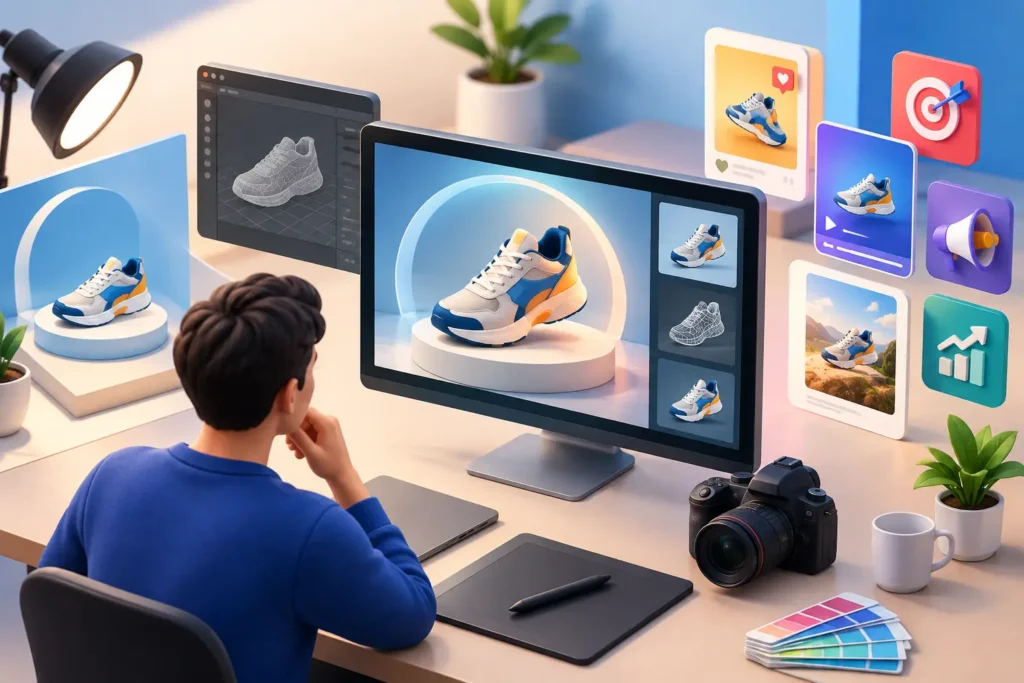
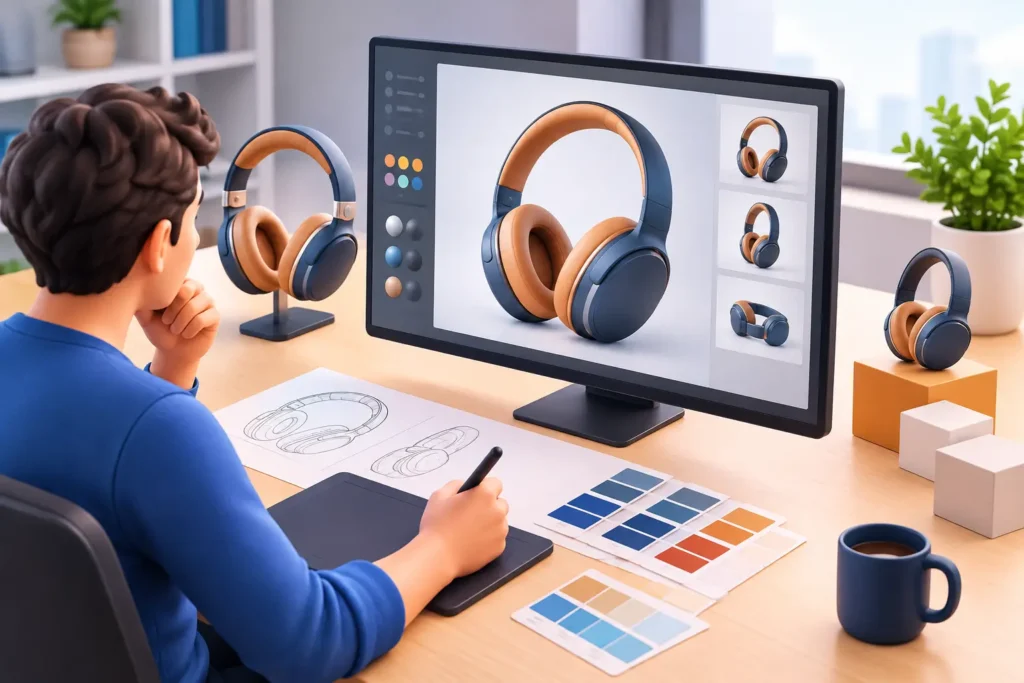
Product marketing is a common example. Brands often need multiple variants, colors, angles, and campaign-ready assets across web, video, ecommerce, and retail channels. Producing that content internally can strain even capable teams. With scalable support, the workflow can be structured around repeatability without making the visuals look generic.
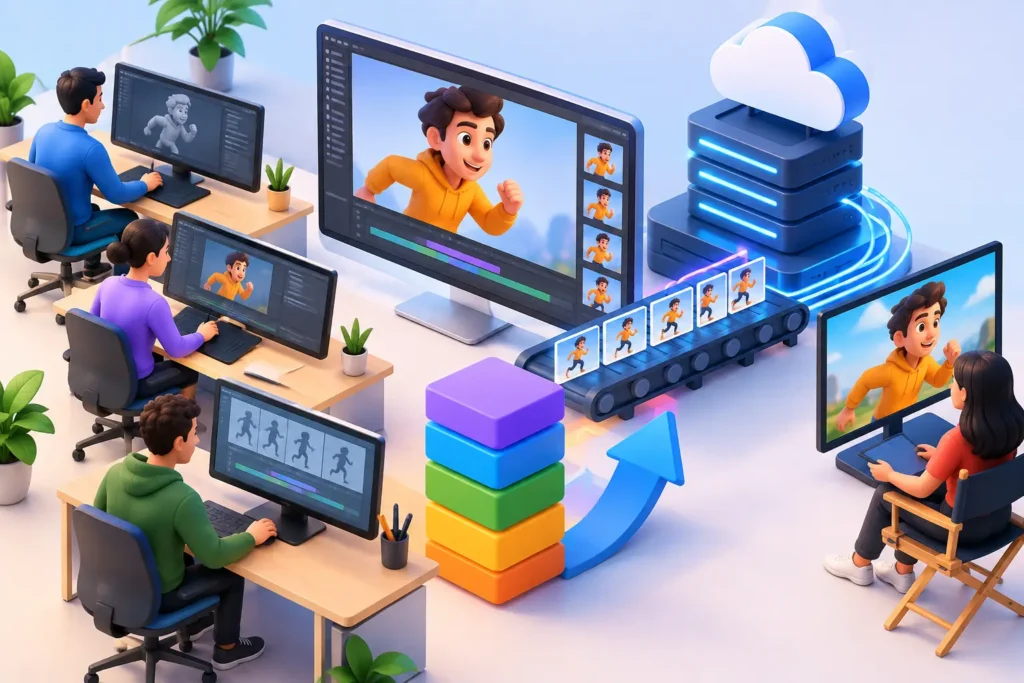
Film and TV pipelines also benefit when asset loads increase unexpectedly or post deadlines compress. Extra modeling, environment development, cleanup, or animation assistance can keep the main production schedule intact. The same applies to architecture, where bids, pre-sales presentations, and design approvals often depend on high-quality renderings delivered on tight schedules.
Medical, industrial, and technical sectors bring another layer of complexity. These projects often need accuracy, documentation alignment, and careful review. Scalable support is valuable here only if the partner has the discipline to follow technical references closely. More artists do not automatically mean better output. Process matters.
What to look for in a scalable 3D production partner
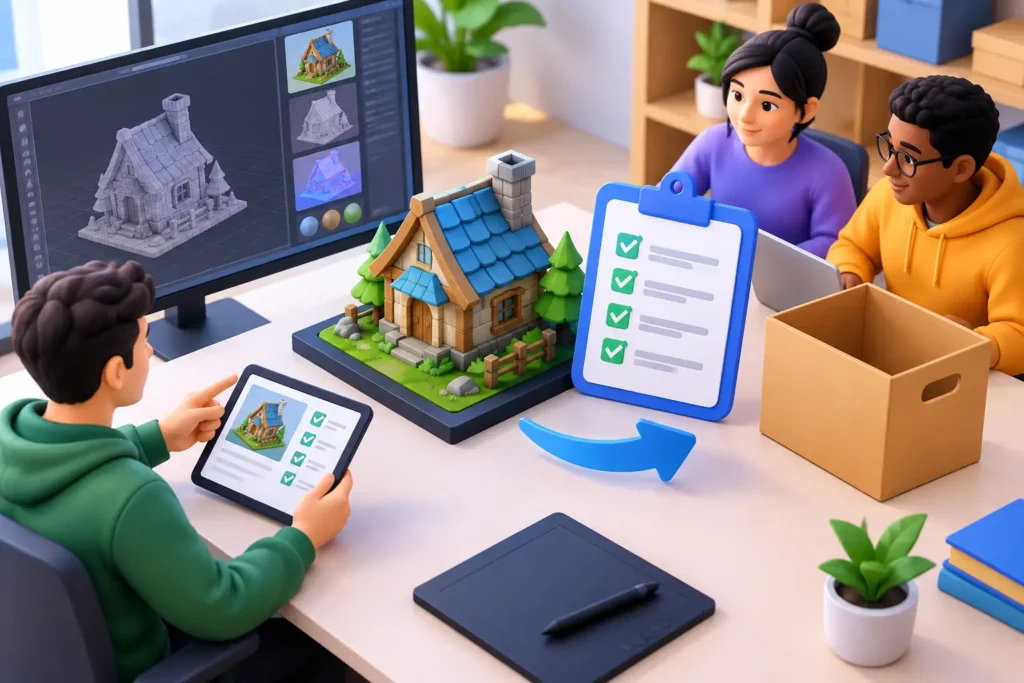
Capacity alone is not enough. The right partner needs a production framework that supports consistency as volume grows. That starts with pipeline clarity. You should know how files are received, how work is assigned, where quality checks happen, and how revisions are managed.
Technical range matters too. If a partner only covers one part of the workflow, your team may still end up coordinating multiple vendors. Full-service support reduces that friction by keeping modeling, animation, rendering, and post-production under one production structure.
Communication is another deciding factor. Fast response times are helpful, but what clients really need is dependable communication tied to milestones, review cycles, and delivery expectations. A partner should be able to explain status clearly, flag risks early, and adapt when project priorities shift.
Quality control is where many outsourcing relationships either succeed or fail. Ask how standards are maintained across artists and across phases of production. Look for evidence of repeatable review systems, lead oversight, and the ability to match an existing visual style. If your brand or studio has established guidelines, the external team should work within them, not around them.
How scalable 3D production support works best
The strongest results come from treating external support as an extension of production, not as a disconnected vendor. That means clear briefs, shared reference materials, realistic review windows, and agreed technical standards from the start.
It also means matching the engagement model to the workload. Some clients need project-based support for a defined campaign or animation sequence. Others need ongoing monthly capacity because their content pipeline never fully stops. Neither model is better in every case. It depends on how predictable your demand is and how much internal production management you want to retain.
A reliable partner should be able to scale in stages. Maybe you begin with environment modeling or product renders, then expand into animation and post-production once confidence is established. That phased approach often reduces risk while giving both sides time to refine workflows.
For companies that need a dependable outsourced team, 3D Modeling Animation Studio fits this model well by combining broad service coverage with a production-focused approach built around quality, speed, and flexible execution.
Trade-offs to consider before you scale
Scalability is not the same as instant output. Even experienced teams need onboarding, references, brand context, and approval structure. If a client provides limited direction and expects perfect first-pass delivery, the process will slow down no matter how strong the vendor is.
There is also a balance between speed and complexity. If a project requires heavy R&D, frequent creative changes, or evolving design language, adding more production capacity will not solve every issue. In those cases, alignment and decision-making speed matter as much as artist bandwidth.
Security, file management, and handoff requirements may also affect the setup. Enterprise buyers, regulated sectors, and entertainment projects with strict confidentiality standards often need tighter controls. A serious production partner should be prepared to work within those constraints, but it is best to define them early.
Scalable support as a growth tool
The companies that benefit most from scalable 3D production support are usually not looking for temporary help. They are looking for a smarter way to grow output without building a larger internal machine than they actually need.
That is the real value. You gain access to specialized talent, structured execution, and flexible capacity while keeping your internal team focused on the highest-value work. When the partner is technically strong and operationally disciplined, outsourced production stops feeling like a workaround and starts functioning like a competitive advantage.
If your pipeline is under pressure, the right move is not always to hire more people. Sometimes the better decision is to build a production model that can expand with demand, protect quality under deadline, and give your team room to operate at its best.