
A product launch is six weeks away. The marketing team needs a polished 3D explainer, the product is still changing, and internal stakeholders expect approval-ready visuals on a fixed budget. In that situation, the freelance vs studio animation decision is not simply about finding the lowest hourly rate. It determines who owns production risk, how quickly feedback becomes revisions, and whether the final work is ready for commercial use.
A strong freelancer can be the right answer for a focused assignment. A capable animation studio is often the better choice when a project needs multiple disciplines, formal production control, or room to scale. The best option depends on the scope, timeline, internal resources, and cost of a missed deadline.
Freelance vs Studio Animation: The Core Difference
A freelance animator is usually an individual specialist hired to complete a defined piece of work. They may excel at character animation, motion graphics, product rendering, rigging, compositing, or another specific discipline. The client communicates directly with the person doing the work, which can make the relationship fast and flexible.
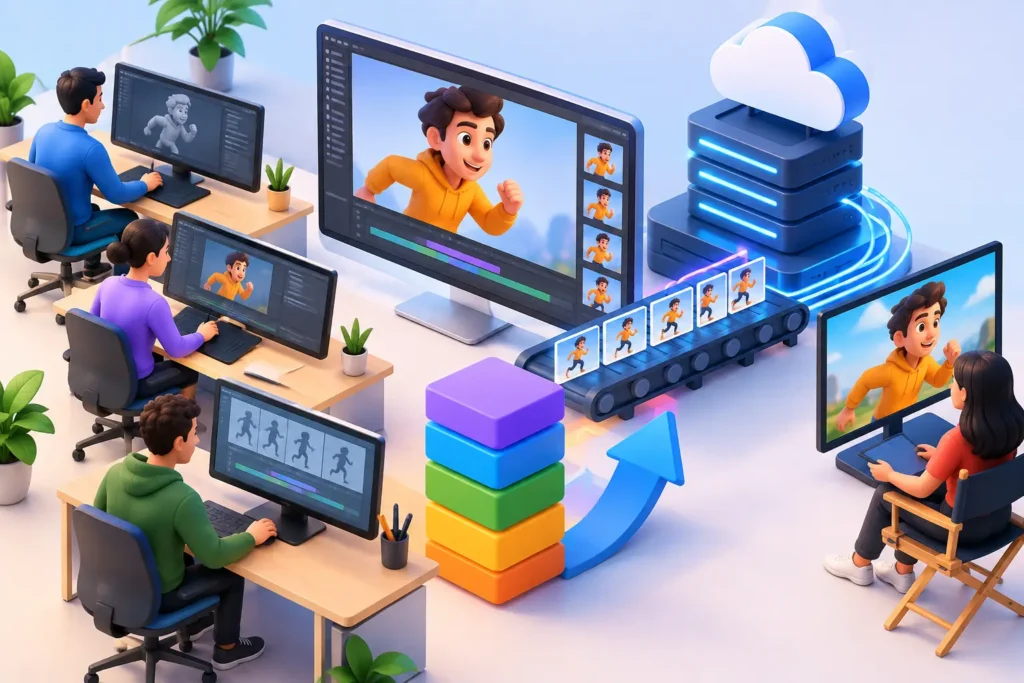
A studio provides a managed production team. Instead of relying on one person to cover every need, the studio can assign modelers, texture artists, riggers, animators, lighting specialists, editors, and project managers according to the project plan. That structure is designed to support complex work and protect delivery when requirements change.
Neither model is automatically better. The question is whether the project needs individual expertise or a production system.
When a Freelancer Is the Best Choice
Freelancers are a practical option when the brief is narrow, the creative direction is already clear, and the project does not depend on several connected production stages. For example, a production house may need an experienced animator to support an existing pipeline, or a marketing team may need a short social-media animation built from approved assets.
Direct access is a major advantage. Feedback can move quickly because there are fewer people between the client and the artist. Clients can often hire for a very specific style, software skill, or industry background. If a freelancer has already worked within your workflow, they may start immediately without a lengthy onboarding process.
Cost can also be attractive for small assignments. A freelancer generally has lower overhead than a studio, so the initial quote may be lower. For a one-off task with stable inputs, that can make financial sense.
The trade-off is capacity. One person can only work so many hours, and a sudden change in scope may create pressure quickly. If the freelancer becomes unavailable, gets booked on another assignment, or encounters a technical issue outside their specialty, the client must find a solution. This does not mean freelancers are unreliable. It means the project has fewer built-in contingencies.
Best-fit freelance projects
Freelance support tends to work well for targeted animation fixes, single shots, overflow work within an established studio pipeline, simple motion graphics, or a clearly defined render task. It is particularly effective when the client already has a producer, technical lead, source files, brand guidelines, and a reliable review process in place.
When a Studio Is the Better Production Partner
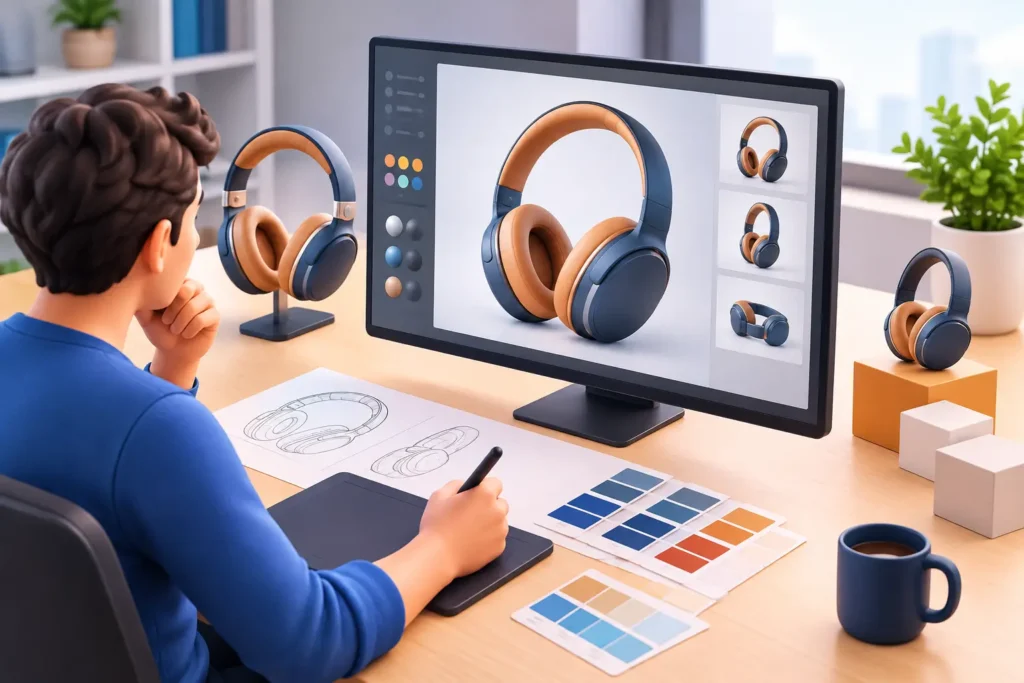
Studio animation becomes more valuable when the work involves dependencies. A product animation may require CAD cleanup, modeling, materials, lighting, animation, simulation, voiceover coordination, editing, and final delivery in several formats. A medical animation may require technical accuracy, clear visual storytelling, controlled reviews, and careful handling of scientific feedback. Architectural visualization may need environment modeling, camera work, rendering, and revisions tied to design changes.
Managing these parts through separate freelancers can work, but it shifts coordination onto the client. Someone must set standards, track versions, resolve handoffs, control the schedule, and make sure the final animation feels like one coherent piece. A full-service studio takes responsibility for that production layer.
For decision-makers, this is often the central advantage. You are not just buying animation hours. You are buying a team, a workflow, quality control, and accountability around delivery.
Scale without adding headcount
Demand rarely arrives at a convenient pace. A brand may need one product video this month, a launch campaign next month, and a larger asset library after that. Hiring internally for every spike is expensive and slow, while relying on a single freelancer can leave the team exposed when workload increases.
A studio can scale resources up or down based on the approved scope. That gives companies access to specialist capabilities without carrying permanent headcount for every discipline. For agencies and production houses, it also creates a practical way to take on more work without overloading internal artists.
Stronger controls for complex deliverables
Complex animation projects need more than creative skill. They need clear milestones, review rounds, file management, technical checks, and a defined approval path. A studio can establish a production schedule from concept through final render, with owners for each stage and visibility into progress.
This matters when several stakeholders are involved. Marketing may focus on brand accuracy, product teams may check features, legal may review claims, and creative leaders may evaluate the visual direction. A managed process prevents late-stage feedback from becoming uncontrolled rework.
Cost: Look Beyond the Initial Quote
Comparing a freelance rate with a studio quote can be misleading if the scope is not identical. A freelancer may quote only for animation, while a studio quote may include pre-production, modeling, rigging, rendering, compositing, editing, project management, and revision coordination. The studio number may appear higher because it reflects the complete delivery requirement.
The more useful comparison is total project cost. Consider the time your internal team will spend briefing artists, organizing files, reviewing work, solving technical issues, and coordinating additional vendors. Also consider the cost of a missed launch date, inconsistent brand execution, or having to rebuild assets because they were not created for future use.
Studios are not always the lowest-cost option for a small task. They are often the more cost-effective option when fragmented production would create delays or require significant client-side management. Freelancers can offer excellent value when their role is tightly defined and the surrounding workflow is already covered.
Questions to Ask Before You Choose
Start with the production scope. Does the project require only animation, or does it need assets built from the ground up? If you need modeling, rigging, environments, simulations, rendering, and post-production, a studio can reduce the number of vendors and handoffs.
Then assess schedule risk. Is the deadline flexible, or does it support a product launch, trade show, investor presentation, broadcast delivery, or campaign date? A freelancer may be able to move quickly on a small job. A studio is better positioned to redistribute work if the timeline tightens or additional deliverables are approved.
Review the approval structure as well. One creative director giving timely feedback is very different from a project involving marketing, engineering, compliance, and executive stakeholders. The more reviews involved, the more valuable formal project management becomes.
Finally, consider whether the work is a one-time asset or the beginning of an ongoing content need. If you expect new variants, updated products, localization, additional camera angles, or a larger campaign, choose a partner that can preserve project knowledge and expand the asset pipeline without starting over.
A Hybrid Model Can Be the Smartest Move
The choice does not have to be absolute. Many businesses use freelancers for specialist support while relying on a studio for production leadership and quality control. A studio may manage the broader project, then add a niche specialist when a particular style or technical requirement calls for it.
This approach works especially well for agencies and internal creative teams with existing talent but limited capacity. It preserves flexibility while giving the project a clear production owner. The key is defining who controls schedules, files, approvals, and final technical delivery before work begins.
Choose the Partner That Matches the Risk
For a contained task with clear assets and a stable brief, an experienced freelancer can deliver excellent work efficiently. For multi-stage visuals, compressed timelines, or commercially critical campaigns, studio animation provides the structure needed to protect quality and delivery.
3D Modeling Animation Studio supports businesses that need that added production capacity, from technical 3D modeling and rigging through animation, rendering, editing, and final asset delivery. The goal is not to make every project larger than necessary. It is to apply the right team and process to the result your business needs.
Before selecting a provider, write down what cannot fail: the deadline, visual standard, technical accuracy, brand consistency, or ability to scale. That priority will usually make the right production model clear.