Deadlines slip fast when internal teams are stretched, product launches move up, or a campaign suddenly needs ten more visuals than planned. That is usually the point when buyers start asking how outsourced 3d modeling works and whether it can deliver the same control, quality, and speed as an internal team. In practice, the right outsourcing partner does not replace your standards. It extends your production capacity without forcing you to build a larger department.
For brands, studios, architects, and production companies, outsourced 3D modeling is a structured production process. You define the business goal, share source materials, align on scope, and an external team handles modeling, review rounds, technical cleanup, and final delivery. The value is not just labor savings. It is access to specialized skill sets, predictable workflows, and scalable output when project demand changes.
How outsourced 3D modeling works in real projects
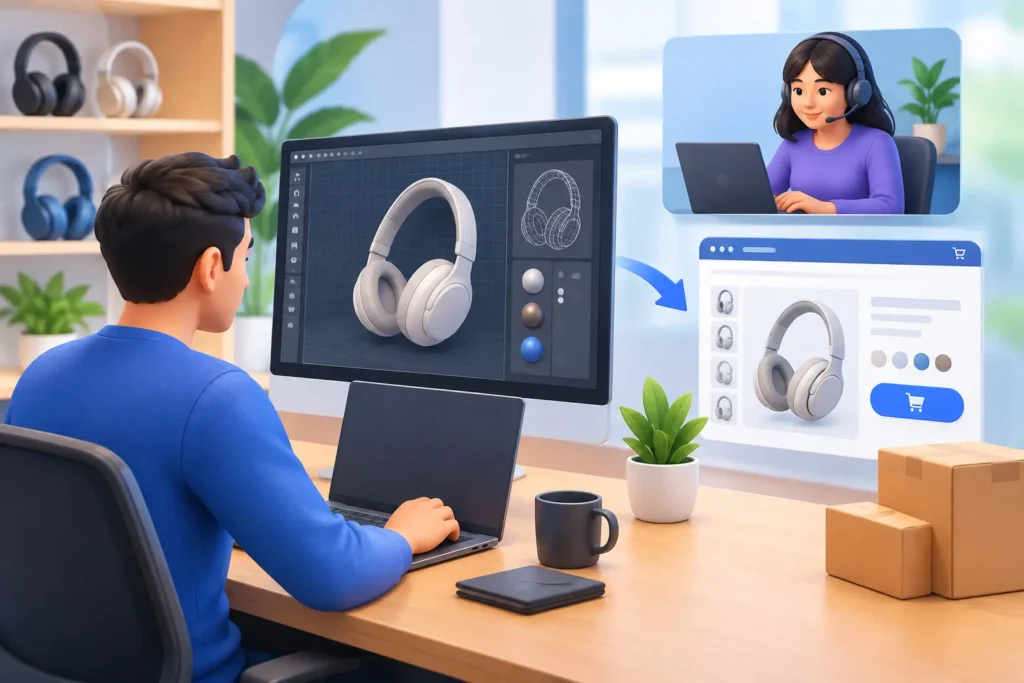
The process usually starts with a brief, not a model. A strong outsourcing engagement begins when the client explains what the asset needs to do. That could mean selling a product, supporting an animated sequence, visualizing an unbuilt space, or creating medically accurate visuals for a highly specific audience. The more clearly the intended use is defined, the better the production team can make decisions about detail level, topology, texture quality, file format, and turnaround.
After that, the client shares available inputs. These may include CAD files, sketches, reference photography, mood boards, measurements, technical drawings, existing brand assets, or animation notes. A capable external team reviews those materials and identifies what is complete, what is missing, and what will affect schedule or cost. This step matters because 3D modeling is rarely slowed down by modeling alone. Delays usually come from incomplete references, unclear approvals, or shifting scope.
Once scope is confirmed, the production team sets milestones. In most professional workflows, that means agreeing on deliverables, timeline, revision rounds, and communication points before modeling begins. For a single product visualization asset, milestones may be simple. For a film environment, architectural package, or large-volume asset library, they become more detailed and often include phased approvals for blockout, refined model, textures, rig-ready mesh, and final export.
The production stages behind outsourced 3D modeling
The first modeling pass often begins with a blockout or base mesh. This is where proportions, major shapes, scale, and structure are established. It is not the polished final asset, and that is the point. Early review at this stage prevents expensive rework later. If the silhouette, dimensions, or layout are wrong, the team can correct them before spending time on fine surface detail.
From there, the model moves into refinement. Depending on the project, this can include hard-surface detailing, organic sculpting, topology optimization, UV mapping, and preparation for texturing, rigging, or rendering. Commercial product work often demands precision and clean geometry. Animation assets may require edge flow that supports deformation. Architecture assets may prioritize realism, scale accuracy, and scene efficiency. Medical or technical visuals usually require close collaboration around correctness, not just appearance.
Texturing and materials may be included in the outsourced scope or handled separately, depending on the client pipeline. The same is true for rigging, animation, lighting, and rendering. That is why experienced vendors define boundaries early. Some clients need only production-ready models. Others want a full-service team that can take assets through final rendered output. Neither approach is better by default. It depends on your internal capacity and how much of the pipeline you want to own.
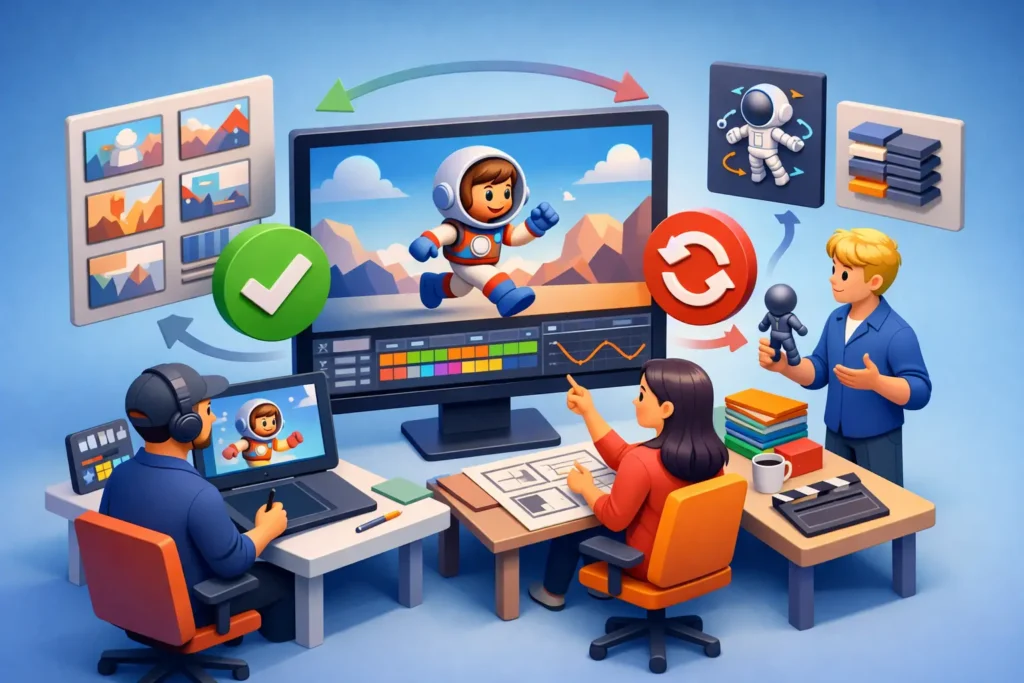
Review and revision are built into the workflow. A professional outsourcing partner does not wait until final delivery to show progress. They share checkpoints, collect feedback, and revise against agreed criteria. This keeps production moving and gives the client visibility without creating constant interruptions. The best engagements strike a balance: enough oversight to protect quality, enough autonomy to keep work efficient.
What clients need to provide for better results
Outsourcing works best when the client is decisive and organized. That does not mean you need a perfect brief on day one, but you do need a clear objective and a point person who can consolidate feedback. Conflicting stakeholder comments are one of the most common reasons outsourced projects stall.
At minimum, most projects benefit from reference images, dimensions, intended output use, preferred software or file formats, and examples of what success looks like. If the model will be animated, say so early. If it must match manufacturing specs, that should shape the workflow from the start. If it needs to run in real-time applications, polygon budgets and optimization standards should be defined up front.
This is where experienced studios create real value. They do not just wait for instructions. They ask the technical questions that protect timeline and output quality. That level of process control is often what separates a low-cost freelancer arrangement from a reliable production partnership.
How quality control is handled in outsourced pipelines
A common concern is whether outsourcing reduces quality. It can, if the engagement is poorly scoped or handed to a team without production discipline. But in a managed pipeline, quality control is often stronger because it is formalized.
Professional teams usually review geometry cleanliness, scale consistency, naming conventions, UV quality, texture alignment, and export readiness before delivery. For animation and VFX pipelines, they may also check topology flow, rig compatibility, and scene organization. For architecture or product marketing, the focus may shift toward realism, detail accuracy, and render-readiness.
Quality control also depends on matching the team to the project. A studio skilled in stylized characters is not automatically the best fit for medical devices or engineered products. The strongest outsourcing relationships are built around relevance, not just availability. Industry experience shortens onboarding, improves communication, and reduces revision cycles.
The business case for outsourcing 3D modeling
The biggest advantage is flexibility. Internal teams are expensive to build and difficult to scale quickly. Outsourcing gives companies access to talent when they need it, without carrying fixed overhead between projects. That matters for product companies with seasonal launches, agencies with fluctuating campaign volume, and studios with uneven production peaks.
Speed is another major factor. A specialized external team can often start faster than a company can recruit, onboard, and manage additional staff. That does not mean every outsourced project is instant. Complex work still takes time. But the ability to ramp production without expanding internal headcount is a serious operational advantage.
There are trade-offs. Outsourcing requires process clarity, communication discipline, and trust in an external partner. If your internal team gives fragmented feedback or changes direction repeatedly, outsourcing will not solve that problem. It may expose it faster. The model works best when expectations, approvals, and deliverables are managed with the same seriousness as any other production function.
How to choose the right outsourced 3D modeling partner
The first question is not price. It is fit. Can the team handle your type of work, your technical requirements, and your production pace? Ask how they manage briefs, revisions, file delivery, and quality checks. Review samples that are relevant to your industry, not just visually impressive in general.
It is also worth looking at communication style. Strong vendors are transparent about timelines, limitations, and dependencies. They do not overpromise just to win the project. They explain how the work will be managed, what inputs they need, and where revisions are likely to affect budget or delivery.
For companies that need more than one service line, a broader production partner can simplify execution. A team that handles modeling, rigging, animation, rendering, and post-production can reduce handoff friction and keep visual consistency tighter across the project. That is one reason many clients work with a full-service provider like 3D Modeling Animation Studio instead of coordinating multiple niche vendors.
Why outsourced 3D modeling keeps growing
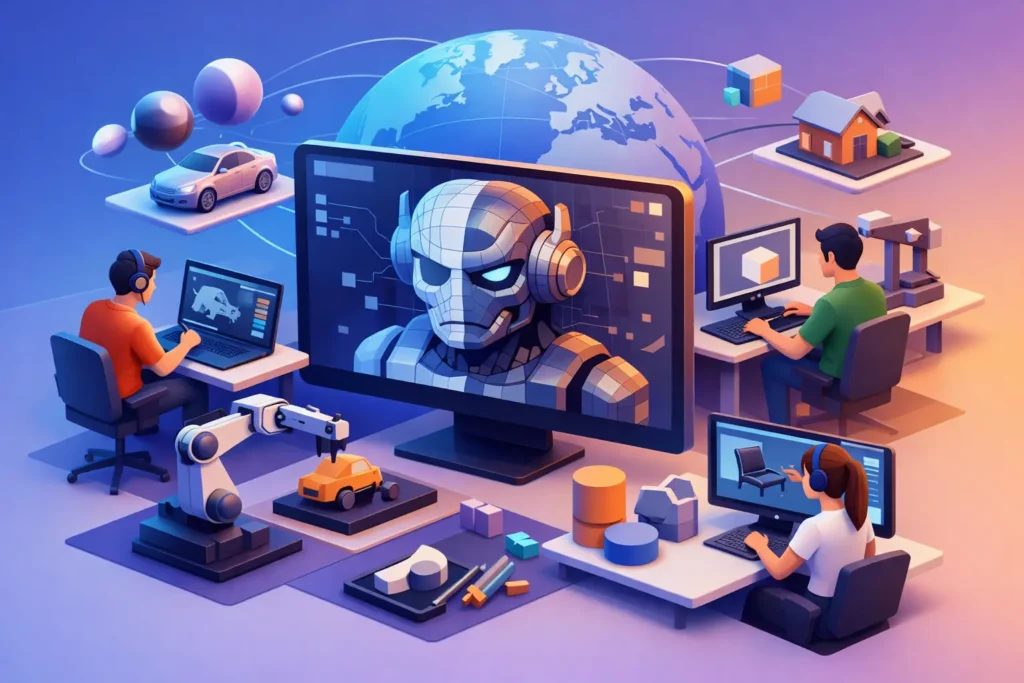
Demand for high-quality visual content keeps expanding across marketing, entertainment, architecture, e-commerce, and technical communication. At the same time, businesses want leaner operations and faster output. Outsourcing fits that reality because it turns specialized 3D production into an on-demand capability rather than a permanent staffing burden.
That does not make it a shortcut. Good outsourced 3D modeling still depends on clear objectives, strong references, structured review, and a team with real production experience. When those pieces are in place, outsourcing becomes more than a staffing fix. It becomes a practical way to increase output, protect quality, and keep projects moving when timelines get tight.
If you are evaluating external 3D support, the right question is not whether outsourcing can work. It is whether your next partner has the process, technical range, and reliability to make your workflow stronger from the first asset onward.