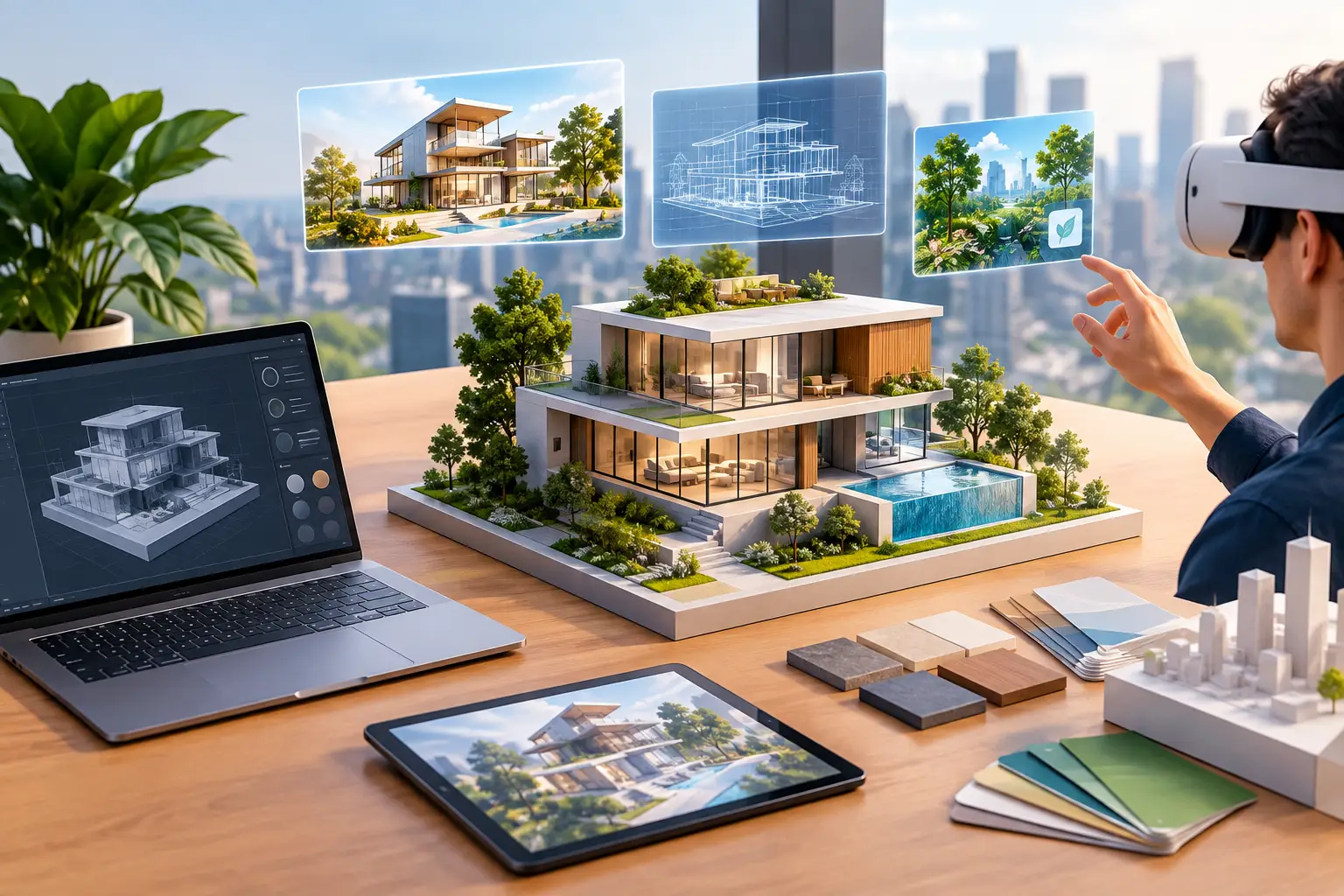
A photorealistic exterior image is no longer enough to win a project, secure planning approval, or help buyers commit with confidence. The top architectural visualization trends for 2026 are shifting the role of CGI from a final presentation asset to a working commercial tool. Developers, architects, and marketing teams now need visuals that explain a place clearly, build emotion, and stay flexible as decisions change.
That shift matters because the pressure on project teams is practical. Design schedules are compressed, stakeholder groups are larger, and presales campaigns often begin before every finish, landscape detail, or unit configuration is finalized. The best visualization strategy is not simply the one with the most detail. It is the one that gives the right audience the right level of clarity at the right stage of the project.
Top Architectural Visualization Trends Changing Project Delivery
Real-time visualization for faster decisions
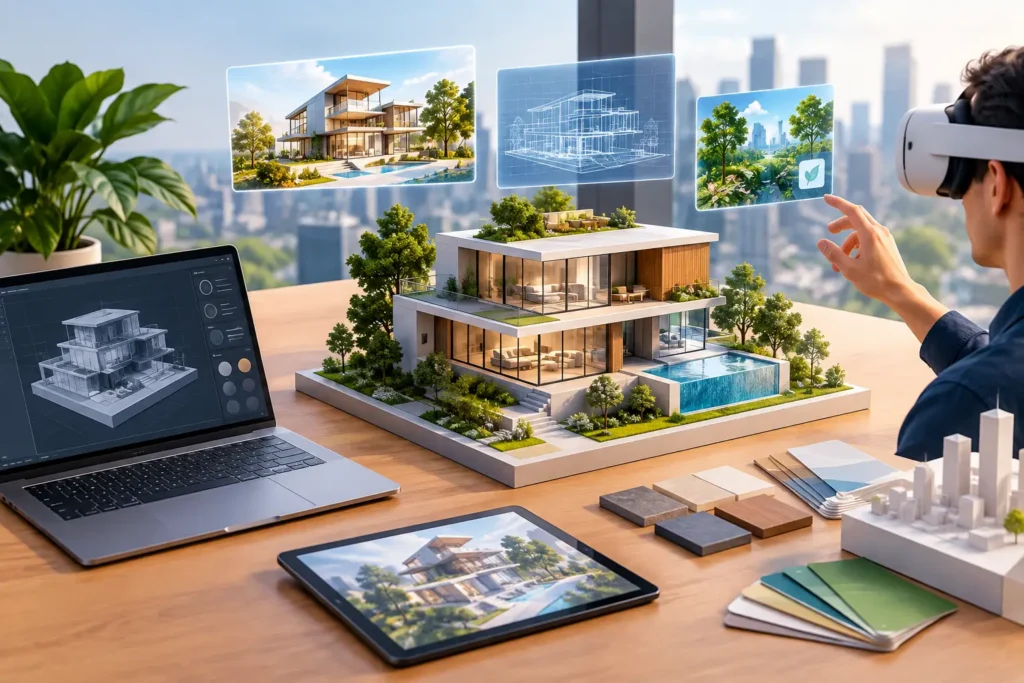
Real-time rendering is becoming a core review tool rather than a novelty reserved for presentations. With a properly prepared 3D environment, architects, developers, and investors can test material options, lighting conditions, furniture packages, and camera views during a live session. This shortens the feedback cycle and makes design conversations more specific.
The commercial advantage is clear: teams spend less time interpreting markups and more time resolving decisions. A client can point to a façade panel, a lobby finish, or a landscape zone and see alternatives immediately. For large developments with repeatable unit types or multiple amenity spaces, that efficiency can compound quickly.
Real-time output does involve a trade-off. A live model must be built with optimization in mind, and it may not deliver the same frame-by-frame refinement as a high-end offline-rendered hero image. Many successful projects use both: real-time content for reviews and interactive sales experiences, then carefully art-directed stills and films for campaign assets.
Cinematic storytelling over isolated hero images
Single exterior renders still have a role, especially for billboards, landing pages, and investor decks. But buyers increasingly expect to understand how a property feels across a day, a season, and a sequence of spaces. That is driving demand for architectural films that move from the neighborhood to the arrival experience, through interiors, amenities, and private views.
The strongest films are not just virtual camera tours. They establish a narrative around the intended customer. A multifamily campaign may show the morning commute, shared workspace, rooftop gathering, and evening city view. A hospitality project may focus on arrival, service, atmosphere, and the transition from public spaces to private rooms.
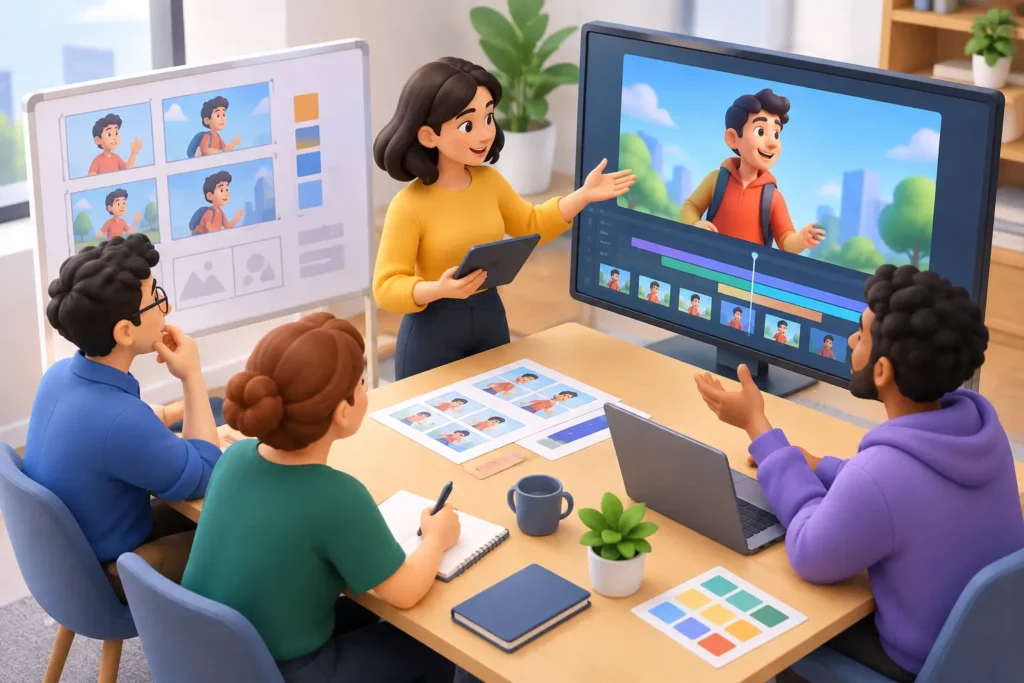
This approach requires discipline. Excessive motion, dramatic effects, or generic lifestyle scenes can distract from the design and make the asset feel dated. The production team should define the audience, the key selling moments, and the desired emotional pacing before animation begins. Storyboards and camera-path approvals prevent expensive revisions later.
People, activity, and believable context
Architectural visualization is becoming more human because empty spaces do not answer the questions buyers actually ask. Is the plaza active but comfortable? Does the retail frontage feel inviting? Can a family imagine using the shared courtyard? Does the office support focused work as well as collaboration?
High-quality people, vehicles, landscaping, weather, and neighborhood context make these answers more immediate. They also help decision-makers evaluate scale and circulation. A carefully populated scene can reveal whether an entrance feels visible, whether public seating is well placed, or whether a street-level experience supports the project’s positioning.
Believability matters more than density. A sparse but purposeful scene often works better than a crowded image filled with repeated figures. The right level of activity depends on the asset’s purpose. A leasing image may benefit from aspirational energy, while a planning visualization should remain accurate, transparent, and easy to assess.
Digital twins and data-informed visualization
Visualization is moving closer to the project data behind it. Digital twins, BIM coordination models, GIS information, and product specifications can inform visual outputs that are more accurate and easier to update. For teams managing complex developments, this can reduce the risk of marketing assets drifting away from the current design.
The value is not that every BIM model should become a finished rendering automatically. Raw project data rarely arrives in a condition that supports a premium marketing image. Geometry often needs cleanup, materials need creative direction, and the environment needs to be built for the camera. The advantage comes from creating a reliable bridge between technical data and visual production.
For developers, this can support phased launches, option comparisons, construction communications, and sales collateral with fewer duplicated modeling efforts. For architects, it can strengthen coordination between design intent and client-facing presentation. The process works best when teams agree early on which files are the source of truth and who approves changes.
AI-assisted workflows with human art direction
Artificial intelligence is influencing concept development, texture research, image enhancement, and repetitive production tasks. Used well, it can accelerate early exploration and help teams generate options before committing to a detailed 3D build. It can also assist with tasks such as background development, vegetation variation, and selected post-production work.
However, AI-generated architecture should not replace controlled 3D production when accuracy, approvals, or brand consistency are on the line. It can introduce incorrect structure, impossible details, inconsistent furniture, or misleading context. Those risks are particularly serious for presales, planning, healthcare, hospitality, and high-value commercial projects.
The most dependable model is AI-assisted, artist-led production. Skilled 3D artists, architects, and compositors still need to control geometry, materials, lighting, camera composition, and final quality assurance. AI can increase speed, but technical precision and visual accountability remain human responsibilities.
Immersive Sales Experiences Become More Selective
Virtual reality, augmented reality, and interactive configurators continue to be valuable, but they are becoming more targeted. The question is no longer whether an immersive experience looks impressive. The question is whether it helps a specific sales, review, or stakeholder task happen faster.
A virtual walkthrough can be highly effective for an unbuilt luxury residence, a large amenity program, or a project selling to remote buyers. An interactive unit selector can help a sales team explain floor plans, views, and finish options without relying on static PDFs. Augmented reality can support physical marketing suites by placing a building model or interior scheme into a real-world setting.
Not every project needs every format. Immersive content requires planning, technical testing, and ongoing support across devices. If the audience primarily needs campaign-ready images for a fast launch, a focused stills-and-animation package may provide a better return. Production should follow the buyer journey, not the latest technology headline.
Sustainability visualization with proof behind the image
Sustainability is increasingly part of how projects are marketed and evaluated. Visualization can make passive shading, daylight access, green roofs, low-impact landscape design, transit connections, and material choices easier to understand. This is especially useful when environmental benefits are real but difficult to communicate through plans and specifications alone.
The key is to avoid greenwashing through imagery. Adding abundant vegetation to a render does not prove a project performs sustainably. When a visual highlights environmental features, it should align with the design documentation and approved project claims. Accurate storytelling builds trust with investors, purchasers, public agencies, and communities.
What These Trends Mean for Outsourced Production
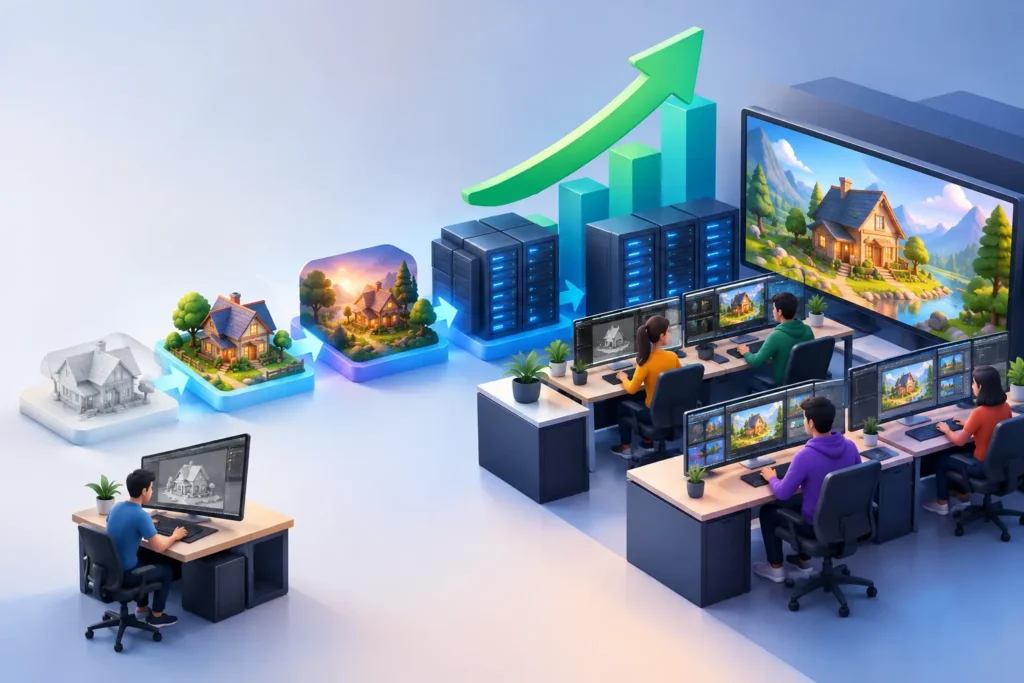
For firms with limited in-house visualization capacity, the growing range of deliverables can create a resource challenge. A project may require still renderings, animation, environment modeling, post-production, interactive content, and multiple revisions across design stages. Hiring for every specialty internally is rarely efficient when demand changes from project to project.
A capable outsourced production partner provides scalability without forcing the client to compromise on workflow control. The right team can work from CAD, BIM, sketches, reference images, and brand guidelines, then establish clear checkpoints for modeling, materials, camera views, lighting, and final output. That structure protects schedules while leaving room for creative decisions.
At 3D Modeling Animation Studio, architectural visualization is approached as a production pipeline, not a one-off image request. The goal is to deliver assets that are technically precise, commercially useful, and consistent across the full campaign.
Before commissioning the next visualization package, identify the single decision each asset must support. A well-defined purpose gives the production team a clearer brief, keeps revisions focused, and turns compelling imagery into a tool that moves the project forward.