A character can have a detailed model, premium textures, and a technically sound rig, yet still feel unconvincing the moment it moves. Motion capture addresses that gap by recording real performance and translating it into animation data. For production teams under pressure to deliver character work quickly, it can create a strong starting point for believable movement without asking animators to build every action from scratch.
The key word is starting point. Motion capture is not a one-button replacement for animation, direction, or post-production. Its value depends on the type of project, the capture method, the quality of the performer, and the team’s ability to clean, retarget, and refine the resulting data. When planned properly, it becomes a highly efficient production tool for film, television, games, product campaigns, training content, and medical visualization.
What Motion Capture Actually Records
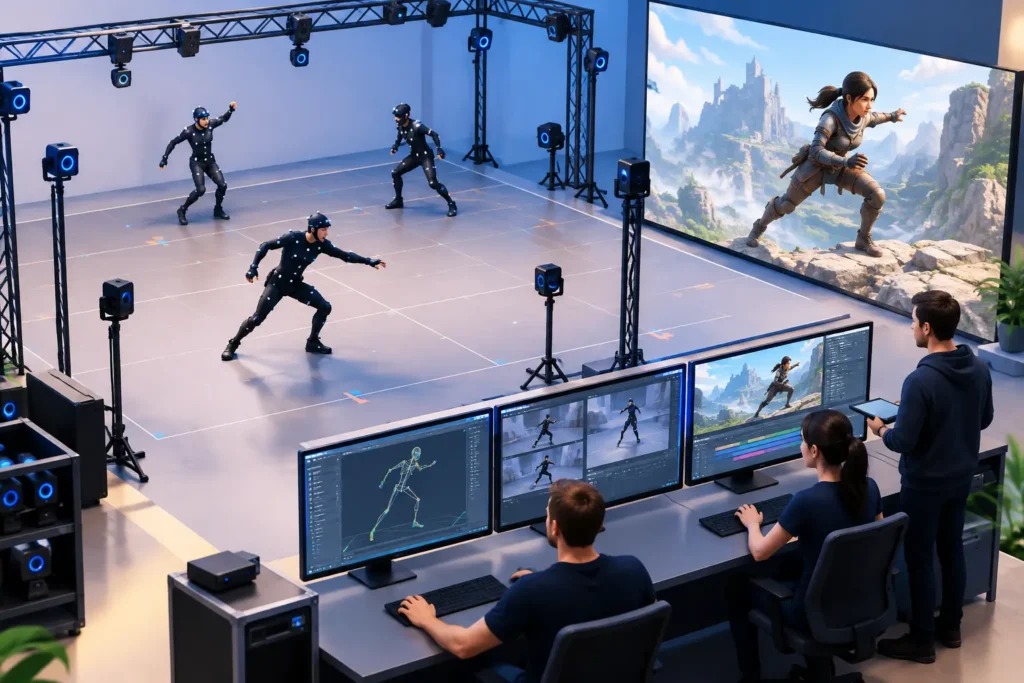
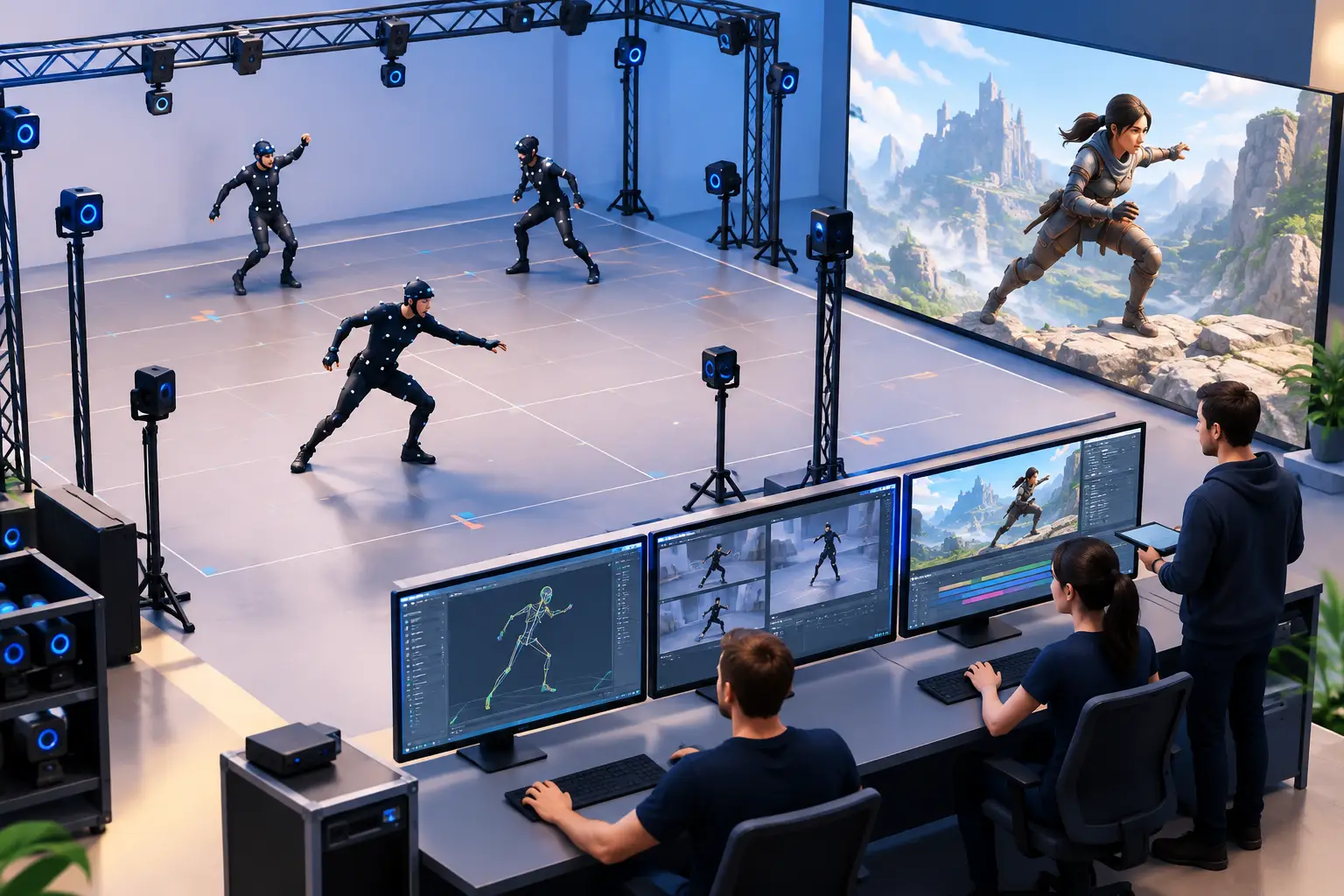
Motion capture, often called mocap, records a performer’s physical movement and converts it into digital data that can drive a 3D character. In many setups, actors wear suits with reflective markers or inertial sensors. Cameras or sensors track body positions over time, producing movement data that is mapped to a character rig.
The result is not usually a finished animation. Raw capture may contain foot sliding, jitter, gaps in tracking, unwanted hand motion, or proportions that do not match the final character. A skilled production team processes the data, removes errors, adjusts timing, and retargets the performance to the rig. Animators then add the control, emphasis, and clarity that the shot requires.
Facial capture follows a similar principle, but the technical demands are different. It records expressions, lip movement, and subtle shifts around the eyes and mouth. For close-up character work, these details can determine whether a performance feels persuasive or artificial. Body and facial capture can be used together, though the capture and cleanup pipelines are often handled separately.
Choosing the Right Motion Capture Method
Not every project needs the same system. The best choice depends on the required accuracy, environment, budget, turnaround time, and how much post-production is expected.
Optical motion capture uses multiple cameras to track reflective markers placed on a performer. It is widely used for high-end character animation because it can capture detailed body movement with strong spatial accuracy. However, it usually requires a controlled studio environment, camera calibration, marker management, and experienced technicians. Marker occlusion can also create tracking gaps when body parts block the cameras’ view.
Inertial motion capture uses wearable sensors to measure rotation and acceleration. It is more portable and can be effective for projects that need fast setup or recording outside a traditional stage. The trade-off is that inertial data can drift over time and may require more cleanup, especially when performers interact closely with props, furniture, or each other.
Video-based capture uses standard or specialized cameras and computer vision to estimate movement without a marker suit. This approach can reduce setup barriers and support fast concept work, social content, or reference capture. It is not always the best choice for shots requiring precise contact, highly technical movement, or production-ready data for complex rigs.
For business buyers, the decision should not begin with the technology label. Begin with the final deliverable. A realistic digital human in a close camera shot demands a different process than a stylized explainer character, a game locomotion library, or an animated surgical training sequence.
Where Motion Capture Creates Real Production Value
Motion capture is most valuable when performance is central to the outcome and the project includes enough movement to justify the setup. It can accelerate production of walk cycles, action sequences, conversational scenes, sports movement, dance, demonstrations, and repeated character interactions.
For film and television teams, capture can preserve an actor’s physical choices while giving directors more flexibility in the final visual environment. A performance recorded on a capture stage can be retargeted to a creature, a digital double, or a fully stylized character. The creative benefit is not merely realism. It is the ability to keep human timing, weight, and intent inside a digitally built scene.
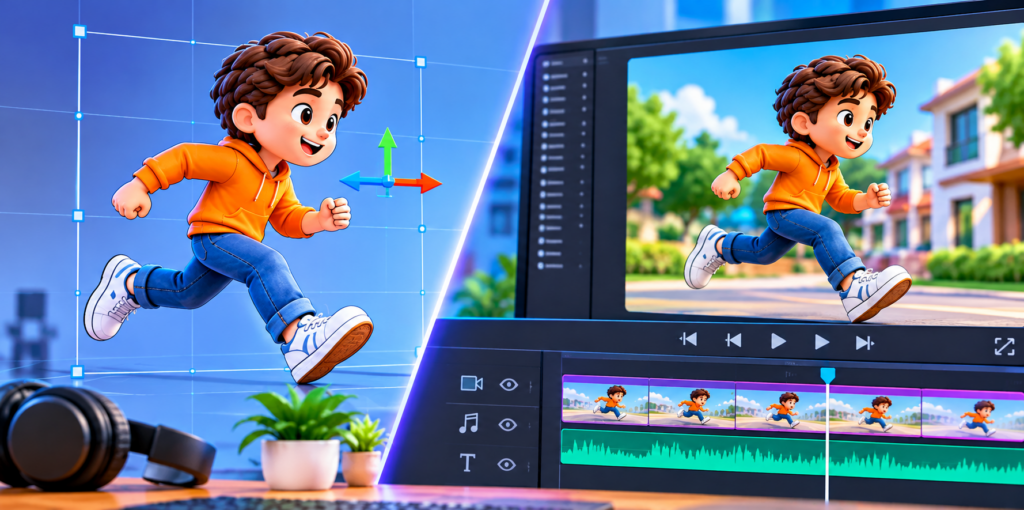
In product marketing, motion capture can support a brand mascot, virtual presenter, or interactive character without the stiffness that often appears in heavily keyframed movement. For training and medical animation, it can help demonstrate realistic body mechanics, rehabilitation exercises, equipment use, or patient interactions. Accuracy still needs expert review, particularly in medical content, but captured movement can provide a useful behavioral foundation.
Game and immersive teams often gain the greatest efficiency from motion capture because they need a large volume of animation states. A captured library can include idle behavior, locomotion, reactions, combat actions, and contextual interactions. The data still needs to be organized for the game engine and adjusted for transitions, responsiveness, and gameplay requirements. Natural movement alone is not enough if the player experiences delays or broken state changes.
The Cleanup Stage Is Where Quality Is Won
A common planning mistake is treating a capture session as the end of the animation process. In reality, capture creates a data asset that requires technical and artistic handling before it is ready for delivery.
First, the team solves or cleans the recording. This process reconstructs missing marker paths, corrects tracking errors, stabilizes motion, and produces a usable skeleton. Next comes retargeting, where the performer’s movement is transferred to the final character rig. This stage can be straightforward for human characters with similar proportions, but it becomes more complex for creatures, stylized figures, armored characters, or nonhuman anatomy.
Animation polish follows. Artists refine poses, lock foot contacts, correct intersections, reshape arcs, and sharpen the performance for the camera. They may also replace sections entirely with keyframe animation. If a character needs to hold a branded product in a precise position, hit an exact mark, or perform a physically impossible action, hand animation may be the more reliable choice for that part of the shot.
This is why project schedules should include time for review cycles. A fast capture day does not automatically create a fast final animation if the shot list is unclear, the character rig is not production-ready, or the approval process is fragmented.
Planning a Capture-Ready Pipeline
The strongest motion capture projects are designed backward from the final use. Before recording begins, define the target character, shot count, camera distance, intended platforms, required frame rate, and level of realism. A cinematic close-up, a mobile game asset, and an architectural presentation avatar have different quality thresholds.
The performer should understand the scene objectives, physical constraints, and interaction points. Clear direction matters as much as capture technology. If the character will hold a virtual object, use a practical stand-in when possible. If the final character is much larger or smaller than the actor, account for that difference in blocking and contact points.
Rig readiness is another critical factor. A well-built rig gives animators the controls needed to preserve the capture while making targeted adjustments. A weak rig can turn a simple retargeting task into extensive technical repair. For outsourced production, providing the latest character files, scale references, naming conventions, and technical specifications early prevents unnecessary rework.
Teams should also agree on deliverables before production starts. Clarify whether the final output is cleaned animation data, retargeted character animation, rendered shots, or a complete post-produced video. These are different scopes with different review needs and budgets.
When Keyframe Animation Is the Better Choice
Motion capture is powerful, but it is not automatically the best choice. Keyframe animation often works better for highly stylized characters, product-focused motion graphics, abstract sequences, short actions with precise posing, and scenes that require exaggerated timing. It can also be more cost-effective for a limited number of simple shots.
The best productions frequently use a hybrid approach. Capture supplies the rhythm and physical authenticity of the performance, while keyframe animation adds stylization, fixes technical limitations, and delivers the final visual intent. This combination gives teams speed without sacrificing control.
For companies managing fluctuating demand, an external production partner can also reduce the operational burden of capture-based work. Instead of assembling separate resources for cleanup, rigging, retargeting, animation, lighting, and rendering, teams can coordinate a single pipeline built around the approved scope. 3D Modeling Animation Studio supports this model with specialized production capacity that can scale from isolated animation tasks to complete visual delivery.
The most effective motion capture work does not call attention to the technology behind it. It makes viewers believe the character has weight, purpose, and presence. Start with the performance your audience needs to see, then build the capture and animation process required to deliver it with precision.