When a product team has 30 seconds to explain a complex mechanism, static slides usually fall short. That is where medical animation services become a practical business asset – not just a visual extra, but a faster way to communicate anatomy, device function, treatment pathways, and clinical value to the right audience.
For healthcare brands, medical device companies, pharmaceutical marketers, and production teams, the challenge is rarely just making something look impressive. The real challenge is making specialized information clear, accurate, and usable across marketing, sales, training, investor presentations, and professional education. Good animation solves that problem. Great animation does it without slowing down approvals, inflating production costs, or creating technical confusion.
What medical animation services actually deliver
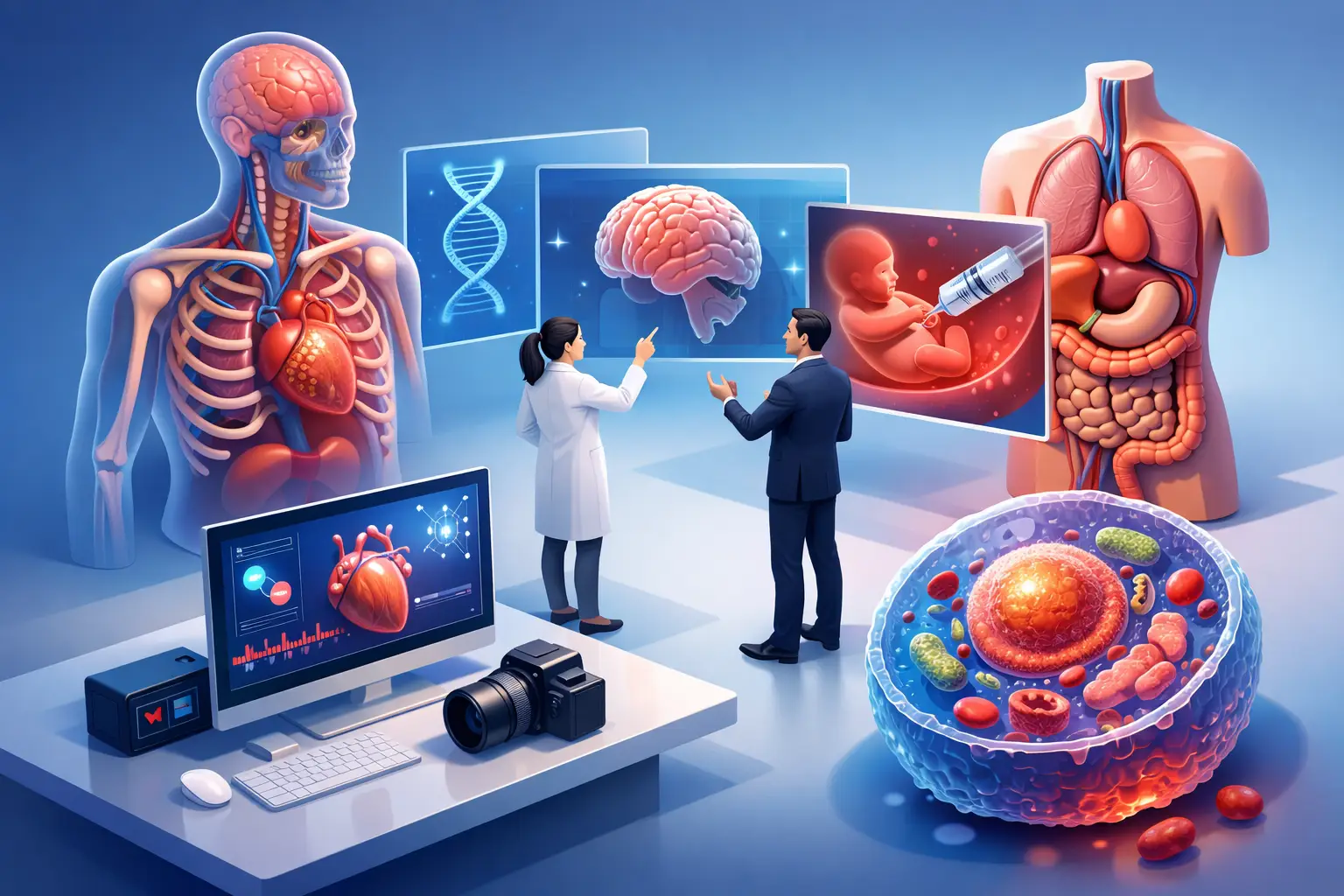
Medical animation services cover far more than a polished 3D video. Depending on the project, the work may include concept development, script support, storyboarding, anatomical modeling, device modeling, material shading, rigging, simulation, animation, voice sync, labels, post-production, and final formatting for multiple channels.
The deliverable itself can vary widely. A company launching a surgical device may need a product mechanism animation for trade shows and sales presentations. A pharmaceutical brand may need a mode-of-action video that shows how a treatment interacts at the cellular level. A hospital system may need procedural animation for internal education. A production house may need overflow support from an outsourced team that can step into a larger campaign without disrupting pipeline standards.
That range matters because not every project needs the same level of detail. A high-end investor film requires a different approach than a looping website visual or a training module for clinicians. Strong production teams know how to scale the process to the communication goal.
Why businesses invest in medical animation services
Medical subjects are technical by nature, and technical messaging often breaks down when audiences do not share the same baseline knowledge. Animation gives teams control over what the viewer sees, in what order, and at what level of detail. That makes it especially valuable when live-action footage is impossible, expensive, or too limited to show internal processes.
For business decision-makers, the value usually comes down to four outcomes: clearer communication, faster understanding, stronger presentation quality, and more flexible reuse across channels. One well-produced animation can support conference displays, sales meetings, digital campaigns, product pages, onboarding, and stakeholder briefings.
There is also a practical advantage in showing what cannot be filmed directly. Internal anatomy, microscopic interactions, implanted devices, and treatment mechanisms are difficult to capture in a controlled, brand-ready format. Animation removes those constraints while keeping the message focused.
That said, realism is not always the goal. Sometimes a stylized, cleaner visual approach is more effective for education and recall than a fully photoreal sequence. The right direction depends on audience, regulatory sensitivity, budget, and distribution context.
Medical animation services for different business needs
The most effective projects start with the intended use case, not the software. A marketing team selling to physicians may need concise, highly credible visuals with technical specificity. A broader consumer-facing campaign may need simplified language and more guided pacing. A device manufacturer may care most about exploded views, product assembly logic, and mechanism clarity. A biotech company may prioritize molecular or cellular storytelling.
This is why experienced providers do more than animate. They help structure the information so the final piece works commercially. The question is not simply, Can this be modeled in 3D? The better question is, What does the viewer need to understand, believe, or remember after watching it?
Projects often fall into a few core categories. Product demonstration animations focus on how a device works and why it differs from alternatives. Procedure animations show the steps, positioning, or treatment flow in a clear visual sequence. Scientific mechanism animations explain internal biological processes that are difficult to communicate with static diagrams. Training animations support internal teams, clinical users, or sales staff who need consistent explanations at scale.
Each type has different production demands. Procedure visuals may require anatomical accuracy and careful motion pacing. Marketing-led product animations may require stronger branding, cleaner composition, and shorter runtimes. Educational content may need more labels, callouts, and modular edits.
What separates strong medical animation from generic 3D work
Not every 3D animation team is equipped for medical content. The technical threshold is higher, and the approval environment is usually more demanding. Accuracy matters at the model level, the motion level, and the messaging level.
A strong medical animation partner understands how to balance scientific credibility with visual clarity. That balance is where many projects either succeed or stall. If the animation is too simplified, technical viewers may lose confidence. If it is too dense, the message may become harder to follow, especially in sales or marketing use.
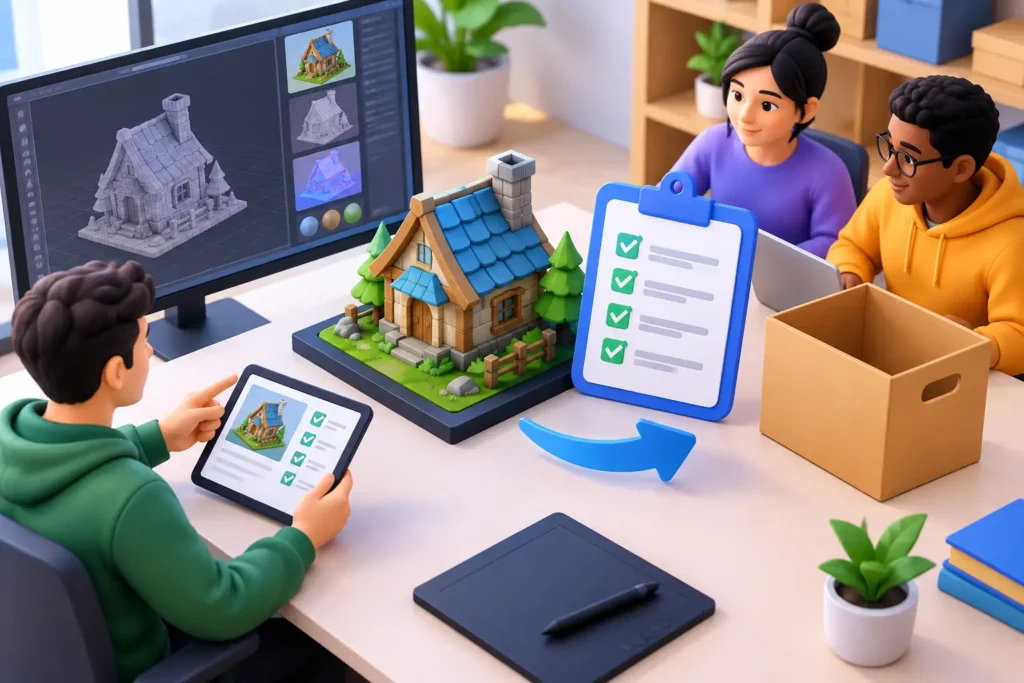
Process discipline matters just as much as artistic skill. Medical projects often involve layered review cycles with marketers, subject matter experts, product teams, and legal or regulatory stakeholders. Without a structured approval process, revisions can expand quickly. An experienced outsourced studio accounts for that from the start with defined milestones, visual references, script alignment, and review checkpoints.
Production flexibility is another separator. Some clients need a full end-to-end partner. Others already have scripts, style frames, or campaign assets and simply need external animation capacity. The best choice depends on internal resources. If your team is overloaded but strategically clear, outsourced execution can speed delivery without adding headcount. If the concept itself is still evolving, a more collaborative development process is worth the investment.
How the production process should work
Good medical animation production starts before any modeling begins. The early stage should clarify audience, use case, runtime, visual style, and scientific scope. This reduces the most expensive kind of revision – changing core direction after the animation is already in progress.
Script and storyboard development come next, even when the project seems visually driven. These steps align stakeholders on structure, terminology, and communication priorities. In many cases, they reveal where simplification is needed or where more technical depth is required.
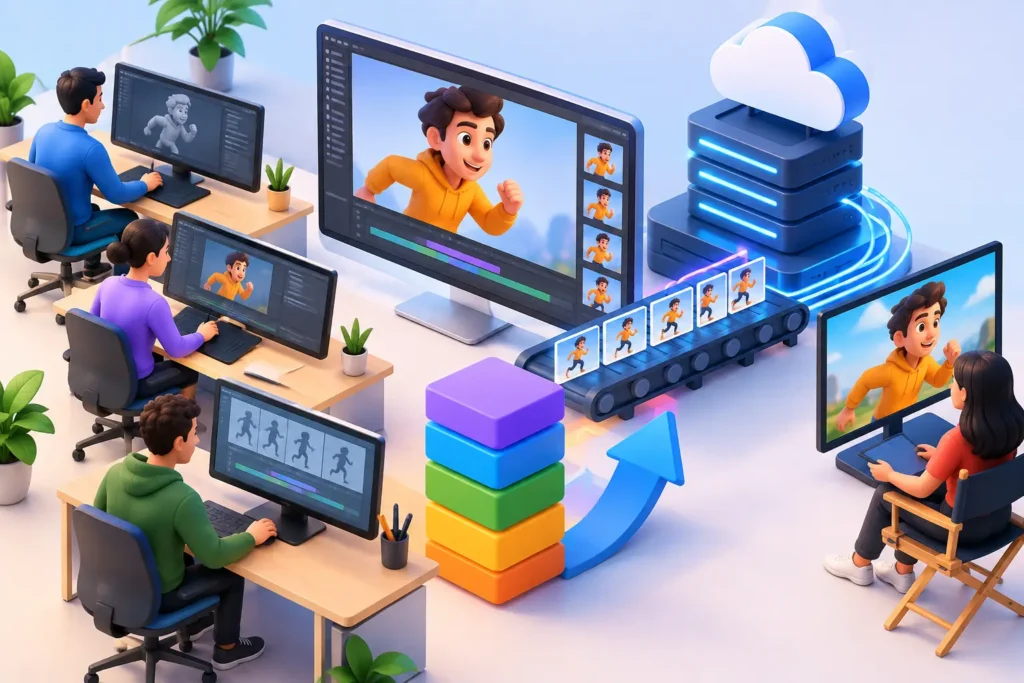
From there, the production team builds the visual assets, develops animation sequences, and shapes the final piece through lighting, compositing, text overlays, and editing. For some projects, multiple output versions are created at the same time, such as a full presentation video, shorter social edits, silent loops for events, and still frames for collateral.
The review process should be controlled and transparent. That means clear revision rounds, consolidated feedback, and realistic scheduling. Medical content often involves more scrutiny than standard product animation, so turnaround promises need to be ambitious but credible.
At 3D Modeling Animation Studio, that outsourced production model is designed for clients who need both specialized execution and dependable workflow support. For companies juggling launch timelines, internal approvals, and fluctuating production demand, reliability is not a bonus. It is part of the deliverable.
Choosing the right provider for medical animation services
The safest buying decision is not always the cheapest bid or the flashiest reel. What matters is whether the team can handle your subject matter, your timeline, and your review environment without creating avoidable friction.
Look for evidence of technical range, but also ask how projects are managed. Can the team work from rough concepts, or do they need fully defined briefs? How do they handle expert feedback? Can they scale for multiple assets or ongoing support? Do they understand the difference between a clinician-facing explainer and a commercial product animation?
It also helps to ask how they approach trade-offs. For example, full photorealism may be ideal for some device visuals, but it can extend production time and cost. A cleaner stylized approach may communicate faster and adapt better across channels. Neither is automatically better. The right answer depends on the business objective.
Another factor is reuse. If you are investing in custom 3D assets, think beyond a single video. Anatomical models, device models, and animation scenes can often support future campaigns, derivative edits, interactive content, or regional versions. A production partner who plans for that from the outset can improve long-term value.
The business case is clarity at scale
Medical animation works because it reduces friction between expertise and understanding. It helps technical teams explain more clearly, helps marketing teams present more confidently, and helps buyers absorb more in less time.
For organizations operating in healthcare, biotech, medical devices, and specialized education, that clarity has real commercial value. It shortens explanations, strengthens presentations, and gives teams a visual tool they can use across the entire customer journey.
If your message is complex, the right animation does not just make it easier to watch. It makes it easier to trust, easier to remember, and easier to act on.