A missed handoff between modeling and rigging can burn a week. A vague review note can send an animation team back through two extra revision cycles. When companies talk about the best outsourced animation workflows, they are usually trying to solve one business problem: how to get high-quality work delivered fast without losing control of scope, quality, or deadlines.
For brands, studios, architects, and production teams, outsourcing works best when the workflow is built for clarity from day one. Talent matters, but process is what keeps a project on schedule. The strongest outsourced animation pipelines reduce friction between stakeholders, make approvals easier, and create a predictable path from brief to final delivery.
What the best outsourced animation workflows actually do
The best workflows are not just organized. They are designed to protect production outcomes. That means fewer unclear approvals, fewer avoidable revisions, and better alignment between creative direction and technical execution.
A good outsourced workflow creates visibility at every major milestone. Clients know what is being built, what is approved, what is in revision, and what is next. The production partner knows who signs off, which assets are final, and what constraints matter most, whether that is realism, motion style, file format, or turnaround speed.
This is where many outsourcing relationships either perform well or fail quietly. Some teams focus too much on creative output and not enough on pipeline discipline. Others are highly structured but slow to adapt when the scope changes. The best model balances both.
Start with scoping, not production
Outsourced animation projects go off track early, not late. Most delays come from weak project definition at the start. If references are incomplete, technical specifications are missing, or approval authority is unclear, the team will end up making assumptions. Assumptions are expensive.
A strong workflow begins with a detailed discovery and scoping phase. This should define the project objective, audience, visual style, deliverables, resolution, runtime, asset requirements, review stages, and timeline. It should also identify dependencies. If animation depends on product CAD data, architectural plans, or medical reference material, that needs to be confirmed before production begins.
For commercial buyers, this phase matters because it directly affects quote accuracy and schedule reliability. Fast turnaround is only realistic when the input package is usable.
The brief should answer operational questions
Creative intent is not enough. An outsourced team needs to know whether the animation is for broadcast, paid media, internal presentations, investor demos, e-commerce, or training. Each use case changes the production approach.
A product marketing animation may need polished materials, close-up camera work, and flexible cutdowns for multiple aspect ratios. A medical animation may require tighter scientific review and a more conservative revision structure. A film or TV asset pipeline may require compatibility with an existing rigging or rendering standard. The best outsourced animation workflows account for those realities before the first scene is built.
Build the pipeline around milestones that reduce risk
The most reliable outsourced animation workflows use milestone-based production, not one long creative sprint. This creates cleaner approvals and prevents late-stage surprises.
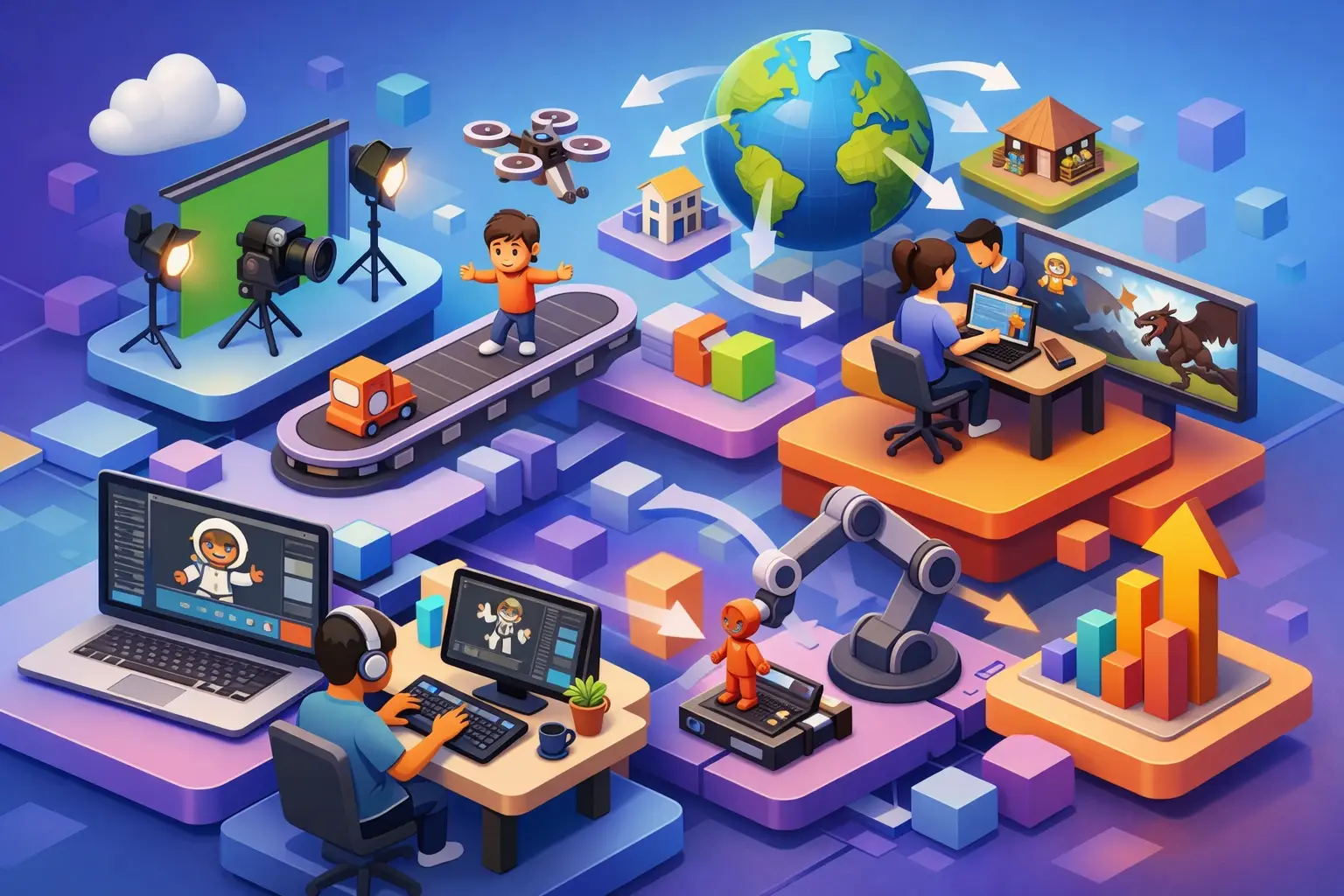
In practice, the project should move through clearly defined stages: concept alignment, asset preparation, look development, animation blocking, refined animation, lighting and rendering, then post-production and final outputs. Each step should have a specific approval goal.
That approval goal matters. If clients are reviewing modeling, they should not be debating music. If they are approving animation blocking, they should focus on timing, camera logic, and movement, not final textures. Keeping feedback tied to the right stage is one of the simplest ways to protect schedule and budget.
Why blocking reviews save time
Animation blocking is where motion intent gets tested before the team commits to polished movement. This stage is especially valuable in outsourcing because it gives decision-makers an early checkpoint without requiring fully rendered scenes.
If the pacing feels wrong or the product reveal is too late, those changes are cheaper in blocking than after simulation, lighting, and compositing are complete. Clients who skip this stage often end up paying for revisions in the most expensive part of the pipeline.
Centralize communication or expect delays
One of the biggest differences between average and best outsourced animation workflows is communication design. Not communication volume. Design.
When feedback comes through email, chat threads, meeting notes, and separate stakeholder calls, the production team spends too much time interpreting direction. That creates lag and inconsistencies. A better workflow consolidates feedback into one review channel with one owner on the client side and one owner on the production side.
This does not mean fewer stakeholders. It means cleaner decision-making. The internal marketing lead, creative director, product team, or executive sponsor can all weigh in, but consolidated notes should come through a single source. That gives the animation partner a clear version of truth.
For larger engagements, weekly production check-ins work well when they are short and tied to milestone progress. Daily calls are rarely necessary unless the timeline is extremely compressed.
File management is part of quality control
A surprising number of animation issues are really asset management issues. Incorrect file versions, missing textures, outdated references, and untracked revision notes create avoidable production risk.
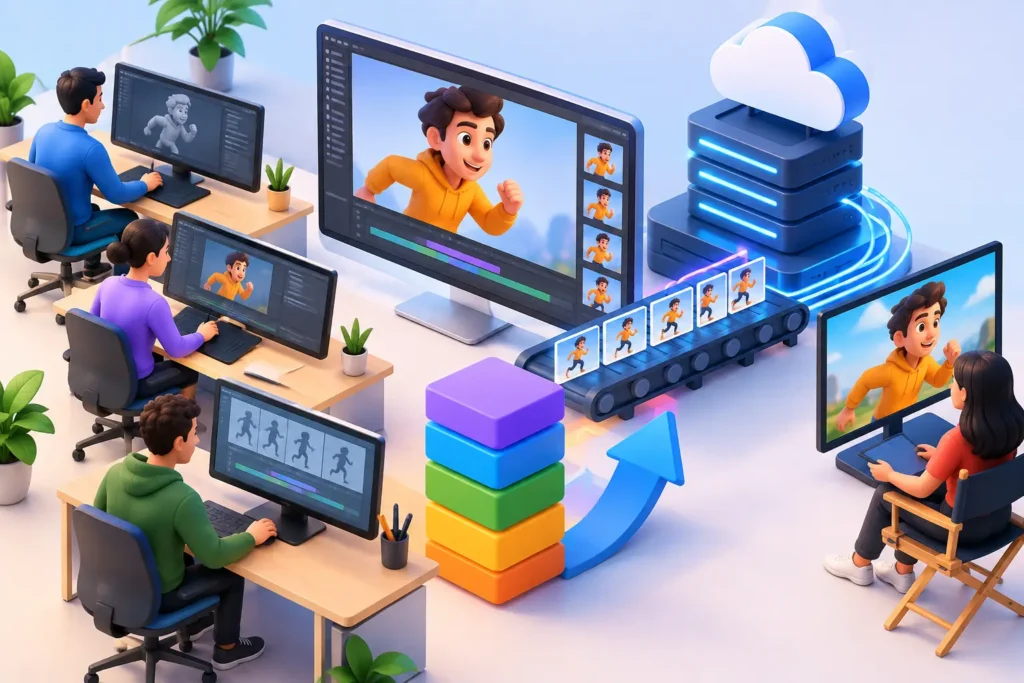
The best outsourced animation workflows use structured naming conventions, locked reference folders, version control discipline, and delivery specs that are agreed in advance. This matters even more for multi-service projects that include 3D modeling, rigging, animation, rendering, and editing.
When one external team can manage the full pipeline, handoff errors usually decrease because there are fewer transition points. That is one reason full-service outsourcing partners often perform better than fragmented vendor setups, especially under deadline pressure. A company like 3D Modeling Animation Studio can add value here by managing interconnected stages under one production framework instead of handing assets across disconnected teams.
Quality control should happen throughout production
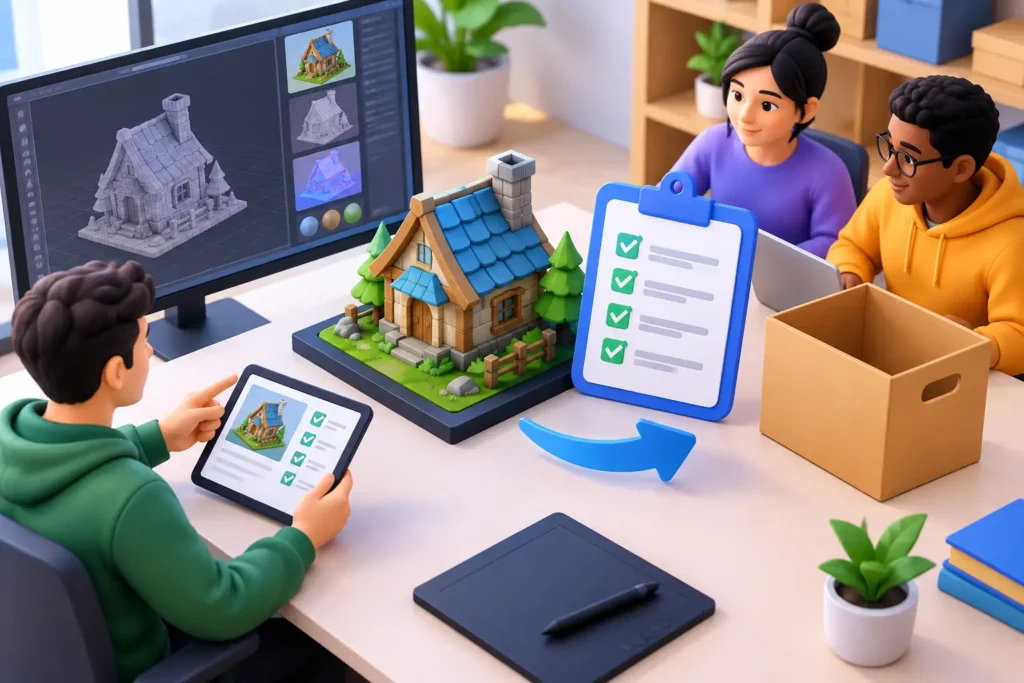
Quality control is not a final pass before delivery. In strong workflows, QA is built into every stage.
That means topology and scale checks during modeling, deformation testing during rigging, motion review during blocking and spline, and technical validation before render output. For client-facing work, there should also be a commercial quality lens. Does the animation actually support the intended message? Does it show the product clearly? Does it feel credible for the audience?
This is where outsourcing experience matters. A technically accurate asset can still fail if it does not perform well in a marketing, architectural, or medical communication context. The best outsourced animation workflows combine production quality with use-case awareness.
Revision limits need to be realistic
Every buyer wants flexibility, but unlimited revisions create unstable production. The better approach is structured revision rounds tied to milestones.
This protects both sides. The client gets defined opportunities to refine the work. The production team gets a manageable process that supports delivery commitments. If the scope evolves significantly, the workflow should allow for change orders rather than pretending major additions can fit inside the original plan.
Choose a workflow that fits the project type
There is no single best workflow for every outsourced animation project. It depends on the complexity, the asset readiness, the stakeholder count, and the purpose of the final piece.
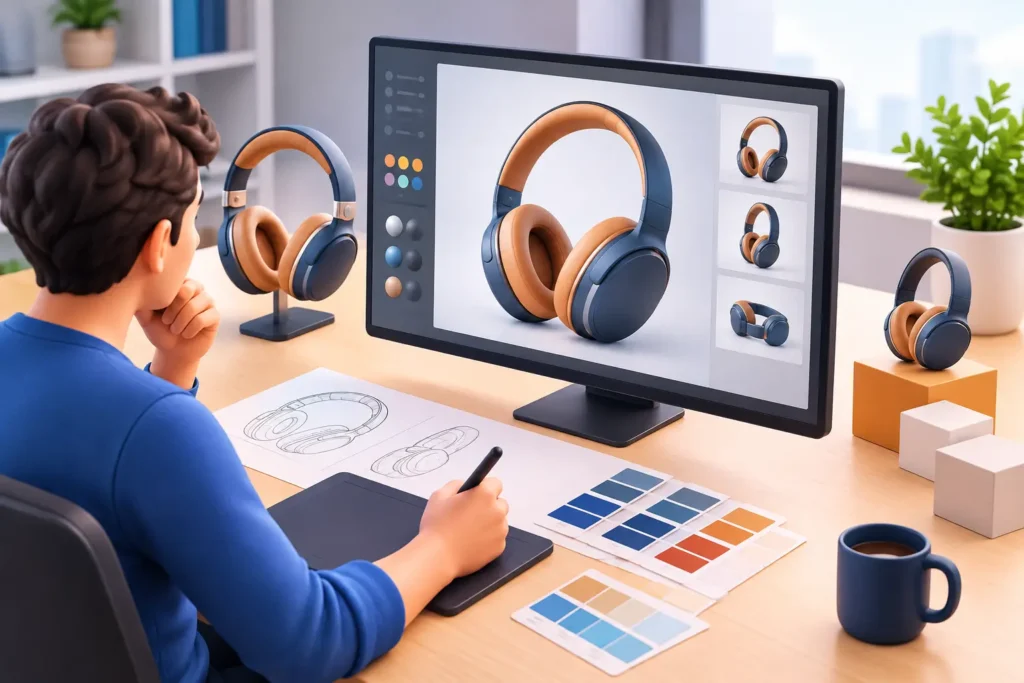
A fast product visualization project may need a lean workflow with compressed approvals and templated render outputs. A cinematic brand animation may require deeper concept development and more iterative lookdev. An architectural animation may need close coordination with design documents and staged environmental approvals. A medical animation may demand expert review points that slow the process but improve accuracy.
The trade-off is simple. Faster workflows reduce decision time, but they require stronger briefs and faster approvals. More exploratory workflows create room for discovery, but they need wider schedules and tighter scope management. The best production partners help clients choose the right model instead of forcing every job through the same pipeline.
What decision-makers should look for in a production partner
If you are evaluating vendors, ask less about software and more about workflow control. Most capable teams can use the right tools. Fewer teams can explain exactly how they prevent revision drift, manage approvals, and maintain consistency across multiple assets or episodes.
Look for a partner that can clearly define milestones, ownership, review cadence, technical handoffs, and final deliverables before work starts. Ask how they handle incomplete briefs, midstream changes, and urgent turnaround requests. Ask who is accountable for production communication. Those answers usually tell you more than a portfolio alone.
A good outsourced team should make your internal process easier, not add another layer of management burden.
Why workflow maturity creates better ROI
Animation outsourcing is often framed as a cost decision, but for most business buyers it is really a capacity and execution decision. The value comes from getting specialized work done efficiently, without building a larger in-house team and without sacrificing quality.
That only happens when the workflow is mature enough to scale. If your partner can absorb more volume, coordinate across services, and maintain predictable delivery, outsourcing becomes more than a one-off solution. It becomes a practical production advantage.
The companies that get the best results from outsourcing are usually not the ones chasing the lowest bid. They are the ones choosing a workflow they can trust under real production pressure. If your next animation project matters to a launch, a campaign, or a deadline that cannot move, the process behind the work matters just as much as the work itself.