A strong product launch animation example does more than make a new item look polished. It gives buyers a reason to care within the first few seconds, answers practical questions without a long explanation, and gives marketing teams adaptable footage for launch day. For brands competing in crowded categories, that combination can determine whether a campaign earns attention or disappears in the feed.
The most effective launch animations are built around a commercial objective, not just an attractive 3D render. The goal may be to introduce an unfamiliar feature, show premium materials, explain a technical mechanism, or establish a product as the clear choice in its category. The visual approach should follow that goal.
What Makes a Product Launch Animation Example Work?
A product animation succeeds when it controls the order in which viewers understand the product. First, it creates interest. Then it reveals the design, shows the product in use or in context, and closes with a message that supports the campaign.
That sequence sounds simple, but it requires disciplined choices in modeling, lighting, camera movement, editing, sound, and pacing. A camera move that feels dramatic for a luxury watch may feel too slow for a consumer electronics launch. An exploded technical view can build trust for a medical device, while a lifestyle sequence may be more valuable for a skincare package.
The best choice depends on the product, the intended buyer, and where the animation will appear. A 60-second launch film for a website can support more detail than a six-second paid social placement. Both can use the same 3D assets, but they should not be edited as if they serve the same job.
7 Product Launch Animation Examples to Consider
1. The cinematic product reveal
This format is designed for products where appearance, craftsmanship, and anticipation drive value. The animation begins with controlled shadows, close material shots, and partial silhouettes before revealing the full product. It works particularly well for consumer electronics, beauty packaging, automotive accessories, luxury goods, and high-end appliances.
A cinematic reveal needs accurate 3D modeling and physically believable materials. Viewers may not know why a metal surface, glass edge, or fabric finish looks wrong, but they will feel the difference. Lighting should define form rather than hide it. Once the product is fully revealed, a short hero shot gives the campaign a clear visual asset for thumbnails, paid media, and key art.
The trade-off is that this style can prioritize emotion over explanation. If the product has a complex function, pair the reveal with shorter feature-focused cutdowns.
2. The feature-first demonstration
Some products win because they solve a specific problem. For these launches, a clean animation showing exactly how the key feature works can outperform a highly stylized reveal. Think of a vacuum showing its filtration path, a smart device demonstrating its controls, or a kitchen appliance moving through its primary function.
The critical decision is focus. Trying to animate every feature usually creates a fast, confusing sequence. Select one core benefit and one or two supporting proof points. Use camera angles that make the interaction understandable, then reinforce the result with concise on-screen copy.
This approach is especially useful when buyers need confidence before purchase. It turns an abstract claim such as “faster,” “cleaner,” or “more precise” into visible evidence.
3. The exploded-view technical animation
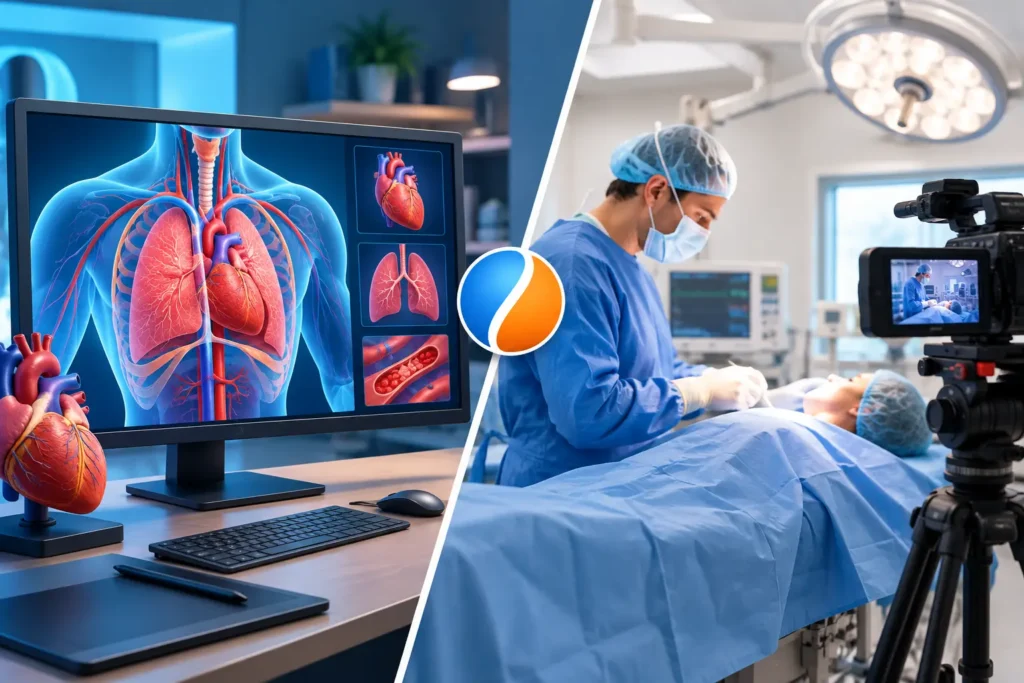
An exploded view separates components in space to show how a product is constructed and how the internal system works. It is a powerful product launch animation example for industrial equipment, medical products, electronics, tools, and engineered consumer goods.
The value comes from transparency. Buyers, distributors, and technical stakeholders can see the relationship between parts without cutting away from the product’s overall design. Transparent materials, cross-sections, callouts, and controlled component movement can clarify details that live-action footage cannot capture.
Accuracy is non-negotiable here. Engineering drawings, CAD data, and product documentation should be reviewed early, ideally before animation begins. A technically impressive sequence loses credibility if the wrong component is shown or an assembly order is inaccurate.
4. The lifestyle product story
A lifestyle animation places the product in a believable environment and shows the result it creates for the user. Instead of focusing only on product specifications, it connects the item to a moment: a homeowner adjusting a smart thermostat, a traveler using a compact device, or a clinician operating equipment in a controlled setting.
This style is a strong fit when the purchase decision is emotional, aspirational, or context-dependent. Architectural-grade environments and realistic character animation can make the product feel established before physical photography is available.
It does require careful restraint. The setting should support the product, not compete with it. If the viewer remembers the room but not the item being launched, the visual story is working against the campaign.
5. The before-and-after transformation
Transformation animations are built around contrast. They show the problem state, introduce the product, and reveal the improved outcome. This format works well for cleaning products, home improvement solutions, beauty products, medical devices, software-enabled hardware, and industrial processes.
The visual change must be immediate and credible. A before-and-after sequence can be literal, such as a damaged surface becoming restored, or technical, such as a process becoming faster and more organized. Use realistic transitions rather than exaggerated effects when the product serves a professional audience. Decision-makers tend to respond better to proof than spectacle.
For regulated or specialized sectors, claims should be aligned with approved product messaging. The animation can illustrate a benefit, but it should not imply outcomes the brand cannot support.
6. The 360-degree product showcase
A 360-degree product animation gives buyers a clear view of proportions, materials, ports, finishes, and small design details. It is often used on ecommerce pages, trade-show screens, product configurators, and sales presentations.
This is not the most narrative-led option, but it has practical value. It can reduce uncertainty for products that are expensive, tactile, or difficult to photograph from every angle. Variations in color, trim, packaging, or configuration can also be produced efficiently once the approved 3D model is in place.
A simple turntable alone may feel static, so add purpose through close-ups, subtle lighting changes, and brief feature callouts. The objective is inspection, not visual noise.
7. The launch ecosystem film
A product rarely enters the market alone. It may connect to an app, an accessory range, a larger platform, or a broader brand experience. An ecosystem film shows those relationships through a sequence of linked product moments.
For example, a smart hardware launch may move from the physical object to its interface, then to the data or convenience it provides. A modular product can show different configurations without requiring multiple physical prototypes. This approach is valuable for companies that need to communicate scale, compatibility, or a future-facing product line.
The risk is complexity. Keep the product as the visual anchor and avoid turning the animation into a feature inventory. A clear narrative thread, such as one user journey or one operational outcome, keeps the film commercially focused.
Plan the Animation Before Production Starts
The quality of the final film is often decided before the first frame is animated. A productive kickoff should establish the campaign objective, target platforms, runtime requirements, existing product files, brand guidelines, and approval structure. These details prevent expensive revisions later.
If CAD files are available, an experienced 3D production team can assess whether they are suitable for rendering or need cleanup and optimization. If the product is still in development, reference drawings, material samples, and design intent can guide the model. This is one of the major advantages of 3D launch content: marketing can begin before final photography or a physical prototype is ready.
A useful production plan also identifies reusable deliverables. A hero launch film may generate vertical social edits, feature loops, ecommerce spins, sales presentation visuals, and still renders. Building these needs into the storyboard makes the asset library more efficient than commissioning each format separately.
Choose a Production Partner That Can Scale
Product launch schedules move quickly, and internal creative teams often need external capacity without sacrificing control. The best outsourced animation partner brings a defined workflow: creative briefing, modeling review, storyboard approval, look development, animation, post-production, and structured feedback rounds.
Technical range matters as well. A team creating a beauty product reveal needs a different skill set from one handling a medical device cutaway or an architectural product visualization. 3D Modeling Animation Studio supports end-to-end modeling, animation, environments, rendering, and post-production so launch teams can keep production aligned under one reliable process.
Before approving a partner, review work that resembles your product category and intended visual style. Ask how revisions are managed, what source materials are required, how product accuracy is checked, and which deliverable formats are included. Fast turnaround is valuable only when quality control stays intact.
A launch animation should leave the viewer with one clear impression: this product is worth a closer look. When the concept, technical detail, and distribution plan support that impression, the film becomes more than a launch asset. It becomes a practical sales tool your team can keep using long after release day.