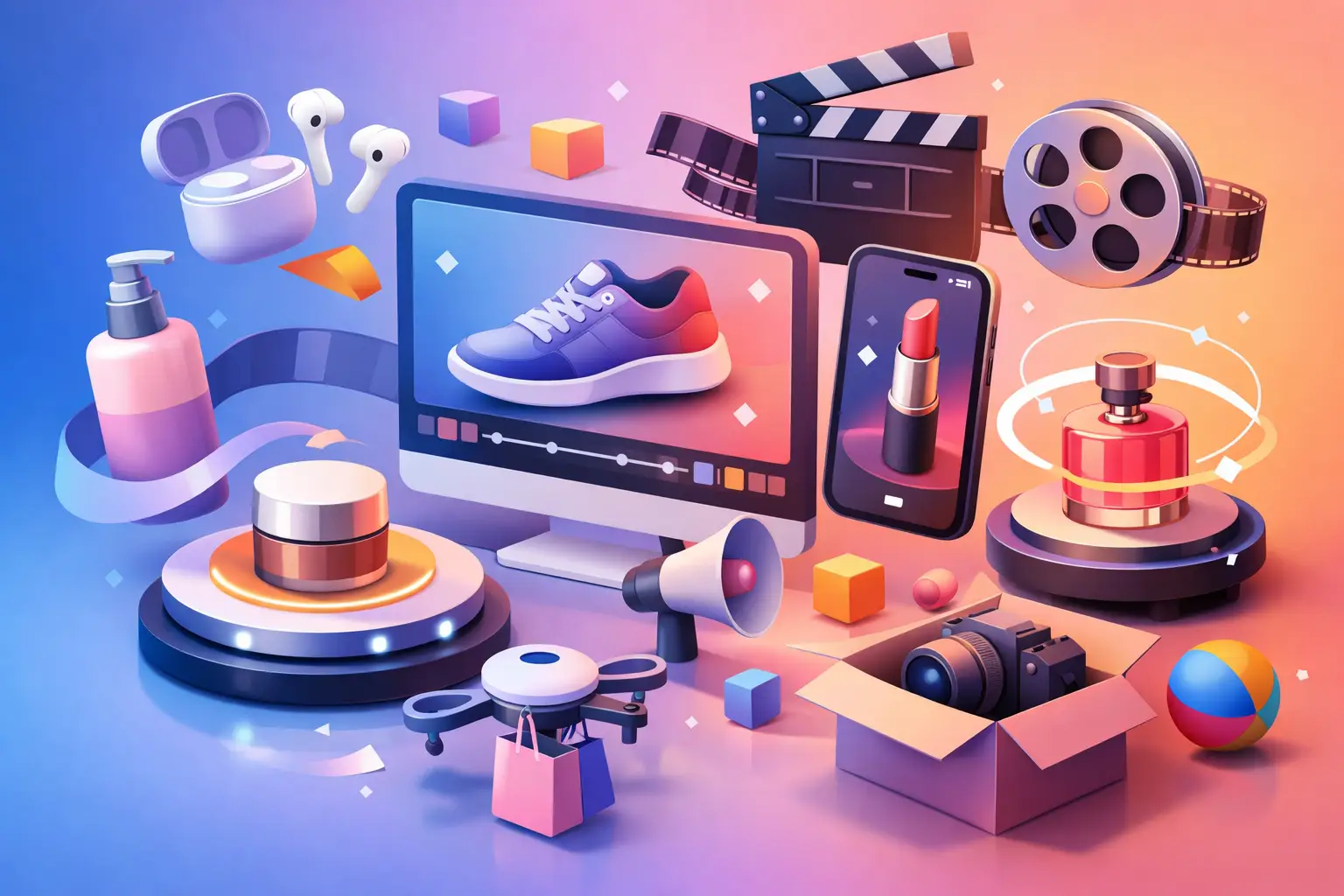
A product can have excellent engineering, a clear benefit, and strong market demand, yet still lose attention when buyers cannot quickly see how it works. That is where the top product animation styles earn their place in a marketing plan. The right visual treatment makes materials, movement, scale, features, and value immediately understandable – often before a viewer reads a single line of copy.
For marketing teams and creative directors, the decision is not simply whether to use 3D animation. It is which style will serve the campaign objective, fit the brand, and deliver within the required production timeline. A cinematic product film may be ideal for a launch, while a technical cutaway is more effective for a sales presentation or medical audience. Choosing well avoids spending on visuals that look impressive but fail to move the customer toward a decision.
How to Choose Among the Top Product Animation Styles
Start with the action you want the viewer to take. A consumer considering a premium cosmetic product needs a different level of information than an engineer evaluating a component, or a hospital procurement team reviewing a medical device. The animation should remove the biggest question standing between the audience and the next step.
Product complexity also matters. Simple, design-led products usually benefit from polished lighting, close-up material detail, and deliberate camera movement. Products with internal mechanisms, performance claims, or complicated assembly need animation that explains cause and effect. For ecommerce, shorter loops and feature-focused clips often outperform a long brand film because the viewer is already close to purchase.
Budget and delivery requirements should shape the creative approach from the beginning. High-end photorealism requires accurate modeling, refined materials, lighting development, rendering, compositing, and review time. A stylized graphic approach can be faster when realism is not essential. The best choice is the one that matches the commercial need, not the most elaborate option available.
1. Photorealistic 3D Product Animation
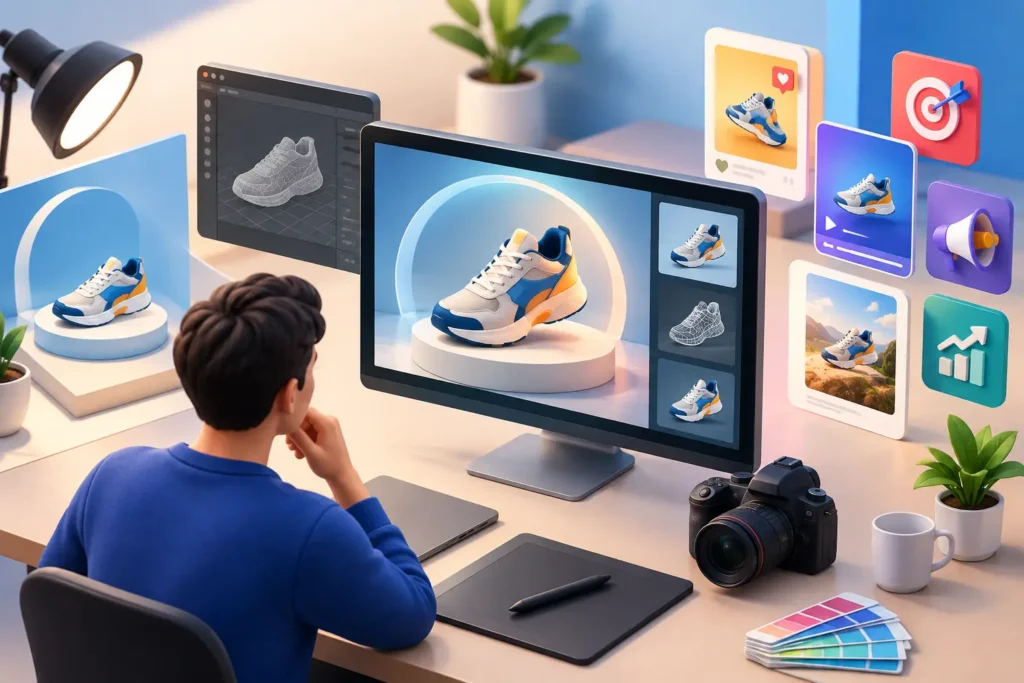
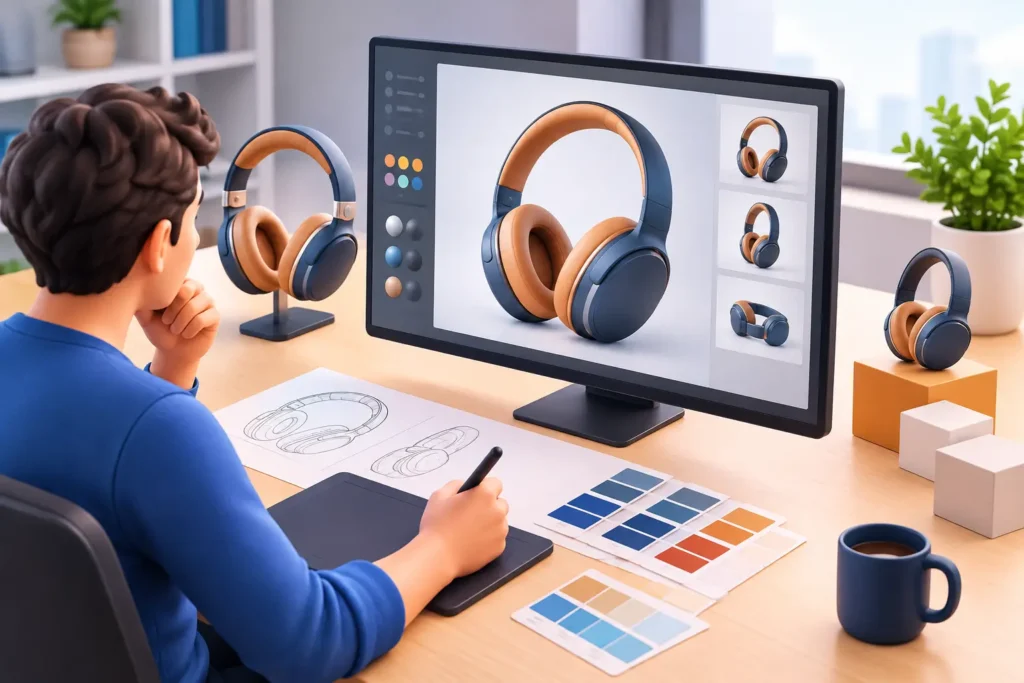
Photorealistic animation is the standard choice for launches, paid advertising, product pages, social campaigns, and presentations where the product itself must carry the message. It recreates the object with precise geometry, authentic textures, realistic reflections, and controlled studio or lifestyle lighting. When done well, it can make a product that does not yet exist physically look ready for market.
This style is especially valuable when product photography is limited, prototypes are unavailable, or multiple colorways and configurations must be shown without scheduling new shoots. A single approved 3D asset can support a hero film, short-form edits, still renders, ecommerce visuals, and future campaign revisions.
The trade-off is that close-up realism exposes every weakness. Inaccurate dimensions, poorly defined materials, or generic lighting can reduce credibility quickly. Product drawings, CAD data, finish references, and brand guidelines give the production team the inputs needed to achieve a convincing result.
Best for premium launches and design-led products
Consumer electronics, appliances, beauty packaging, furniture, automotive accessories, and luxury goods often benefit from photorealistic animation. The camera can move through details that a conventional shoot cannot easily capture, such as a precision-machined edge, a liquid texture, or a product emerging from a custom-built environment.
2. Exploded View and Cutaway Animation
Exploded-view animation separates a product into its component parts, while cutaway animation reveals what happens inside the housing. Both styles turn technical complexity into a clear visual sequence. Rather than asking the viewer to interpret a diagram, the animation shows where each part sits and how the system functions as a whole.
This is one of the strongest choices for B2B products, industrial equipment, electronics, automotive systems, and medical devices. It can show airflow, energy transfer, fluid movement, filtration, assembly logic, or the relationship between a device and the human body. Technical buyers tend to respond well to visual proof when claims need more support than a polished exterior shot can provide.
Accuracy is non-negotiable here. The animation team needs reliable CAD files, engineering documentation, and access to subject-matter experts during review. Simplification is often useful, but it must clarify the mechanism without changing how it actually operates.
Best for technical sales and product education
An exploded view is effective in trade-show content, sales decks, product training, investor presentations, and web pages where a buyer needs to understand why the product performs differently. It also gives marketing teams a practical way to convert complex specifications into benefits that nontechnical stakeholders can follow.
3. Feature-Focused Product Demo Animation
A feature-focused demo uses clean camera work, labels, transitions, and controlled motion to show exactly what a product does. It is more direct than a cinematic brand film and more polished than a screen recording or live demonstration. The product remains the center of attention, with each sequence answering a specific customer question.
For example, a demo for a kitchen appliance may show setup, controls, cleaning, and key performance modes. A software-enabled physical device can pair a 3D product model with interface animation to demonstrate the user experience from first interaction to final result. This structure is highly adaptable for ecommerce, product detail pages, email campaigns, retailer listings, and sales enablement.
The key risk is overloading the viewer. A product with ten features does not require ten equal-length sequences. Prioritize the features that differentiate the product, solve a recognized pain point, or justify its price. Secondary details can become shorter cutdowns or separate support assets.
4. Lifestyle and Contextual Product Animation
Lifestyle animation places the product in a believable setting: a home, workplace, retail environment, vehicle, factory, clinic, or architectural space. Context helps audiences understand scale and imagine ownership. It also shifts the message from what the product is to what it changes for the user.
This approach works particularly well when the product’s value depends on its environment. An architectural fixture needs to be seen in a room. A fitness device benefits from showing a realistic user scenario. A healthcare product may need a clinical setting to establish proper use and professional credibility.
There is a practical production consideration. Environments add assets, lighting needs, and creative decisions. A highly detailed scene can elevate the piece, but it can also consume budget that would be better spent on the product itself. For short ads, a minimal branded environment often delivers the right balance of context and efficiency.
Best for showing benefits in real use
Lifestyle animation is a strong option for social advertising and brand campaigns because it creates an emotional connection while preserving full control over the scene. It is also useful when live-action production would involve location restrictions, sensitive equipment, unavailable prototypes, or extensive reshoots.
5. Stylized 3D and Motion Graphics Animation
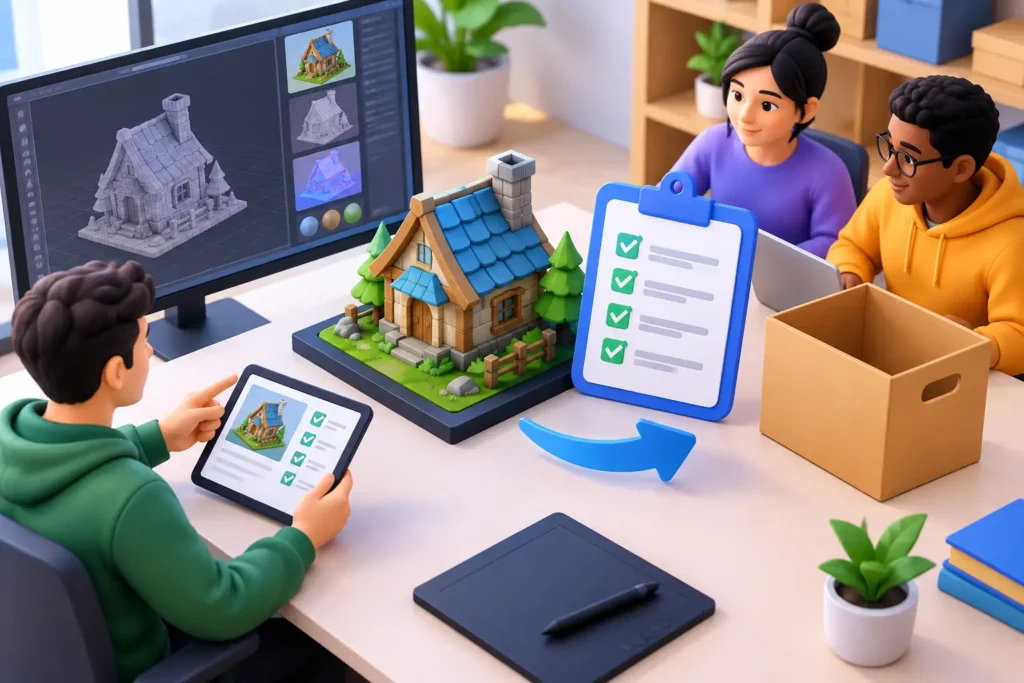
Not every product needs a fully realistic visual world. Stylized 3D animation uses simplified forms, expressive color, graphic transitions, and intentional abstraction to communicate a message quickly. It can be paired with 2D motion graphics, typography, icons, and data visualization for campaigns that need energy and clarity more than literal product detail.
This style is a practical choice for app-connected products, startup launches, explainers, social content, and campaigns aimed at audiences who respond to a more contemporary visual language. It can also help when a product is early in development and final surface details are still evolving.
The limitation is obvious: abstraction should not hide critical proof. If buyers need to inspect craftsmanship, material quality, or a complex mechanism, stylization may not provide enough confidence on its own. A hybrid campaign can solve this problem by using a stylized brand film to create interest, followed by photorealistic feature clips for conversion-focused channels.
6. Scientific, Medical, and X-Ray Animation
Scientific and medical product animation uses transparent layers, internal views, microscopic visualization, and precise anatomical or mechanical motion to explain specialized subjects. It is designed for audiences that require clarity, accuracy, and professional restraint. In these sectors, animation is often part of education, training, product validation, or stakeholder communication rather than advertising alone.
A strong medical animation can show a device pathway, treatment mechanism, surgical workflow, or biologic process with far greater clarity than static illustrations. However, these projects require a disciplined review process. Claims, labels, proportions, and procedural steps need validation from qualified experts before final delivery.
For companies operating in regulated spaces, production efficiency should never come at the expense of technical precision. The right outsourced 3D team will organize feedback clearly, maintain version control, and build approvals into the schedule so the final asset supports both communication goals and compliance requirements.
Build the Style Around the Distribution Plan
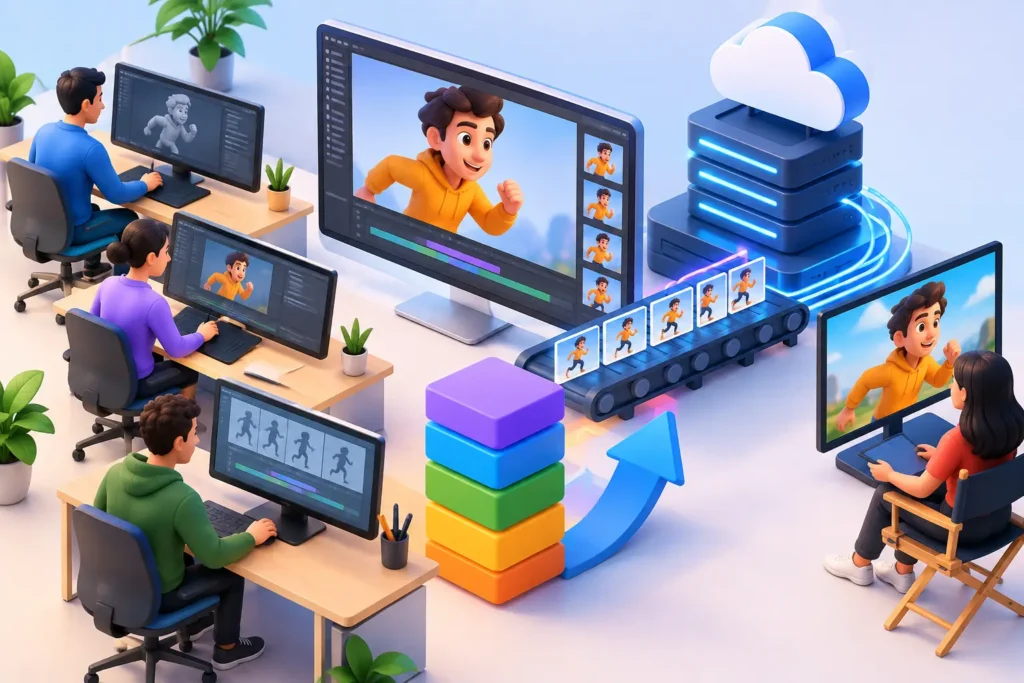
The most effective product animation is rarely a single export used everywhere. A 60-second launch film may need 15-second paid-ad edits, silent social versions with captions, vertical cuts, product-page loops, and sales presentation clips. Planning these formats during scripting and storyboarding protects continuity and reduces unnecessary rework later.
That is why experienced production partners begin with deliverables, audience, reference material, and approval requirements before animation starts. Once the product model and visual direction are approved, a well-organized pipeline can create multiple assets from the same production foundation. This approach gives teams greater campaign flexibility without rebuilding the work from scratch.
When selecting a style, ask one practical question: what must the viewer understand, feel, or believe by the final frame? Let that answer determine the level of realism, technical detail, context, and motion. A focused brief gives the animation team the direction needed to bring your vision to life with visual impact and commercial purpose.