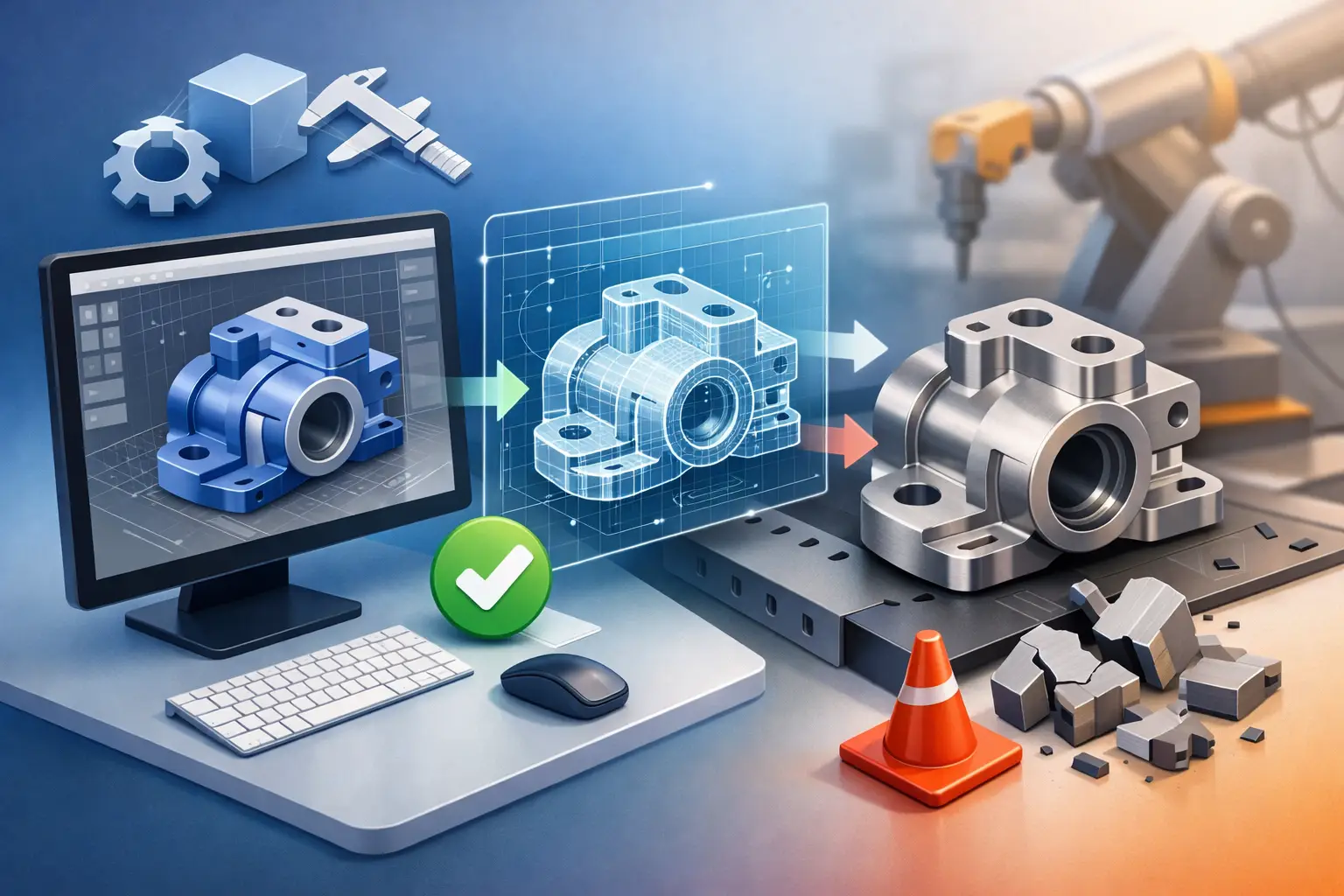
A product can look excellent in a concept render and still fail when it reaches production. A wall that is too thin for molding, a fastener with no tool access, or a housing that cannot be assembled efficiently can turn a promising design into weeks of revision. That is why 3d modeling for manufacturing must do more than create an attractive digital object. It must represent a product accurately enough to support real decisions before costly materials, tooling, and production time are committed.
For product companies, manufacturers, and marketing teams, the model becomes a shared point of reference. Engineering can assess geometry, procurement can confirm components, leadership can approve the design direction, and sales teams can prepare launch assets from the same source. When that source is built with production requirements in mind, it reduces ambiguity across the project.
What Makes a Manufacturing Model Different
A manufacturing-ready 3D model is not the same as a model created exclusively for animation, gaming, or early-stage product visualization. Visual models may simplify internal structures, use approximate dimensions, or favor artistic detail over functional accuracy. Manufacturing models require a tighter standard.
Dimensions, tolerances, material thickness, interfaces, fastening points, and assembly relationships all matter. The model must also reflect how the part will actually be made. A CNC-machined component, an injection-molded enclosure, a sheet-metal bracket, and a 3D-printed prototype each have different constraints. Geometry that works for one process may be impractical or expensive for another.
This does not mean every model requires the same level of engineering detail. A consumer electronics brand preparing a campaign render may need a clean, dimensionally faithful exterior and verified component placements. A manufacturer preparing for tooling needs far more information, including draft angles, ribs, undercuts, wall transitions, and parting-line considerations. The appropriate level of detail depends on the decision the model must support.
Why 3D Modeling for Manufacturing Reduces Risk
The most expensive design problems are usually the ones found late. A physical prototype can expose issues, but by that point teams may have already paid for materials, fabrication, shipping, and internal review cycles. Accurate 3D modeling moves much of that discovery forward.
Clear geometry makes interference checks possible before assembly. Teams can identify whether moving parts collide, whether a cable route has sufficient clearance, or whether a service panel can be removed without disassembling half the product. It also gives stakeholders a more credible basis for approval. Instead of responding to flat drawings or rough concept images, they can review the actual form, proportions, component relationships, and intended user interaction.
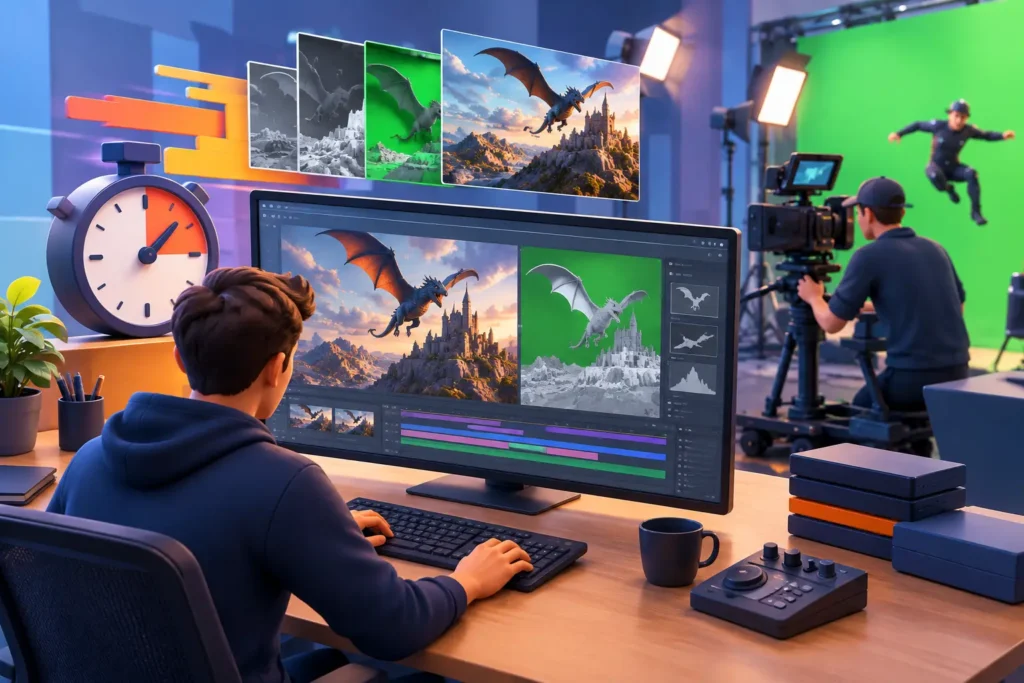
There is also a commercial benefit. A product model built with precision can support manufacturing planning and high-end visual production at the same time. It can be adapted into product renders, assembly animations, installation videos, trade-show visuals, and sales presentations. That continuity helps businesses avoid recreating the same product from scratch for every department.
Start With the Production Method
The strongest modeling workflow begins with a practical question: how will this product be manufactured? The answer affects the geometry from the beginning.
For injection molding, designers need to account for uniform wall thickness, draft, potential sink marks, ribs, bosses, and undercuts. Small design choices can influence cycle time, tool complexity, and the number of required mold actions. For sheet metal, bend radii, flange lengths, reliefs, and material grain direction can affect whether a part is practical to form. For CNC machining, tool diameter, internal corner radii, stock access, and setup count may determine both feasibility and cost.
Additive manufacturing provides more geometric freedom, but it introduces its own trade-offs. Overhangs may need support structures, surface finish can vary by orientation, and printed materials may not deliver the strength or heat resistance required for final production. A model intended for a prototype may therefore need adjustments before it becomes a model for production.
An experienced 3D production team does not replace the role of manufacturing engineering. It supports that process by building clear, accurate assets that make engineering input easier to apply, review, and communicate across departments.
Build a Clean Model Before Adding Visual Detail
Production models benefit from disciplined construction. Clean topology, logical naming, organized layers, and well-defined assemblies may seem like technical housekeeping, but they make later revisions faster and safer. A disorganized file can cause errors when multiple stakeholders need to update, approve, or reuse it.
The core structure should establish the correct dimensions and relationships first. Surface finishes, labels, color options, and photorealistic materials can follow once the underlying form is approved. This order prevents teams from spending time polishing a version that will change because a mounting point, enclosure thickness, or assembly sequence needs correction.
It is equally useful to separate components according to how they are sourced and assembled. Purchased parts, custom-machined elements, molded housings, electronic boards, seals, and fasteners should not become one undifferentiated mesh. Organized assemblies make it easier to produce exploded views, service animations, bills of materials references, and revision-specific visual assets.
Use Reviews to Make Decisions, Not Just Approvals
Many projects lose time because reviews are treated as a general request for feedback. The result is conflicting comments, subjective preferences, and late discoveries. A better approach is to define what each review should confirm.
An early review may focus on form, size, and major component placement. A later review may confirm manufacturability considerations, assembly access, and material assumptions. Once those points are approved, the project can move into detailed visualization, animation, or production documentation support with fewer disruptions.
This is particularly valuable when design, manufacturing, and marketing teams work in different locations. A precise 3D model creates a common visual language. Marketing can ask whether a feature should be highlighted in launch materials, while engineering can explain how that same feature functions or why it has a specific shape. The discussion becomes more productive because everyone is looking at the same product.
Choose File Outputs Around the Next Step
A model is only useful if the receiving team can work with it. CAD-centric workflows often require native or exchange formats suited to engineering systems, while visualization pipelines may use polygon-based formats optimized for rendering and animation. Trying to force one file type to serve every purpose can create unnecessary friction.
The practical solution is to plan deliverables early. Confirm which teams need editable source files, which need neutral exchange files, and which need optimized models for rendering or real-time presentation. Define the required unit system, coordinate orientation, naming conventions, revision process, and level of detail before production begins.
This is where outsourced support can bring real value. A capable external team can prepare models and derivative assets for multiple uses without forcing an internal design team to maintain specialized modeling, optimization, texturing, rendering, and animation capacity. At 3D Modeling Animation Studio, that production flexibility helps clients move from technical product data to polished visual communication while maintaining control over the approved design.
When Visual Accuracy Matters as Much as Dimensional Accuracy
Manufacturing decisions depend on correct geometry, but customer decisions often depend on how that geometry is presented. A high-value product may need realistic material behavior, precise branding placement, accurate finishes, and lighting that reveals functional details without misrepresenting the product.
This is especially relevant before a physical sample is available. Manufacturers can use a verified digital model to create pre-launch imagery, explain an assembly process, compare configurations, or secure stakeholder approval. The visual asset must remain faithful to the product, however. Rendering a feature that has not been finalized or showing a finish that cannot be produced can create expectations the business cannot meet.
The best process keeps technical and visual teams aligned through documented revisions. When a part changes, the change should be reflected in both the manufacturing model and the presentation assets. That discipline protects the product story as it moves from design review to market release.
A well-built model is not simply a file handed from one department to another. It is a working asset that helps teams spot issues earlier, communicate with more confidence, and prepare the product for the moment it has to perform in the real world.