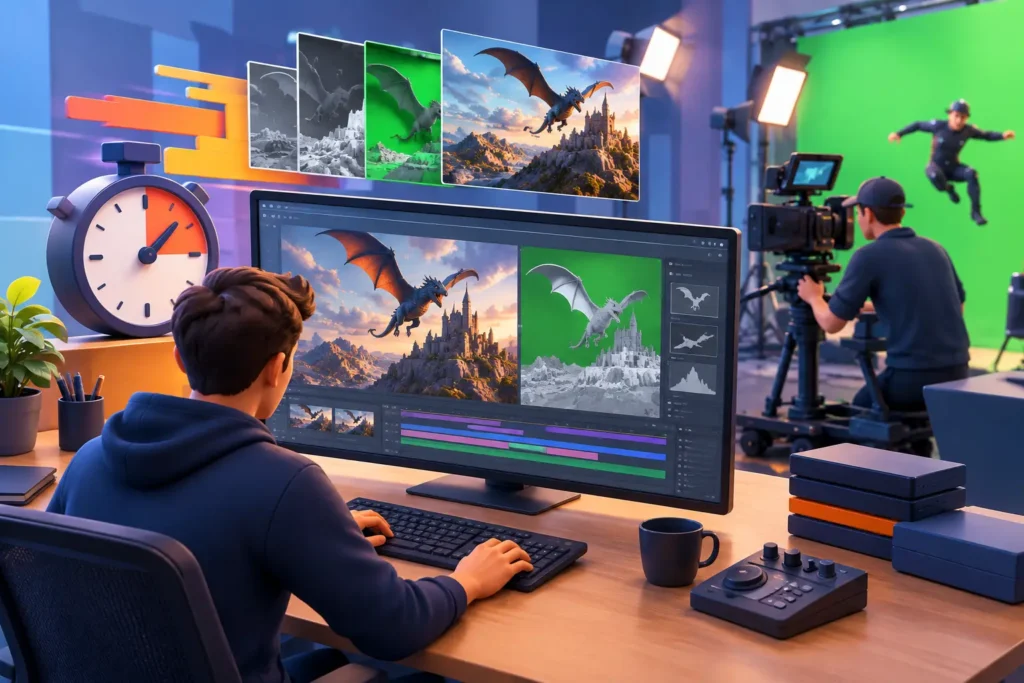
A client approves a campaign concept on Monday, requests a polished 3D product film by Friday, and expects daily progress without excuses. For a creative team already managing strategy, client feedback, media assets, and other deliverables, the decision to outsource animation for agencies is often about protecting the relationship as much as finishing the video. The right production partner gives your agency added capacity without sacrificing creative control.
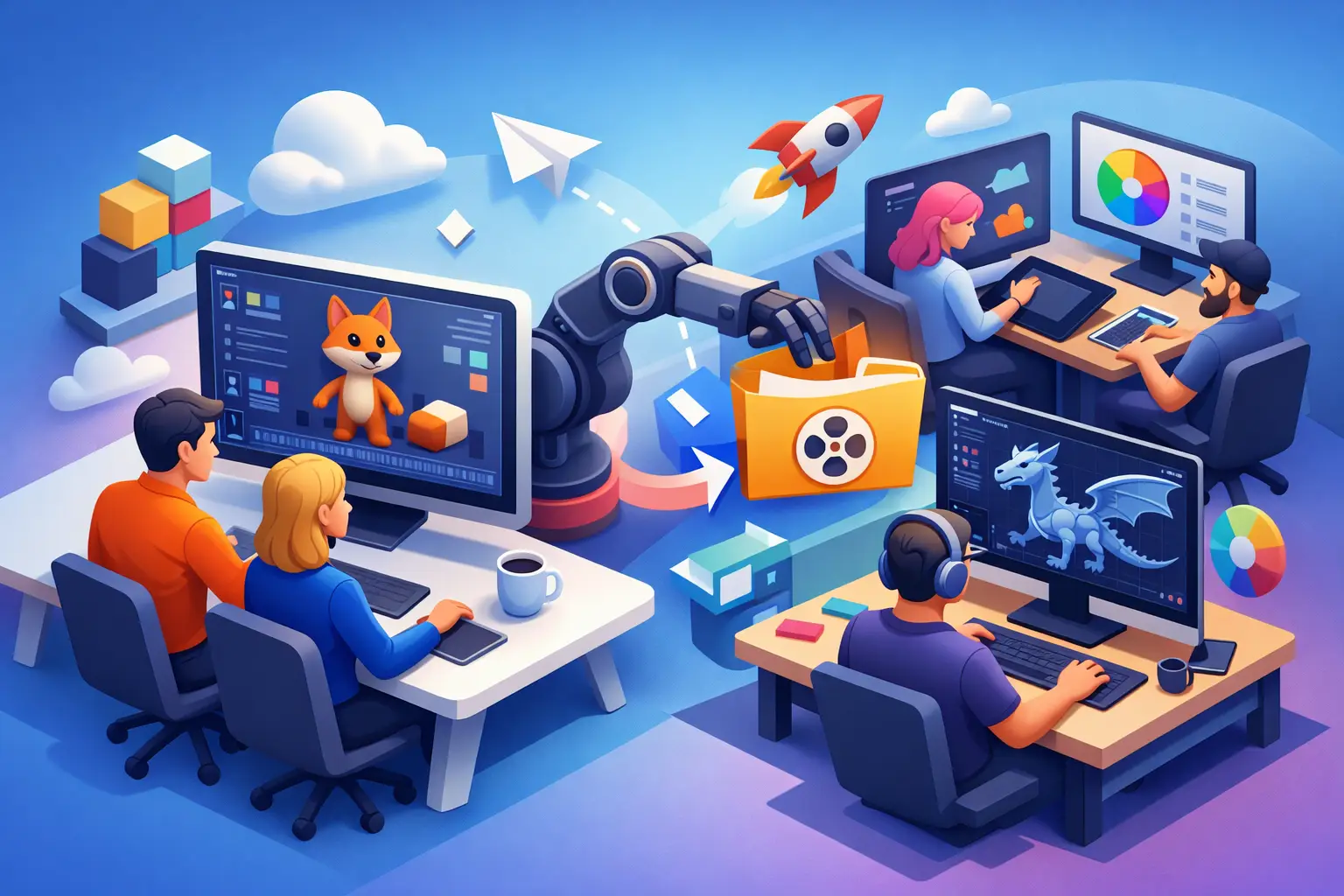
Outsourcing is not simply handing off overflow work. It is a production strategy that lets agencies take on larger visual projects, respond to unpredictable demand, and access specialists in modeling, rigging, animation, rendering, and post-production when the brief requires them. The result should be work that looks native to your agency’s standards while arriving on a timeline your client can trust.
Why Agencies Outsource Animation Production
Animation demand rarely arrives in a convenient, steady stream. A branding project may need a short logo reveal, while the next account requires a fully realized product animation, architectural flythrough, or medical visualization. Building an in-house team for every level of complexity creates fixed costs that may not match the agency’s pipeline.
An external animation team changes that equation. Instead of hiring for peak demand and carrying the overhead during quieter periods, an agency can scale production support around active projects. This makes it easier to price work accurately, preserve margins, and pursue opportunities that would otherwise exceed internal capacity.
Specialization is another practical advantage. High-quality 3D output depends on more than artistic taste. It requires technical decisions about topology, UVs, physically accurate materials, rig performance, lighting, render optimization, compositing, and delivery formats. A partner with dedicated talent across these disciplines can solve production issues early, before they become expensive revisions.
That said, outsourcing is not the best answer for every task. Quick social edits, simple motion graphics, or projects built around a highly proprietary internal process may remain more efficient in-house. Outsourcing delivers its strongest value when the workload is specialized, time-sensitive, variable, or large enough to strain your existing team.
How to Outsource Animation for Agencies Without Losing Control
The concern most agency leaders share is valid: will external production dilute the idea, slow approvals, or create a client-management problem? Those risks are real when the project starts with a vague brief and an undefined review process. They are manageable when the agency treats the animation vendor as an extension of its production operation.
Start with a production-ready brief
A strong brief does more than describe the desired look. It establishes the business purpose of the asset, audience, platform, runtime, technical requirements, brand rules, available source files, and final deliverables. If the project involves a product, provide CAD files, product photography, dimensions, material references, and any claims that must be represented accurately.
For character work, clarify the intended performance, shot count, dialogue, reference footage, and whether rigs or models already exist. For architectural work, identify which design elements are confirmed and which are still subject to change. The more clearly the production team understands what is fixed, the more efficiently it can plan modeling, animation, rendering, and revisions.
A visual reference board is useful, but it should not replace decisions. Tell the team what you want to borrow from a reference – camera energy, lighting mood, material realism, pacing, composition, or graphic treatment. This reduces the common mistake of approving a style direction only to discover that the client expected a different execution.
Define ownership before production begins
Agencies need a clear arrangement that supports their client relationship. Confirm who communicates with the end client, who consolidates feedback, who owns source files and final assets, and whether the production partner works under white-label terms. Define the number of review rounds and what qualifies as a change in scope.
This is particularly important for 3D projects because revisions can range from a simple text correction to rebuilding a model or changing an animation after lighting and rendering have started. A dependable outsourcing partner will identify those differences clearly instead of treating every request as identical.
Build approvals around milestones
Do not wait until the final render to discover a problem with the creative direction. A controlled workflow typically moves through concept or storyboard approval, asset approval, animation preview, lighting and look-development review, then final compositing and delivery. Each stage answers a different question.
At the storyboard stage, the agency confirms message, pacing, and shot logic. During modeling, it verifies accuracy and brand fit. Animation previews establish movement and camera behavior before rendering consumes time and budget. Final review should focus on polish, color, sound, graphics, and file specifications rather than major creative changes.
The agency should consolidate client feedback into one clear set of instructions. Sending fragmented comments from multiple stakeholders creates conflicting direction and increases turnaround time. One accountable approver on the agency side keeps the project moving.
Choose a Partner by Production Fit, Not a Low Quote
A low estimate can be attractive, especially when agency margins are under pressure. But animation pricing reflects labor, technical complexity, render resources, revision expectations, and production management. A quote that excludes essential work can become more costly than a transparent estimate with defined deliverables.
Review whether the partner has experience relevant to the assignment. Product marketing animation requires accurate materials, compelling camera work, and commercially focused storytelling. Film and television work may demand more advanced character pipelines and shot continuity. Medical animation requires precision, careful interpretation of source information, and a disciplined approval process. Architectural rendering depends on design accuracy, atmosphere, and an understanding of how a space should be presented.
Ask practical questions about how the team works. Can it provide modeling, rigging, animation, environment creation, rendering, video editing, and post-production under one workflow? How are project files managed? What does the review cycle look like? How does it address a missed detail or technical issue? The answers reveal more than a portfolio alone.
A capable partner should also be realistic about timing. Fast turnaround is valuable, but a credible schedule accounts for asset quality, review windows, render time, and contingency. Promising a complex animation in an implausibly short period may signal that key production steps have not been considered.
Protect Quality While Moving Fast
Speed and quality are not opposing goals when the production process is organized. They become opposing goals when scope changes continuously, references arrive late, or approvals are delayed. Agencies can improve both by establishing a few operating rules at kickoff.
Use approved brand assets from the start, including logos, fonts, color values, product files, and legal language. Specify delivery requirements early: aspect ratios, resolution, frame rate, codec, transparent backgrounds, social cutdowns, and whether editable project files are required. Late delivery changes can force unnecessary re-rendering.
It also helps to identify non-negotiables. For one client, it may be the exact finish of a product surface. For another, it may be a medical sequence that must match an approved scientific explanation. Put those requirements at the top of the brief, not in a final-round comment.
At 3D Modeling Animation Studio, outsourced production can be structured as end-to-end support or as a focused extension of an existing agency pipeline. That flexibility matters when an agency needs only environment modeling for a campaign, a specialist team for product visualization, or complete animation and post-production delivery.
Create a Scalable Agency Production Model
The most successful agency-vendor relationships are not treated as emergency solutions. They are set up before the next urgent project arrives. Share your typical service mix, quality expectations, preferred feedback format, and brand presentation standards. A partner that understands how your agency works can estimate more accurately and begin production with less friction.
Over time, a repeatable model can support multiple types of assignments without rebuilding the process each time. Your internal team stays focused on strategy, client communication, and creative direction. Your external animation capacity handles the specialist production workload with defined checkpoints and accountable delivery.
The goal is not to make outsourcing invisible. It is to make it reliable enough that your agency can confidently sell ambitious visual work, protect deadlines, and bring each client’s vision to life with the level of precision the brief demands.