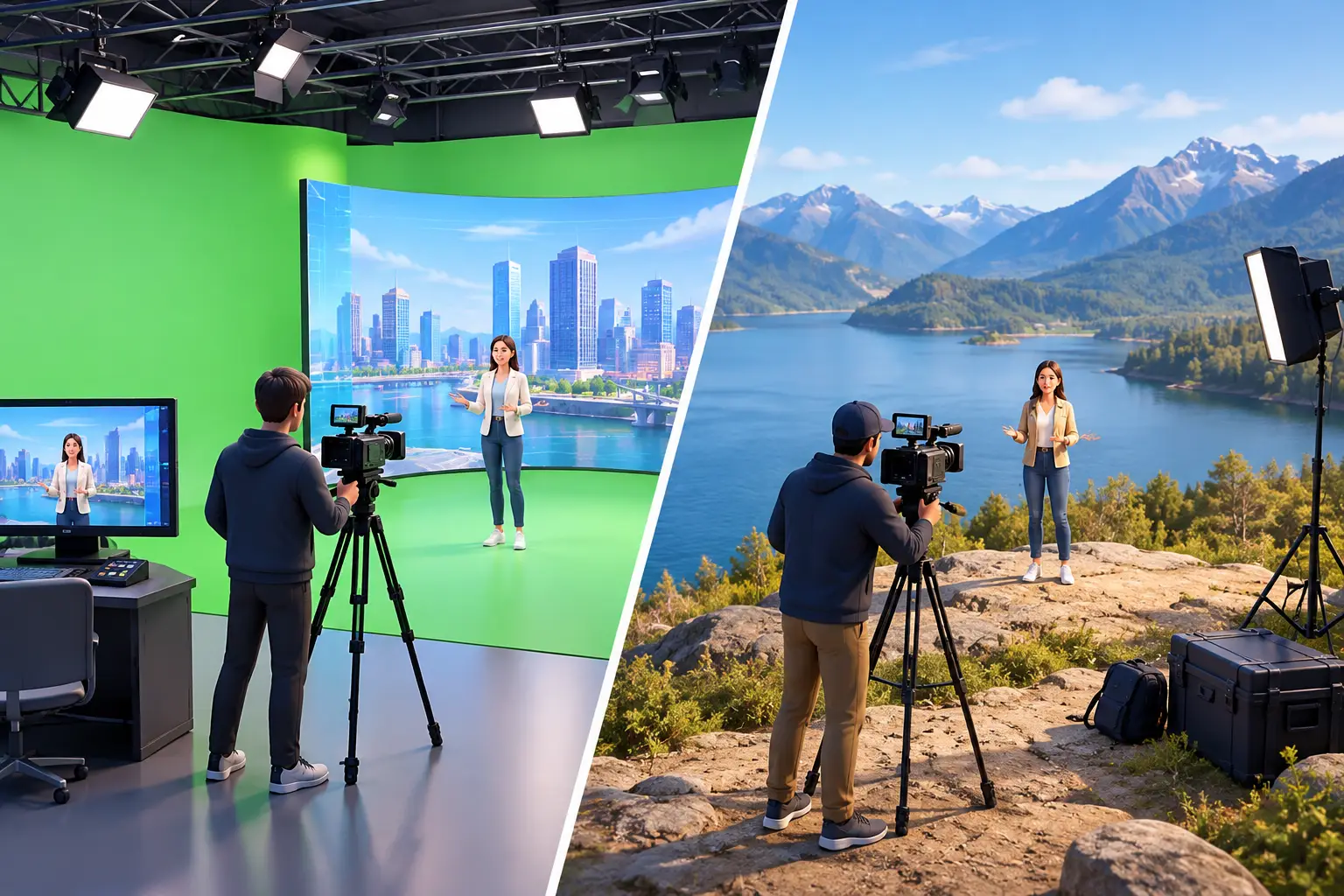
A storm over Manhattan, a product floating in a custom-built world, or a medical device shown inside the human body can all be produced without moving a crew across the country. But virtual sets versus locations is not a simple question of digital replacing physical. It is a production decision that affects cost, scheduling, creative flexibility, client approvals, and the realism your audience expects.
For agencies, production houses, marketers, and studio teams, the best choice depends on what the camera needs to capture and what the project needs to achieve. A real location may bring instant authenticity. A virtual environment may eliminate weather risk, location restrictions, and expensive reshoots. The strongest productions often use both.
Virtual Sets Versus Locations: The Core Difference
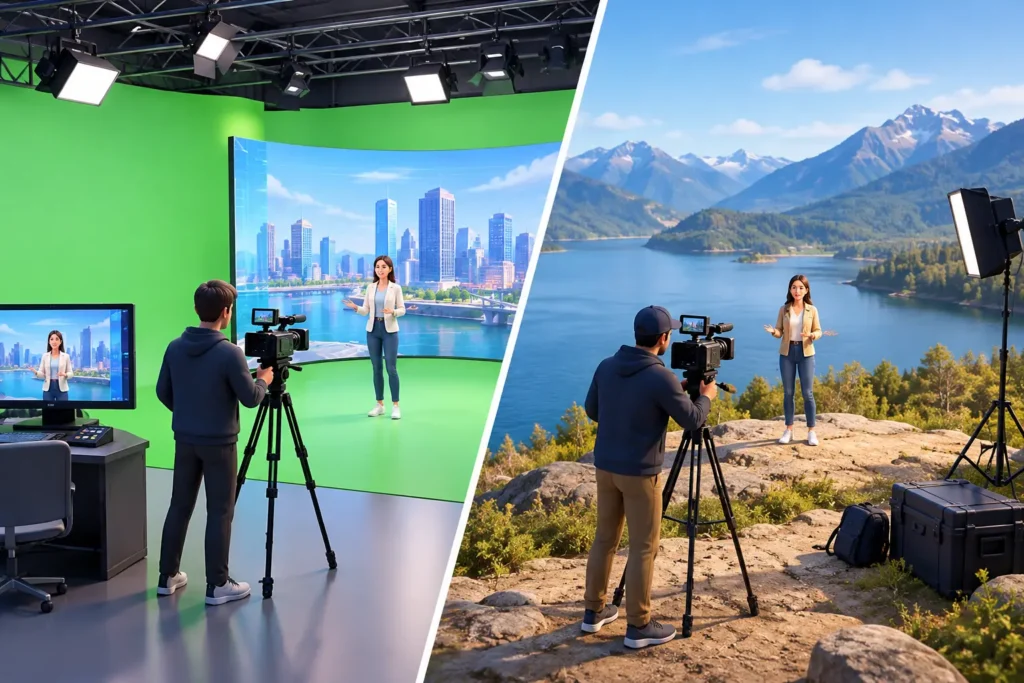
A location is a physical environment where talent, crew, equipment, props, and lighting come together for a live shoot. It can be a practical office, a factory floor, a residence, an outdoor landscape, or a purpose-built stage. Its major advantage is natural detail. Real surfaces, distance, atmosphere, reflections, and environmental imperfections are already present.
A virtual set is a digitally created environment, typically built with 3D modeling, textures, lighting, compositing, and animation. It may be used as a fully CG scene in post-production, a green-screen background, or an LED volume that displays a rendered world behind performers in real time. Virtual sets can recreate real places, visualize locations that do not exist, or show subjects that cannot be filmed conventionally.
The distinction matters because the workflow changes. Location production concentrates costs and decisions around shoot days. Virtual production shifts more work into preproduction, asset creation, technical planning, and post-production. That shift can be a major advantage when a brand needs multiple versions, frequent updates, or visual control that a physical shoot cannot provide.
When a Physical Location Is the Best Choice
A location remains the best choice when the setting itself carries emotional value or documentary credibility. A hospitality brand showing a real property, a manufacturer featuring its active facility, or a retailer filming in a recognizable city neighborhood can gain trust from the tangible details of a real place.
Practical locations also perform well when the scene depends on close interaction between talent and the environment. Walking through tall grass, opening a weathered door, handling machinery, or reacting to a crowded space often looks more natural when performers have real physical reference points. Although advanced virtual production can support these moments, the required planning and integration may outweigh the savings on a straightforward shoot.
There are operational benefits as well. If a location is accessible, controllable, and already aligned with the creative brief, filming there may be faster than building a high-detail digital replica. A short commercial with limited revisions and a simple day-for-night schedule may not need extensive 3D work.
That said, location work comes with variables that can be difficult to price or control. Permits, travel, weather, public access, insurance, union considerations, noise, changing daylight, and local restrictions can quickly expand a production schedule. A single delayed shoot day may cost more than the virtual option that initially appeared expensive.
Where Virtual Sets Deliver Stronger Business Value
Virtual sets are especially effective when a project needs control, repeatability, or visualization beyond what can be physically filmed. Product marketing is a clear example. A 3D product model can be placed in multiple environments, rendered in different colors, updated for new features, and adapted for global campaigns without rebuilding the shoot from scratch.
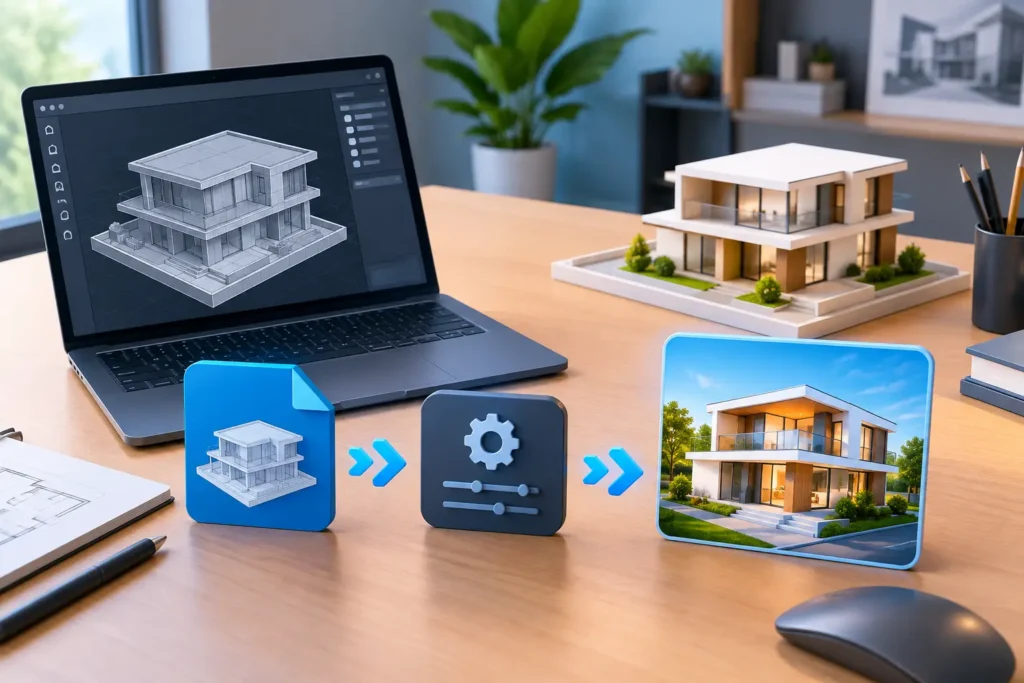
For architecture and real estate, virtual environments allow stakeholders to show an unbuilt property at the right season, time of day, occupancy level, and finish quality. In medical animation, a virtual set is often essential because the story takes place inside the body or at a microscopic scale. Film and television teams can use digital environments to extend sets, create historical scenes, or place talent in inaccessible locations.
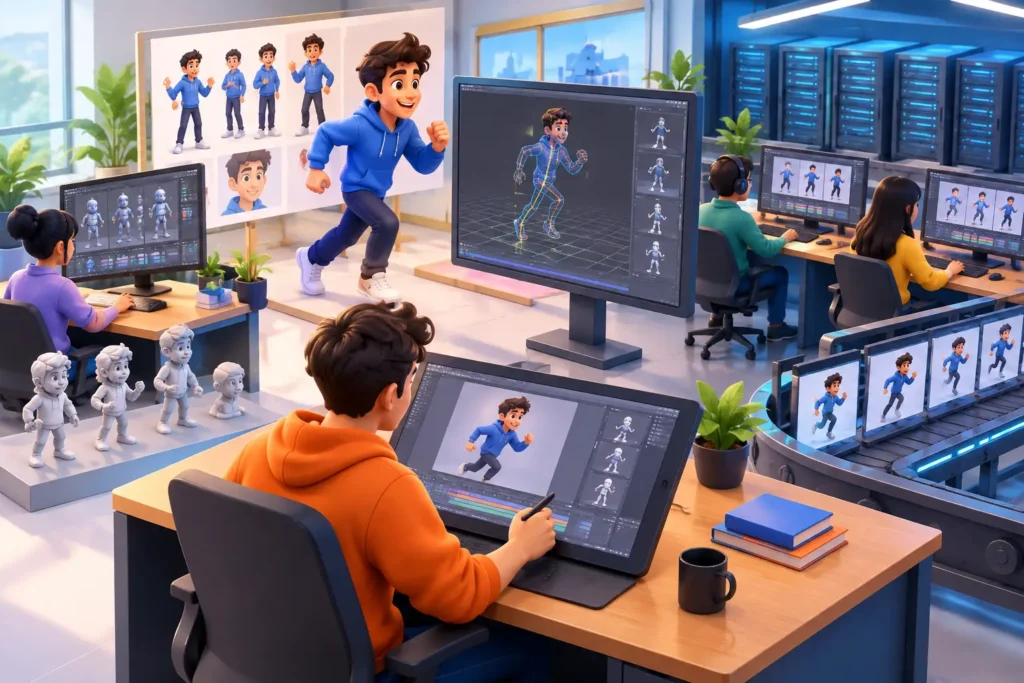
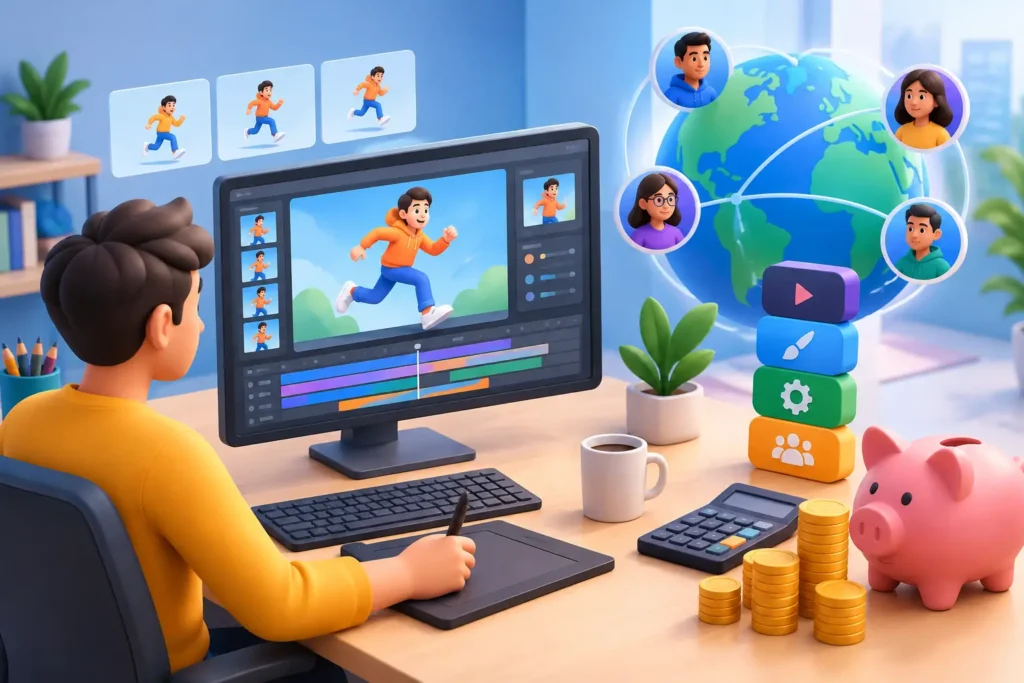
The most valuable benefit is not simply that virtual work looks impressive. It is that it creates a reusable production asset. Once a properly organized 3D environment exists, it can support stills, motion content, alternate camera angles, social cutdowns, product explainers, training content, and future campaigns. This is where outsourced 3D production can give internal teams meaningful capacity without requiring a permanent expansion of headcount.
Virtual sets also protect the schedule. There is no rain delay in a rendered studio, no sunset window that lasts twenty minutes, and no travel day for a client review. Creative teams can approve materials, camera paths, lighting direction, and environmental details before final rendering. That does not mean revisions are free, but revisions can be planned, scoped, and executed with far more control than a full physical reshoot.
Cost Is About More Than the Shoot Day
Comparing quotes for virtual sets versus locations can be misleading when teams only compare the immediate production line items. A location may appear less expensive because it avoids 3D environment development. A virtual set may appear costly because it includes modeling, texturing, look development, lighting, rendering, compositing, and quality control.
The better question is: how many deliverables must this production support, and how likely are changes? A one-time editorial interview in a readily available office may favor a physical location. A global product campaign that requires ten market variations, several languages, updated product details, and multiple aspect ratios often favors a virtual workflow.
Virtual production becomes more cost-effective when asset reuse is part of the brief. It is also valuable when travel, logistics, or safety risks are high. Filming a vehicle in an extreme landscape, a large industrial process, or a technically sensitive medical scenario can require significant coordination on location. A digital environment reduces those variables while giving the creative team greater control over what the viewer sees.
Budget discipline still matters. Photorealism takes time, especially for environments with water, vegetation, crowds, complex glass, or detailed reflections. If the required quality is cinematic and the camera moves close to every surface, the digital work must be funded accordingly. An expert production partner will define the visual target early rather than promising high-end realism on an underdeveloped scope.
Creative Control and Realism Need a Clear Brief
The right choice often comes down to the specific type of realism the audience needs. A luxury product campaign may need flawless surfaces and impossible camera moves, which favor CG. A brand film about a local community may need the texture of a real place and real people, which favors location shooting.
Virtual sets give directors precise control over composition. The team can move a wall, widen a corridor, change the skyline, adjust the sun, replace materials, or create a camera path that would be impossible with a crane or drone. This control is particularly useful when stakeholders need visual consistency across a campaign.
Physical locations provide productive unpredictability. Natural light changes, lived-in details, and spontaneous interactions can add a quality that is difficult to design deliberately. The decision should not be framed as digital versus authentic. A carefully built virtual set can feel convincing, while a poorly selected real location can look generic or distracting.
A Practical Decision Framework
Before committing to either route, production teams should assess four factors: audience expectations, asset reuse, schedule risk, and interaction requirements.
Audience expectations determine how closely the image will be inspected. A high-end automotive spot, architectural visualization, or medical explainer may demand controlled detail at a level that supports virtual production. Asset reuse reveals the long-term value of creating a digital environment. Schedule risk covers weather, permits, travel, and availability. Interaction requirements address whether talent must physically touch, navigate, or react to the environment.
A hybrid approach can resolve many of these trade-offs. Film talent and practical foreground elements on a controlled stage, then extend the world digitally. Shoot a real facility for credibility, then add CG product callouts, safety visualizations, or environment enhancements. Build a physical partial set for interaction and use virtual backgrounds for scale. This approach preserves what works best in each method.
Plan Earlier to Protect the Final Image
Virtual work rewards early decisions. Before modeling begins, teams should align on references, camera language, product accuracy, lighting mood, deliverables, aspect ratios, and approval stages. A strong preproduction process prevents late changes from becoming expensive rebuilds.
Location work also benefits from early planning, particularly through technical scouts, permit checks, contingency scheduling, and clear client approvals. The production goal is the same in both cases: reduce uncertainty before the most expensive phase begins.
The smartest decision is rarely about choosing the newest technology or the most familiar production method. It is about choosing the method that gives your team the right level of control, credibility, and reuse for the story you need to tell. When that choice is made early, the final visuals have room to do what they should: make the audience believe in the world around the message.