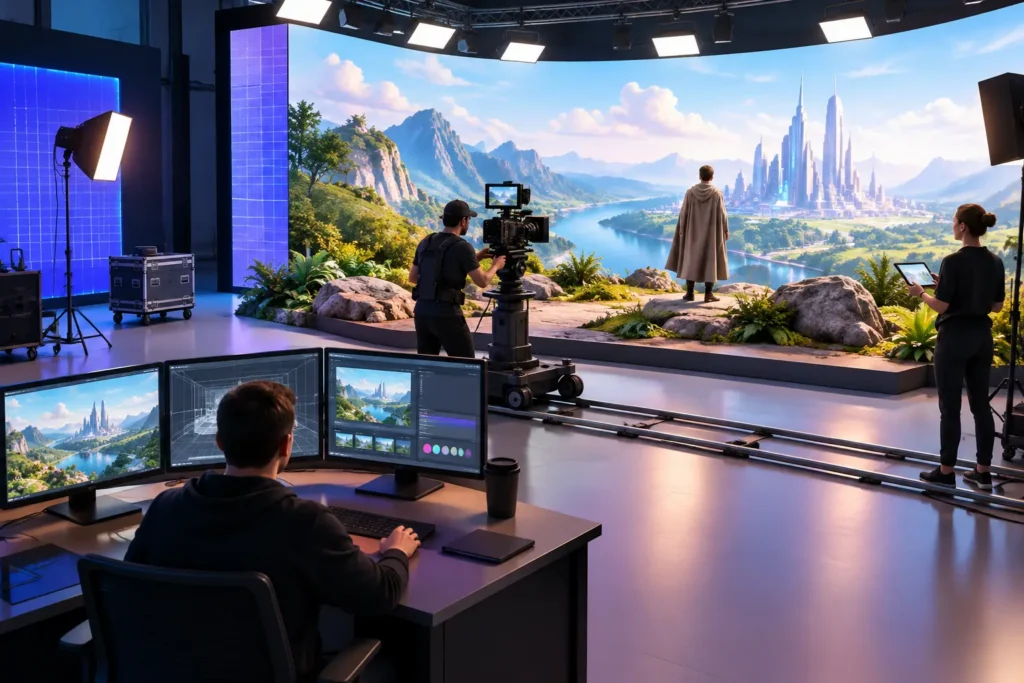
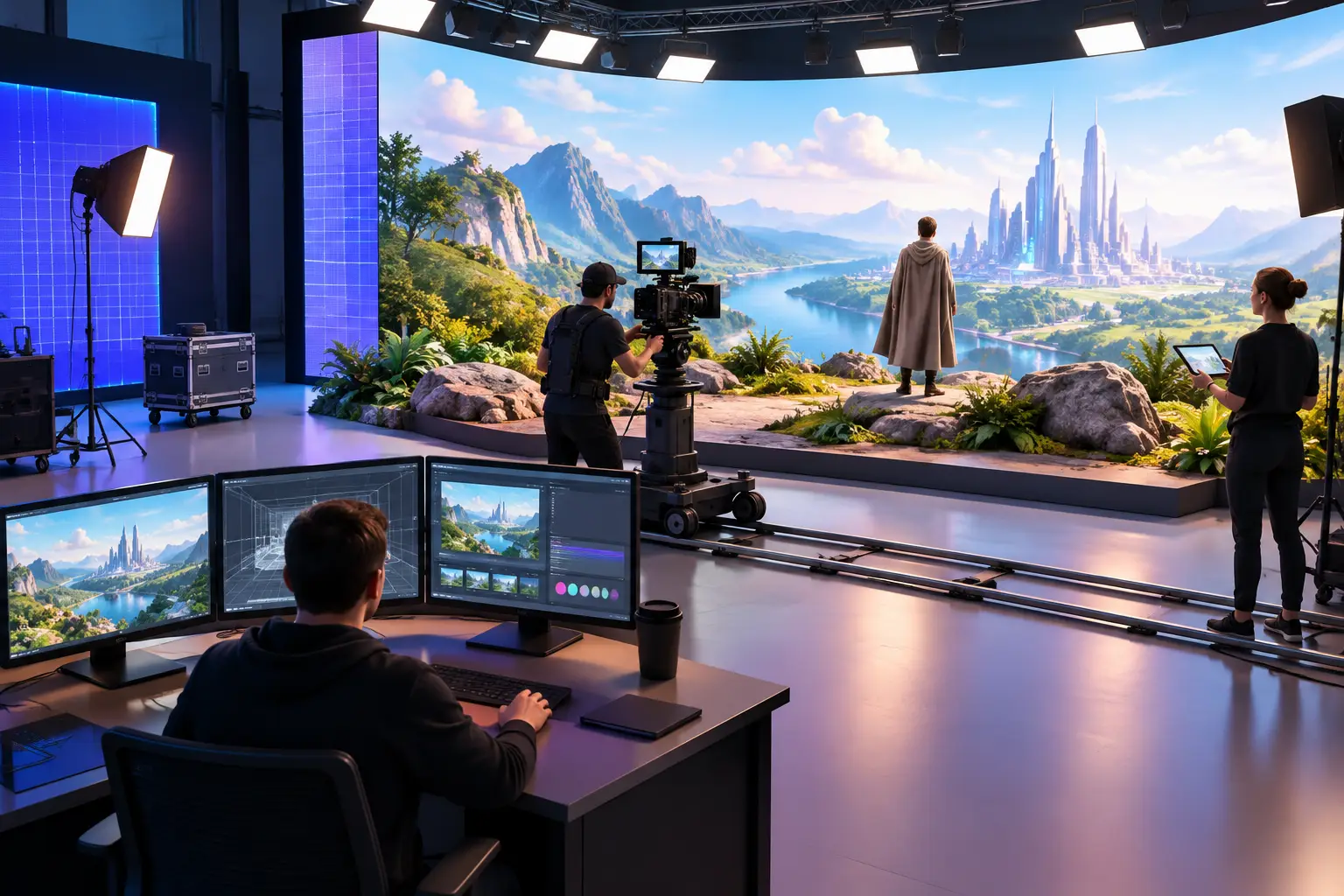
A virtual production shoot can now fail for reasons that have little to do with the camera. A late environment update, an incorrectly calibrated LED wall, a heavy Unreal scene, or missing color-management decisions can slow an entire stage. That is why virtual production trends 2026 matter to production leaders: the technology is moving beyond impressive demonstrations and becoming a discipline of planning, asset readiness, and dependable execution.
For brands, studios, and production houses, the opportunity is substantial. Virtual production can reduce location dependency, give creative teams earlier control over final-pixel imagery, and make global campaigns easier to adapt. But the best results will not come from treating an LED volume as a shortcut. They will come from building the right workflow around it.
Why Virtual Production Trends 2026 Favor Prepared Teams
The major shift is practical. Virtual production is becoming less about owning the most expensive stage and more about connecting preproduction, visualization, asset creation, cinematography, and post-production without avoidable handoffs.
A production team may use an LED volume for a hero automotive spot, a compact stage for a product launch, or real-time environments for a medical explainer. Each use case has different technical needs. A photoreal exterior environment needs disciplined lighting, optimized geometry, and high-resolution textures. A stylized campaign may prioritize rapid art direction and multiple visual looks. The right solution depends on the content, viewing distance, camera movement, delivery formats, and budget.
Clients will increasingly judge virtual production partners on predictability. Can the environment be approved before stage time begins? Can the team respond to a client revision without breaking performance? Can assets move from previs to final content rather than being rebuilt from scratch? These questions carry more commercial value than a technology checklist.
LED Volumes Will Become More Targeted
Large LED stages will remain valuable for shots where interactive lighting, reflections, and in-camera backgrounds justify the cost. Automotive work, reflective products, practical foreground elements, and talent-driven scenes are strong examples. When an actor needs to respond to a changing horizon or a product needs authentic environmental reflections, capturing those effects in camera can protect realism and reduce compositing work later.
Still, not every scene belongs on an LED wall. In 2026, more producers will make a sharper distinction between shots that benefit from an in-camera environment and shots better handled through green screen, traditional location work, or fully CG production.
The hybrid stage model will grow
Many efficient productions will combine methods. An LED wall may carry the horizon, lighting cues, and practical reflections, while foreground extensions or distant details are completed in post-production. A brand film might reserve stage time for key talent shots while creating product cutaways entirely in 3D.
This hybrid approach helps control costs without sacrificing creative quality. It also requires planning. Teams need to establish which elements must be final on set, which can remain flexible, and who has approval authority when a stage-day decision affects post-production.
Smaller stages will have a stronger role
Not every project needs a massive volume. Compact LED setups, projection-based workflows, and controlled real-time stages can be highly effective for tabletop products, interviews, social campaigns, architecture presentations, and specialized visual content. The stage should fit the shot plan, not the other way around.
For clients with recurring content needs, smaller and repeatable setups can be the better investment. They support faster production cycles and make it easier to refresh environments, product configurations, or regional campaign versions without rebuilding physical sets.
Real-Time Assets Must Be Built for Performance
A cinematic 3D model is not automatically a virtual production asset. Real-time rendering places different demands on geometry, textures, materials, lighting, and scene organization. A detailed environment that looks excellent in an offline render can become difficult to operate once camera tracking, live playback, and stage constraints are added.
Asset optimization will therefore be one of the most important virtual production trends 2026 brings to outsourced production. Production-ready assets need clean naming, logical scene hierarchies, efficient UVs, scalable texture resolution, and materials that behave reliably under the selected real-time engine and LED display conditions.
The goal is not simply to reduce polygon counts. It is to preserve the details the camera will see while removing complexity the final shot does not need. An expert 3D team can make that distinction early, before a costly stage day exposes performance issues.
Color pipelines also deserve more attention. What looks balanced on an artist’s monitor may shift on an LED wall or in the final graded image. Early color tests between the content team, stage provider, cinematographer, and post-production team help prevent a mismatch between the virtual environment and practical subject.
AI Will Accelerate Exploration, Not Replace Production Judgment
Generative AI will speed up reference gathering, concept exploration, texture ideation, and preliminary environment development. It can help creative teams compare directions before committing resources to a full asset build. For fast-moving brand work, this may shorten the path from initial brief to approved visual territory.
However, AI-generated material still requires control. Brand consistency, product accuracy, copyright risk, geometry quality, and technical usability remain serious concerns. A beautiful concept image may not contain enough reliable information to build a camera-ready 3D world. A generated texture may need substantial cleanup before it works across close-up shots.
The valuable use of AI is as part of a supervised pipeline. Experienced artists, technical directors, and production managers should validate outputs, protect source files, and ensure the work meets the project’s commercial and technical standards. Speed is useful only when it does not introduce expensive uncertainty later.
Outsourced Production Capacity Becomes a Strategic Advantage
Virtual production places pressure on internal teams because the workload arrives earlier. Environments, props, digital doubles, motion assets, and look-development tests often need to be ready well before principal photography. A studio that waits until post-production to source 3D support may lose the flexibility virtual production was meant to provide.
Outsourcing gives producers access to specialized capacity without adding permanent headcount for every campaign or show. The strongest external partner is not simply a vendor that receives a task list. It is a team that can interpret the shot requirements, flag technical risks, and organize assets for the selected workflow.
3D Modeling Animation Studio supports this model by providing scalable 3D modeling, animation, environment creation, and post-production support for teams that need additional production capacity. For virtual production, that support can include previs assets, optimized real-time environments, product models, animated elements, and final visual polish.
The handoff process should be defined at the start. Clients should provide the target engine or rendering pipeline, stage specifications when available, camera and framing expectations, resolution needs, color requirements, and approval milestones. The production partner should return clear asset packages, version control, test renders or playblasts, and documented delivery dates.
Plan the Project Around Decisions, Not Just Deliverables
A successful 2026 virtual production workflow starts with a decision map. Before modeling begins, determine the shots that must be captured in camera, the elements that can remain adjustable, and the environmental details that will affect lighting or reflections. This prevents teams from spending valuable time perfecting assets that never appear in the final frame.
Previs and technical rehearsals should be treated as production safeguards, not optional extras. They reveal whether camera moves, parallax, focal lengths, and real-time scene performance match the creative intent. They also let clients review the virtual world in context, where decisions are faster and less costly than they are on shoot day.
Budgeting should include a realistic revision allowance. Virtual production can make changes more visible and more immediate, which encourages experimentation. That is a benefit, but only when change requests are managed through a clear approval process. Unlimited revisions can quickly consume the time saved by avoiding physical locations.
The teams that benefit most from virtual production in 2026 will not chase every new tool. They will choose the right stage approach, build assets for the actual camera, and bring specialized support into the process early enough to make creative flexibility commercially useful.