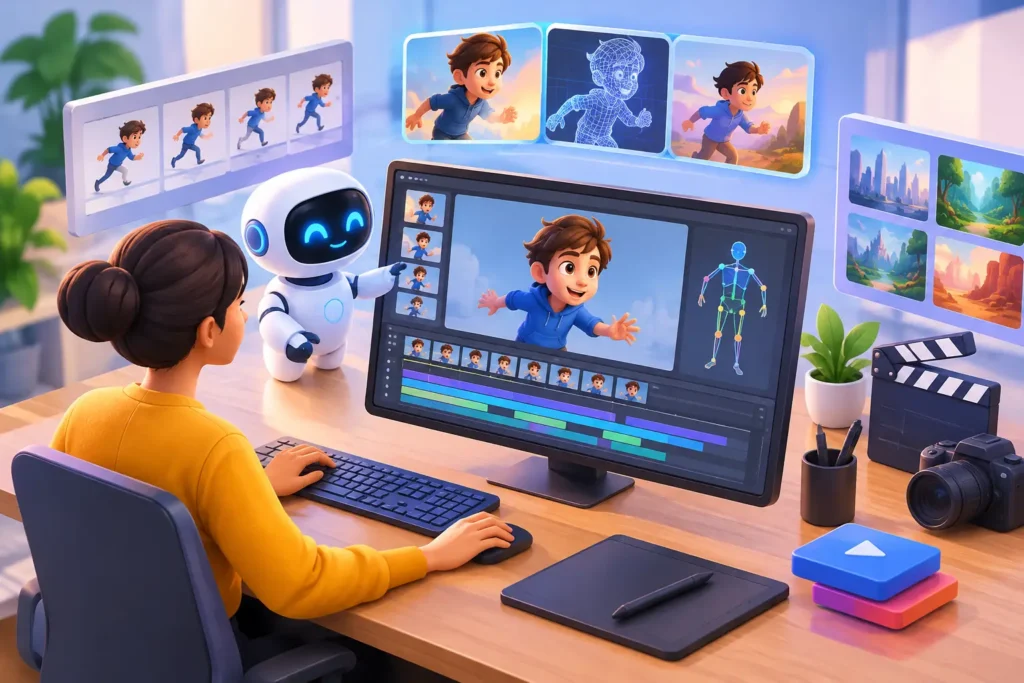
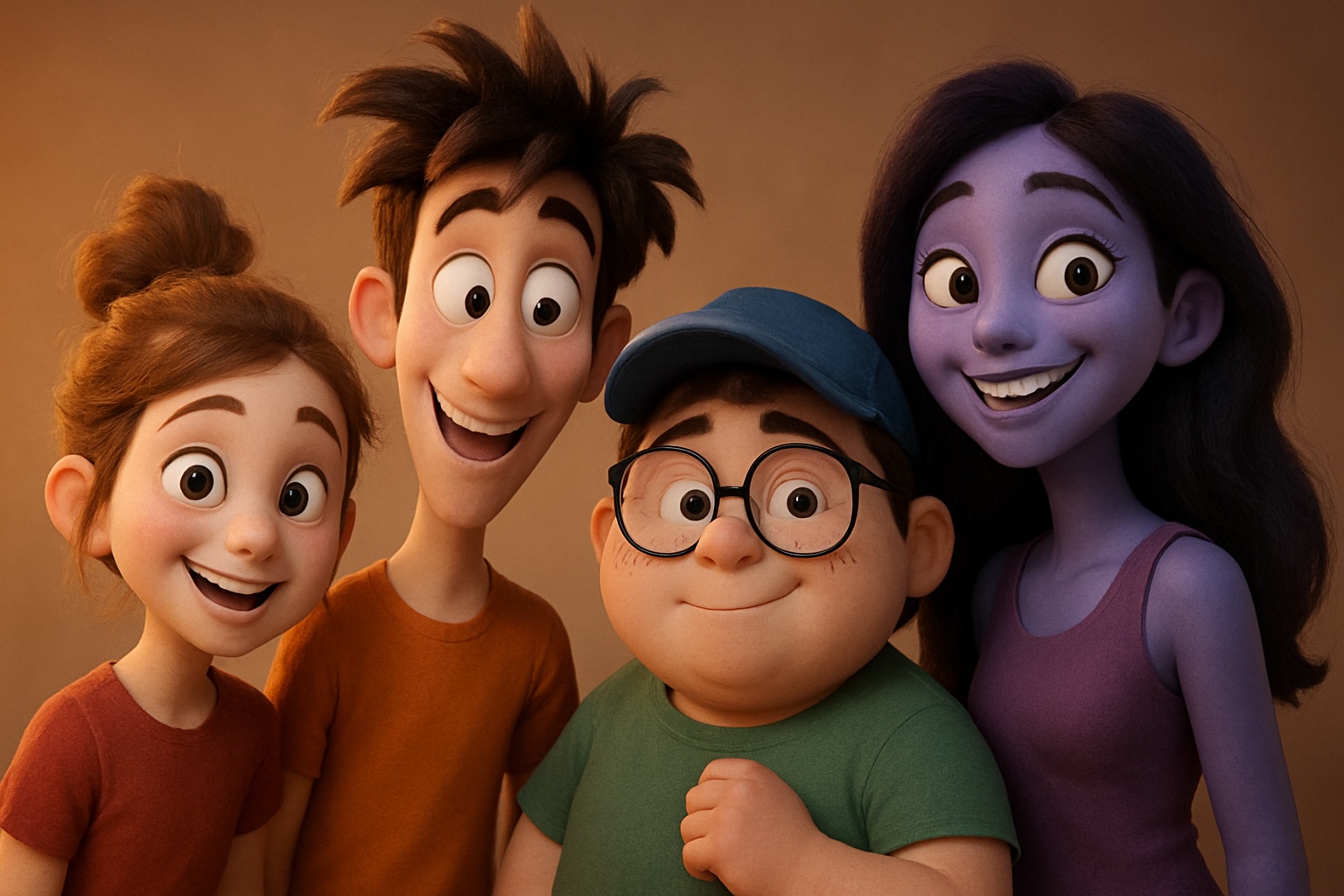
The core of any game is its characters. They serve as our avatars, our conduit to an imaginative and enjoyable world. Because 3D characters look more lifelike than their 2D counterparts, they have become quite significant in the game industry. Game developers must be able to build realistic, interactive, and visually attractive 3D characters — even if those characters are talking dinosaurs in pink and purple.
A variety of software programs exist today that make the process of creating 3D character models easier than ever. Let’s examine the top four packages on the market and their features for producing 3D character models for your games and apps.
Lightwave: Versatile and Feature-Rich for Dynamic Character Creation
NewTek created Lightwave, and the business still owns all of the software. It first appeared as a stand-alone application in 1994, though it had been around since the early 1990s. If you’ve seen Jurassic Park, Titanic, Babylon 5, or Battlestar Galactica, then you’ve seen the effects that Lightwave helps artists produce.
For many years, creators have used Lightwave for virtual productions, television, motion graphics, the film industry, visual effects, architectural visualisations, and music videos. The program includes a strong rendering engine to guarantee the best possible graphics.
Lightwave incorporates three types of dynamics to ensure optimal character development. It includes hard body dynamics to accommodate collisions. It also includes textile dynamics that allow garments to move naturally and soft body dynamics that let developers simulate fat or jelly-like materials.
Additionally, Lightwave provides a variety of material shaders and textures that apply to characters made using the program. These shaders help generate metallic, reflective, and transparent surfaces, and they assist in creating realistic skin textures for your models.
Most reviews claim that Lightwave is quite easy to learn, and skilled users often produce incredibly high-quality work using the program — making it a practical choice for those exploring 3D Character Modeling.
Maya: Industry Leader in 3D Character Animation
At the moment, creators regard Maya as one of the top 3D Character Animation Software programs on the market. In terms of producing character-animated films, it stands as the industry leader. If you’ve watched Finding Nemo, Up, Frozen, or Monsters Inc., then you’ve witnessed Maya in action. As a frontrunner in video game development, Maya has also increased its market share.
Maya enables strong character development and animation. It allows users to dynamically produce and model stiff or hard-bodied objects, as well as simulate fluids, clothing, and hair for soft-bodied items. These dynamic features — combined with Maya’s robust scripting language — let programmers develop incredibly sophisticated 3D environments.
Painting-like techniques allow programmers to sculpt and carve objects with the artisan brush-type tools of Maya. They may add grass, trees, and other elements without any trouble by just painting them in the scene.
The weakness of Maya is the learning curve. It has a large size and strong features which may be difficult to learn by a beginner. But most seasoned users feel the effort is justified, since Maya allows some of the most complex 3D animation work to be performed, particularly by those creating a complete Anime Character 3D Model.
3DS Max: A Go-To Choice for Game and Movie Creators
For many programmers and designers who wish to develop 3D characters, 3DS Max offers the best option. Autodesk sells this 3D computer graphics tool for creating animation models and images used in movies and video games.
Films like The X-Men, Alice in Wonderland, Planet of the Apes, and Harry Potter and the Deathly Hallows all feature animation made using 3DS Max. Compared to competing software, 3DS Max delivers a range of features that make building 3D models easier and faster.
Designers can import, visualise, and render cloud data sets using the point cloud support feature — helping them create models based on real-world references. 3DS Max’s ShaderFX functionality enables real-time visual shading.
Advanced character animation and rigging technologies allow designers to quickly create realistic characters. Plugins like Character Studio make it easy to animate models using various biped skeletons — a great feature for anyone working at a 3D Character Animation Studio or building detailed game assets.
Let Your Creativity Run Wild with Character Creation
Your creative desires can truly come to life once you learn how to make 3D character models. Whether you plan to build a fierce beast or a loveable anime hero, the tools are out there.
Once you’ve created your terrifying, lifelike creatures, it’s time to design the powerful weapons and environments they’ll live in the full fantasy experience powered by a 3D Anime Character Creator.
Contact us to learn how the right 3D character tools can elevate your creative projects, whether you’re developing games, films, or animations.