A rig that looks fine in a still frame can fall apart the moment animation starts. Elbows collapse, facial controls feel limited, skin weights break under extreme poses, and suddenly a production that looked on schedule starts losing time. That is exactly why knowing how to outsource 3D rigging matters. The right external rigging partner does more than build controls – they protect animation speed, character consistency, and delivery timelines.
For studios, brands, and production teams, outsourcing rigging is often the most efficient way to access specialized talent without expanding internal headcount. But it only works when the handoff is clear, the technical standards are defined, and the vendor understands how the rig will be used in production. Rigging is not just a support task. It is a technical foundation that affects every animation decision that follows.
How to outsource 3D rigging without slowing production
The first mistake buyers make is treating rigging as a simple add-on to modeling. In practice, good rigging depends on the model topology, the intended motion range, the animation style, the target software, and sometimes the final export format. A game-ready biped, a medical mechanism, and a film character may all need completely different rigging logic.
Start by defining the business need before you ask for a quote. Are you outsourcing because your internal team is overloaded, because you need a specialized character setup, or because you need a scalable production partner for ongoing work? That answer shapes the engagement. A one-off rig for a product demo is priced and managed differently than a batch of characters for episodic animation.
A strong outsourcing process begins with a practical brief. At minimum, your vendor should know what is being rigged, what software pipeline it needs to fit into, who will animate it, what kind of motion it needs to support, and how final files will be delivered. If those details are vague, revision rounds usually multiply.
Define the rigging scope before comparing vendors
Many outsourcing problems come from unclear scope rather than poor technical skill. If one vendor assumes a basic deformation rig and another assumes a full facial system with animator-friendly GUI controls, pricing will vary for good reason.
Be specific about the asset type. Say whether it is a human character, creature, mechanical product, vehicle, medical model, or architectural object with moving parts. Then define the rig complexity. Does the asset need IK/FK switching, stretch controls, corrective blend shapes, advanced face controls, cloth proxies, or game engine compatibility? The more precise you are here, the easier it is to compare vendors on equal terms.
It also helps to state what success looks like. That may mean fast viewport performance, clean deformation at shoulder and hip joints, simple animator controls, naming conventions that match your pipeline, or export-ready rigs for Unreal or Unity. Rigging quality is not only about technical complexity. It is about whether the setup supports the actual production goal.
What to look for in an outsourced rigging partner
The best choice is not always the cheapest quote or the largest vendor. It is the team that can show technical consistency, communicate clearly, and work within your production environment.
Portfolio review should go beyond pretty renders. Ask to see rigs in action, deformation tests, control systems, and examples of similar asset categories. A character rigger may not be the right fit for hard-surface mechanical setups. A team with film-quality rigs may not be optimized for real-time constraints. Relevant experience matters more than broad claims.
Process transparency matters just as much. A reliable partner should explain how they handle model checks, skeleton setup, skinning, control creation, testing, revisions, and file delivery. If their workflow sounds improvised, expect inconsistency later.
Communication is another filter. Rigging projects move faster when questions are raised early. A strong vendor will flag topology issues, discuss range-of-motion limits, and confirm software versions before work begins. That saves expensive backtracking.
The files and specs your rigging vendor needs
If you want a smooth start, give your vendor clean inputs. Topology problems, missing references, and unclear technical requirements create avoidable delays.
The model should be final or very close to final before rigging starts. Major mesh changes after skinning often trigger rework. Include neutral pose files, texture references if facial setup depends on them, and any blend shapes or morph targets already prepared. If the asset needs to work with existing animation libraries or a studio rig standard, provide those examples upfront.
Written specs help more than many clients expect. Share target software versions, preferred naming conventions, unit scale, joint orientation requirements, export expectations, and whether the rig must support mocap cleanup, keyframe animation, or both. If this sounds detailed, that is because rigging is technical production work. Precision at the beginning prevents friction later.
How pricing works when you outsource 3D rigging
Rigging costs vary widely because the work itself varies widely. A simple product rig with rotation controls is not comparable to a facially expressive hero character. Buyers sometimes expect a flat market rate, but pricing depends on asset complexity, revision risk, deadline pressure, and pipeline requirements.
Most vendors price rigging by one of three methods: per asset, per project scope, or by time and materials for evolving needs. Per-asset pricing works well when the requirements are stable. Project pricing fits larger production packages. Time-based pricing can make sense when assets are still changing or when animation feedback will shape the final rig.
The lowest bid can become the most expensive option if the rig fails during animation. A cheaper setup may skip deformation tests, control polish, documentation, or optimization. That can push the burden back onto your animators or technical directors. A better question than “What does it cost?” is “What level of production readiness is included?”
Quality control checkpoints that protect your timeline
If you are serious about how to outsource 3D rigging effectively, build approval checkpoints into the schedule. Do not wait until final delivery to evaluate the rig.
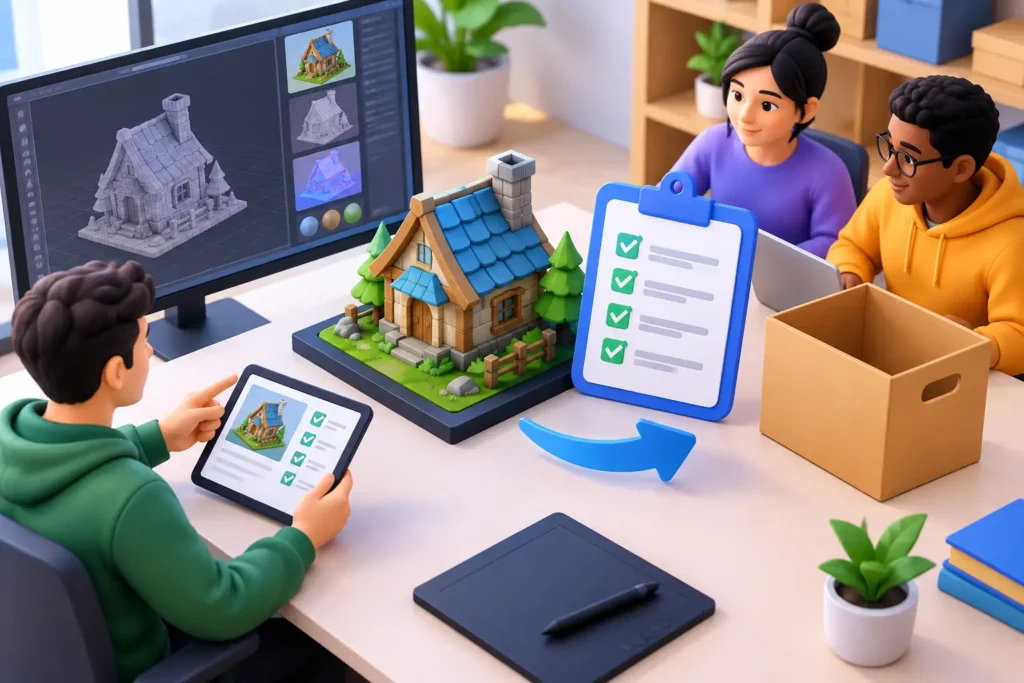
A practical review flow usually includes model validation, skeleton approval, first-pass controls, skinning and deformation tests, and final animation testing. That structure catches issues while they are still easy to fix. It also gives your internal team visibility without forcing them to micromanage the vendor.
Animation testing should be part of quality control, not an afterthought. A rig can be technically complete and still feel slow or awkward for animators. Ask for test poses, motion samples, and extreme deformation checks. If the rig is meant for real-time use, performance testing matters too.
For business buyers managing multiple stakeholders, this step reduces approval risk. Creative directors can review usability, producers can confirm deadlines, and technical teams can validate pipeline compatibility before the asset goes live.
Common outsourcing mistakes and how to avoid them
The most common mistake is sending unfinished models to rigging to save time. It usually does the opposite. When geometry changes late, skinning and controls often need to be rebuilt.
Another issue is under-specifying the intended motion. A vendor may create a perfectly functional base rig, but if nobody mentioned acrobatic movement, close-up facial acting, or mechanical simulation limits, the result may still miss the mark.
There is also the approval bottleneck problem. If one client contact handles commercial decisions but another handles technical feedback, delays happen when roles are unclear. Assign one decision-maker and one technical reviewer from the start.
Finally, do not judge a rig only by how many features it has. More controls do not always mean better production value. The best rigs are stable, efficient, and easy to animate.
When outsourcing rigging makes the most sense
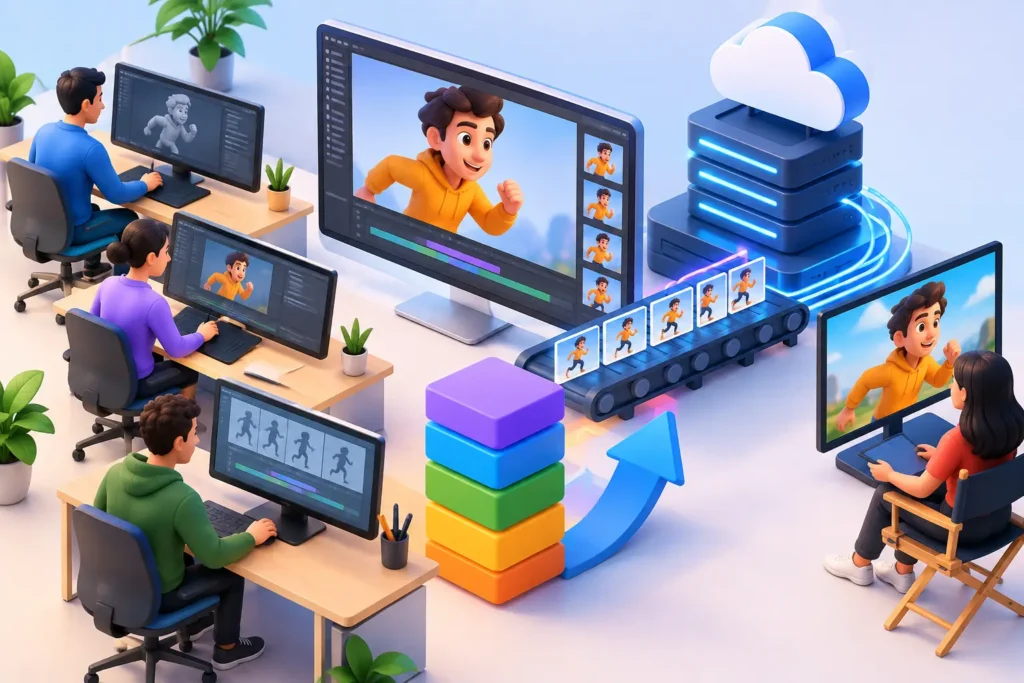
Outsourcing is especially valuable when deadlines spike, character counts increase, or niche technical skill is required. It is also a smart move when internal artists should stay focused on higher-value animation, look development, or client-facing creative work.
For many companies, the strongest model is not all-in-house or all-outsourced. It is a hybrid setup. Internal teams keep creative direction and approvals, while an expert external partner handles rig production at scale. That gives you capacity without long-term staffing overhead.
A capable production partner should feel like an extension of your pipeline, not a disconnected freelancer pool. That is where experience matters. Teams such as 3D Modeling Animation Studio are built around outsourced production support, which is exactly why process discipline, technical precision, and delivery reliability matter as much as artistic quality.
If you are evaluating how to outsource 3D rigging, think beyond the immediate asset. A well-built rig saves time on every animation pass that follows, and that makes it one of the smartest production decisions you can get right early.