Architectural animation outsourcing is most valuable when a project needs more than attractive still images. A well-produced animation can show how people arrive, move through, and experience a space over time. For architects, developers, marketing teams, and visualization studios, that moving perspective can turn a difficult-to-explain design decision into a clear commercial story.
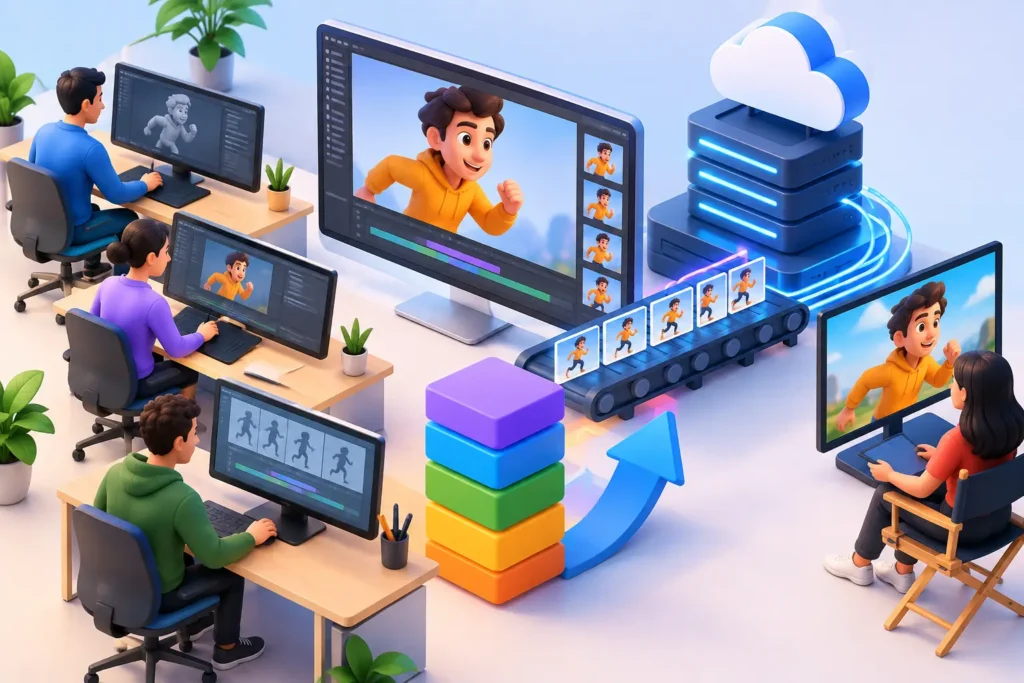
The challenge is that architectural animation is resource-intensive. It requires accurate modeling, scene optimization, lighting, camera direction, animation, rendering, compositing, sound, and revision management. Building all of that capacity internally can be expensive, especially when project volume rises and falls. An experienced external production partner gives teams the ability to scale without sacrificing visual quality or missing a launch deadline.
When Architectural Animation Outsourcing Makes Sense
Outsourcing is not simply a way to reduce production costs. It is a capacity decision. An in-house visualization team may be fully capable of creating project films, yet still lack the available artists, rendering power, or specialist skills needed for a major pitch, public approval process, sales launch, or investor presentation.
It makes particular sense when deadlines are fixed and the final deliverable has high visibility. A mixed-use development may need a cinematic launch film before pre-sales begin. An architecture firm may need an animation for a competition submission. A product manufacturer may need to show how a new facility functions before construction starts. In each case, the production team must work quickly while maintaining design accuracy.
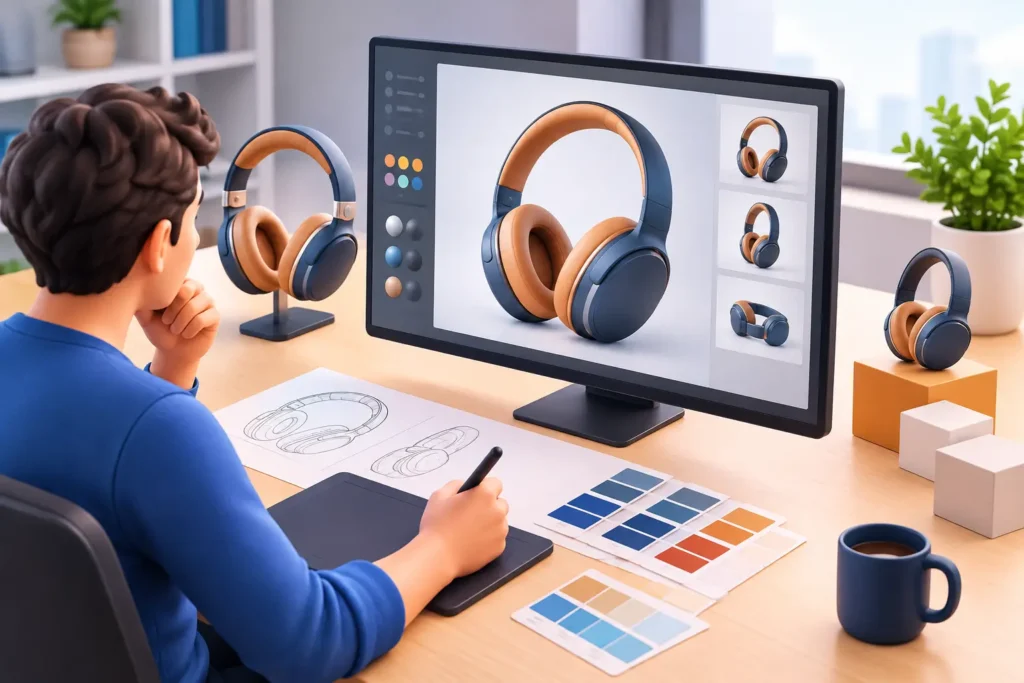
Outsourcing also helps when the brief requires a style outside the internal team’s usual workflow. Some projects call for photoreal exterior flythroughs with complex landscaping and traffic simulation. Others need stylized massing animations, construction sequencing, interior lifestyle scenes, or technical demonstrations of sustainable building systems. The best choice depends on the audience and the decision the animation needs to support.
A sales-focused film, for example, may prioritize atmosphere, amenities, and emotional pacing. A planning presentation may require accurate context, massing, circulation, and clearly labeled design features. Treating both deliverables as the same type of animation is a common reason projects lose time in revisions.
What a Strong Outsourced Production Process Looks Like
Reliable results begin with a defined production process, not with rendering. Before animation starts, the client and production partner should agree on the project purpose, target audience, visual reference, scope, runtime, delivery format, and approval structure. These decisions set the creative direction and prevent late-stage changes that affect every department.
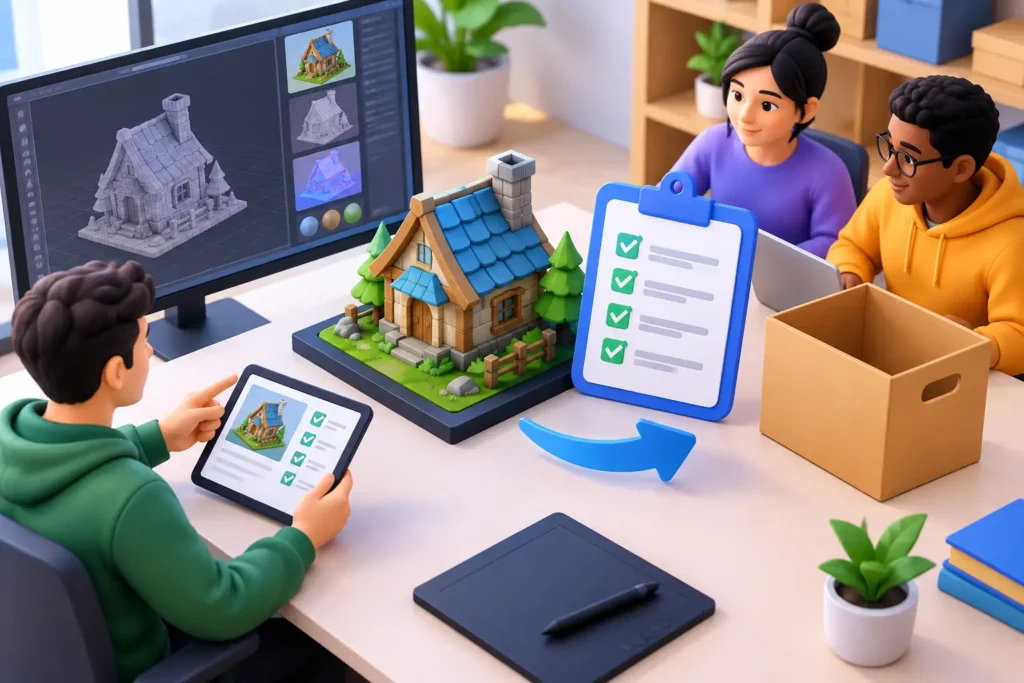
The first production stage is asset review. The external team assesses available CAD files, BIM models, Revit exports, SketchUp files, reference imagery, material schedules, site plans, and brand materials. Source files rarely arrive ready for animation. Geometry may need cleanup, layers may need organization, and models may need optimization for rendering. Identifying these issues early protects both schedule and budget.
Next comes previsualization. This is where camera paths, key scenes, timing, and story flow are established through a storyboard, shot list, or simple animated preview. It is far more efficient to revise a camera route at this stage than after detailed lighting, populated environments, and final materials have been completed.
For most architectural films, the workflow moves through these core approvals:
- Creative brief and source-file assessment
- Storyboard or camera-path approval
- Low-resolution preview with basic scene content
- Material, lighting, and environment review
- Final rendering, compositing, sound, and delivery
This sequence keeps client feedback focused. Instead of receiving general comments such as “make it feel better,” the production team can ask for decisions at the right moment: Is the shot order correct? Does the building massing match the approved design? Are the selected finishes accurate? Does the final color treatment support the campaign?
The Technical Details That Affect Quality
A polished animation is built on decisions viewers may not consciously notice. Camera height and lens selection affect whether a building feels credible or distorted. Lighting determines whether materials read accurately. Landscape assets, vehicles, people, and surrounding context establish scale. Animation speed influences whether viewers absorb the architecture or feel rushed through it.
Technical precision matters just as much. Large architectural scenes can become heavy quickly, particularly when they include dense interiors, high-resolution textures, vegetation, city context, water features, and animated crowds. An experienced outsourcing team knows how to optimize geometry, manage proxies, organize render layers, and select the right rendering approach for the schedule.
The rendering strategy should fit the use case. A premium investor film displayed at a live event may require higher resolution, refined post-production, and a carefully designed soundscape. A digital campaign may need several short versions for social media, web pages, and presentations. A virtual walkthrough may require real-time assets rather than a pre-rendered movie. These are related deliverables, but they require different production planning.
Clients should also be clear about what “photorealistic” means for their project. Photorealism is not only about adding detail. It depends on believable light behavior, accurate materials, appropriate camera movement, realistic environmental context, and disciplined compositing. Excessive effects can distract from the architecture. The strongest visuals support the design rather than compete with it.
How to Choose an Architectural Animation Outsourcing Partner
The right partner should be able to explain how they will manage production, not just show attractive work. A portfolio is essential, but it should be evaluated for relevance. Look for work that demonstrates the type of building, audience, visual style, and storytelling challenge your project requires.
Ask how the team handles source files and design updates. Architectural projects evolve, and changes are inevitable. A capable provider will define what is included in the revision process, document change requests, and advise on the impact of major model or design changes before they affect delivery dates.
Communication is another deciding factor. Global production support can provide valuable flexibility, but only if the workflow includes clear points of contact, regular progress reviews, shared approval milestones, and reliable file management. Time-zone coverage can speed up production when managed well. Without a clear communication structure, it can create confusion and duplicated feedback.
Pricing should be transparent enough to support informed decisions. The lowest quote is not always the best value if it excludes scene development, environment modeling, revisions, post-production, music licensing, or alternate formats. A detailed proposal should clarify deliverables, runtime, resolution, number of shots, included revisions, input requirements, and final file formats.
For recurring work, it is also worth evaluating whether the provider can function as an extension of your team. Long-term production partnerships become more efficient because the external artists learn your design standards, branding, preferred materials, approval process, and quality expectations. That familiarity reduces onboarding time and makes tight schedules more manageable.
Getting Better Results From Your External Team
Clients have a direct role in the final quality of an outsourced animation. The strongest projects begin with a concise but complete brief. Share the intended audience, the single most important message, the preferred visual references, the elements that must remain architecturally exact, and any aspects that are still subject to change.
It also helps to appoint one decision-maker or consolidate feedback before sending it to the production team. When comments from architects, developers, leasing teams, and marketing stakeholders arrive separately, they can conflict. A consolidated review gives the animation team clear direction and avoids costly backtracking.
Be realistic about the approval timeline. Fast turnaround is possible when feedback is timely and decisions are made at each milestone. Delays often come not from rendering, but from waiting on material selections, updated plans, final branding, or stakeholder sign-off. A production schedule is only as dependable as the approvals that support it.
At 3D Modeling Animation Studio, architectural animation projects are approached as business-critical visual assets, not generic flythroughs. The goal is to combine design accuracy, cinematic quality, and production control so every scene supports a presentation, campaign, or development objective.
The best outsourced animation partner does more than create motion. It gives your team room to focus on the design, the client, and the next deadline while experienced specialists turn approved plans into a compelling visual experience.