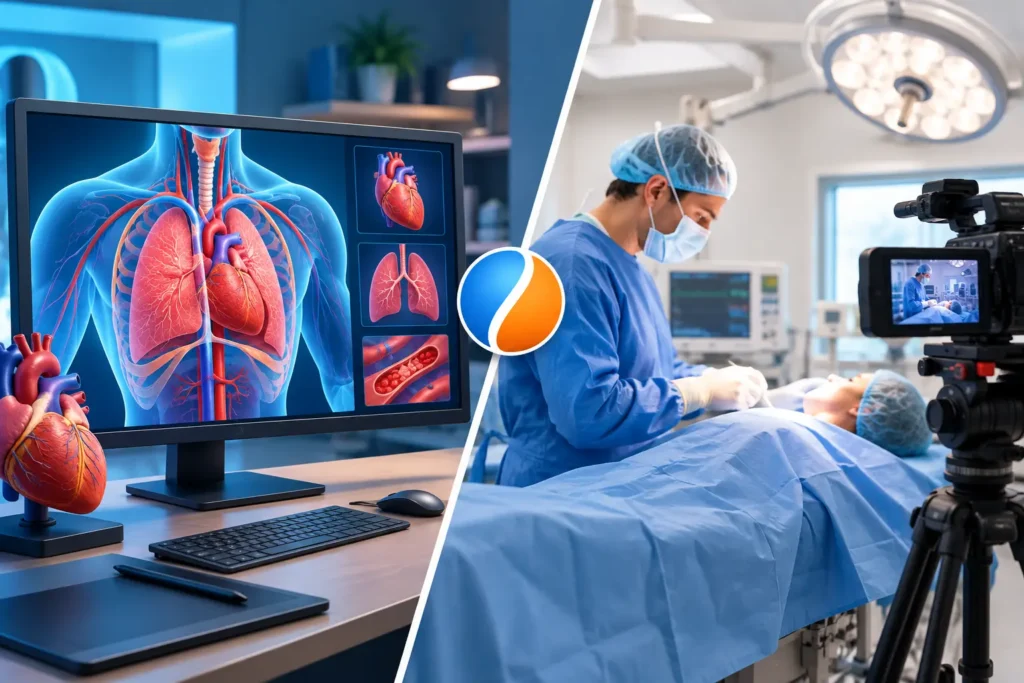
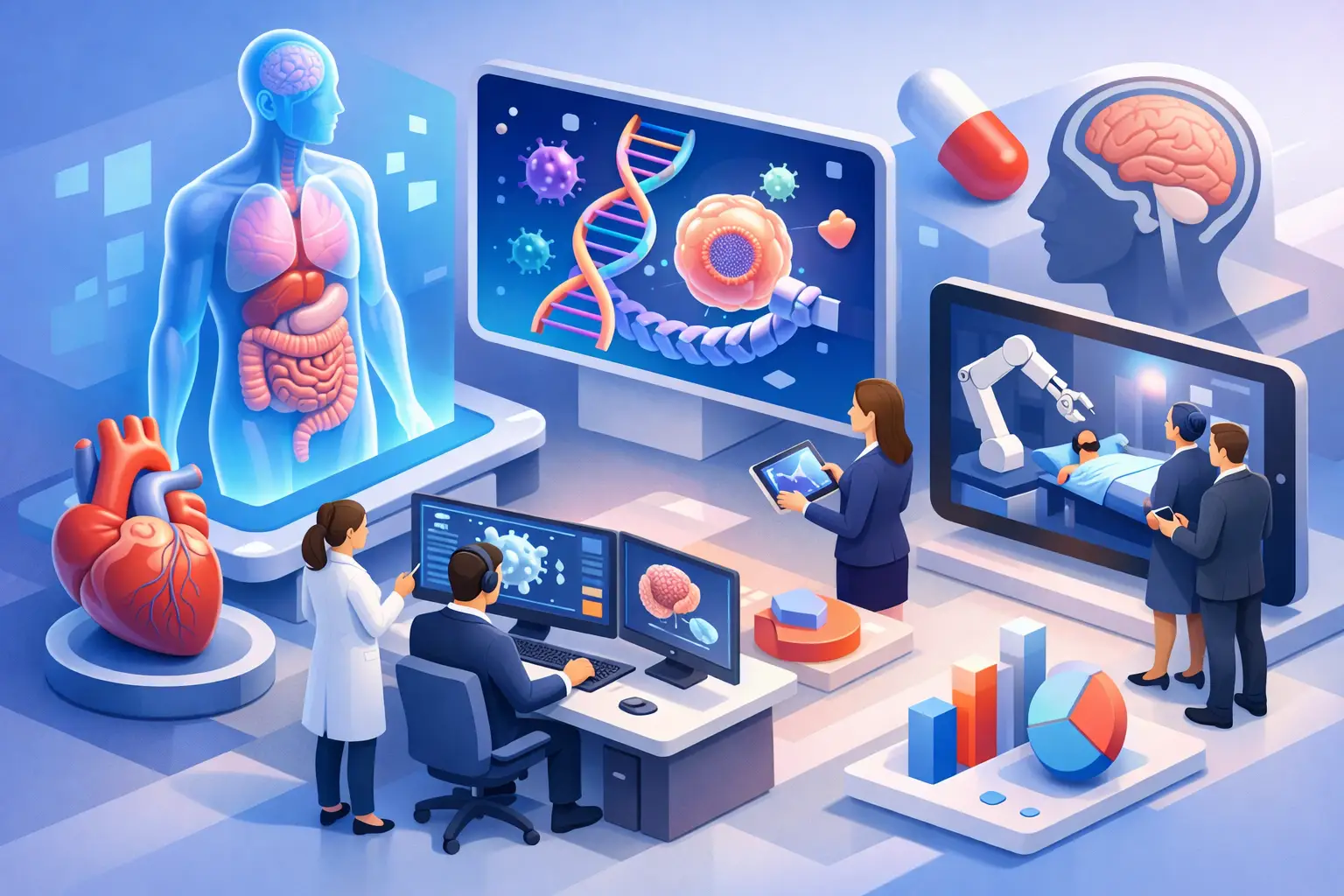
A device launch can fail to gain traction for a simple reason: the product is technically sophisticated, but no one can clearly see how it works. Static images, live-action footage, and slide decks often struggle to show what happens beneath the skin, inside a device, or across a complex clinical workflow. The best medical animation use cases solve that communication gap with controlled, accurate visuals built for a specific audience and business objective.
For marketing teams, medical device companies, healthcare organizations, and production partners, animation is not decoration. It is a practical way to make complex mechanisms understandable, support confident buying decisions, and create reusable visual assets across campaigns, sales materials, training programs, and events.
Where the Best Medical Animation Use Cases Deliver Value
Medical animation earns its budget when it reduces explanation time without reducing technical accuracy. A well-planned 3D sequence can isolate an anatomical structure, reveal a mechanism of action, remove visual clutter, and guide viewers through a process at the right level of detail.
The right application depends on the audience. A surgeon may need a precise procedural view, while a patient needs reassurance and plain-language context. A procurement committee may be focused on workflow efficiency, whereas an investor may need to understand the technology’s commercial potential. One animation can support several goals, but only if the script, level of detail, and approval process are planned from the beginning.
1. Medical Device Product Demonstrations
Product demonstrations are among the most commercially valuable medical animation applications. They show how a device is assembled, positioned, activated, and used in a clinical setting without relying on a physical prototype, operating room access, or difficult live-action production.
A 3D animation can cut through the housing of a catheter, implant, surgical instrument, monitor, or diagnostic system to show internal components at work. It can also visualize details that are impossible to film, such as fluid movement, sensor response, energy delivery, or a device’s interaction with tissue.
For sales and product marketing teams, this creates a flexible asset that can be adapted into launch videos, trade show loops, website visuals, sales presentations, and product training modules. The trade-off is that technical claims must be carefully managed. Every feature shown should align with approved documentation, product specifications, and regulatory guidance.
2. Mechanism of Action Visualizations
Pharmaceutical, biotech, and life science companies often need to explain events at the cellular or molecular level. Mechanism of action animation makes these invisible processes visible, showing how a therapy interacts with receptors, proteins, cells, pathogens, or biological pathways.
This format is particularly effective when a product’s differentiation cannot be understood through conventional photography. It can communicate how a therapy reaches a target, blocks a pathway, stimulates a response, or changes disease progression. For scientific audiences, the animation can include detailed molecular behavior. For a broader audience, the same concept can be simplified into a clear visual story.
Accuracy matters more here than visual spectacle. Molecular interactions are often modeled from a combination of published science, client-provided references, and artistic interpretation. The production team should establish early which elements are scientifically literal, which are illustrative, and which require medical or legal review before release.
3. Surgical Procedure and Clinical Training
Surgical animation helps clinicians understand procedure steps before they enter the operating room. It can demonstrate access points, instrument positioning, treatment sequences, potential complications, and best-practice technique in a controlled format.
Unlike recorded surgery, animation can remove blood, obstruction, and unnecessary detail while preserving the anatomical relationships that matter. It can pause at critical moments, use transparent views, and show angles unavailable to a camera. This makes it useful for surgeon education, physician onboarding, continuing education, and internal product specialist training.
Training content requires a different production approach than promotional content. It should prioritize sequence clarity, validated terminology, and procedural consistency. If a technique varies by physician preference, geography, or device configuration, the animation should acknowledge those boundaries rather than present one workflow as universal.
4. Patient Education and Informed Consent
Patients do not make better decisions because they receive more terminology. They make better decisions when they understand the condition, the proposed treatment, the expected process, and the questions they should ask their provider.
Patient education animations can explain common procedures such as joint replacement, dental implants, cardiac intervention, fertility treatment, cancer therapy, or spine surgery with a calm, approachable visual style. The most effective versions avoid graphic imagery unless it is necessary for understanding. They use familiar comparisons sparingly, clear labels, and pacing that gives viewers time to process each stage.
These animations can support informed-consent discussions, patient portals, waiting-room displays, and post-consultation follow-up. They should not replace a clinician’s explanation or imply guaranteed outcomes. Used correctly, they help patients arrive at conversations better prepared and less overwhelmed.
5. Healthcare Sales Presentations and Trade Shows
At a crowded conference booth, a representative may have less than a minute to earn attention. A concise medical animation can establish the product problem, show the solution in action, and create a reason for a prospect to start a conversation.
Trade show animation works best when it is designed for the environment. Booth screens are often viewed from a distance, in noisy spaces, and without audio. The first few seconds should communicate the product category or clinical challenge visually. Short loops, large focal points, and readable on-screen messaging tend to outperform lengthy narratives built for desktop viewing.
The same core 3D assets can later be repurposed for digital ads, landing pages, social clips, and sales outreach. That asset reuse is one of the strongest business cases for investing in a properly built 3D production pipeline rather than commissioning isolated campaign visuals.
6. Investor, Fundraising, and Stakeholder Communication
Early-stage medtech and biotech companies frequently need to explain a complex concept before a final product exists. A polished animation can visualize a device prototype, clinical workflow, platform technology, or therapeutic concept before physical manufacturing, trial footage, or real-world use cases are available.
For investors and strategic partners, the goal is not to simulate a finished commercial. It is to clarify the opportunity: what problem exists, how the solution functions, why it is differentiated, and how it may fit into clinical practice. Animation can make that story more credible when it is grounded in real engineering data and avoids overstating readiness or efficacy.
Selecting the Right Use Case Before Production
The most expensive animation mistake is starting with visuals before defining the decision the video needs to influence. Before commissioning a project, establish the primary audience, the single most important message, the distribution channels, and the approval stakeholders.
A 90-second product overview for a sales meeting may need a different level of technical detail than a 30-second trade show loop. A clinician-focused procedure animation may require input from physicians, clinical educators, and regulatory reviewers. A patient-facing piece may need health literacy review and accessible language. Treating all medical animation as the same category leads to unnecessary revisions and diluted messaging.
It also helps to plan for modular delivery. A master animation can be structured to produce shorter cutdowns, still images, product renders, vertical clips, and presentation-ready segments. This approach improves the return on production spend and gives marketing teams usable content long after the initial launch window.
A Production Process That Protects Accuracy
Medical animation is most efficient when creative and technical decisions happen in the right order. The process should begin with a discovery phase covering objectives, target viewers, visual references, product files, clinical source material, and required approvals. From there, a detailed script and storyboard establish the narrative before intensive 3D work begins.
Once the visual direction is approved, artists create or refine 3D models, develop anatomy or environments, animate the action, and add lighting, labels, sound, and post-production elements. Review checkpoints should be scheduled around meaningful milestones, especially storyboard approval, technical animation review, and final claims review.
An experienced outsourced team can add capacity without forcing internal teams to manage multiple vendors for modeling, animation, rendering, and editing. For organizations with fluctuating launch schedules or limited in-house specialists, that production flexibility can be as valuable as the final video itself.
The strongest medical animation does more than make a complex subject look impressive. It gives the right viewer a clear reason to understand, trust, and act. Start with the communication problem, bring technical reviewers into the process early, and build assets that can keep working across every stage of the product journey.