A product launch is six weeks out, the packaging is still being finalized, and the campaign team needs hero visuals now. That is where the debate around 3d rendering vs photography stops being theoretical and starts affecting budget, timelines, and sales readiness.
For brands, studios, architects, and production teams, the right choice is rarely about which medium is better in absolute terms. It is about which one gives you the control, speed, realism, and production efficiency your project actually needs. In some cases, photography is the obvious fit. In others, 3D rendering is the faster, more scalable, and commercially smarter option.
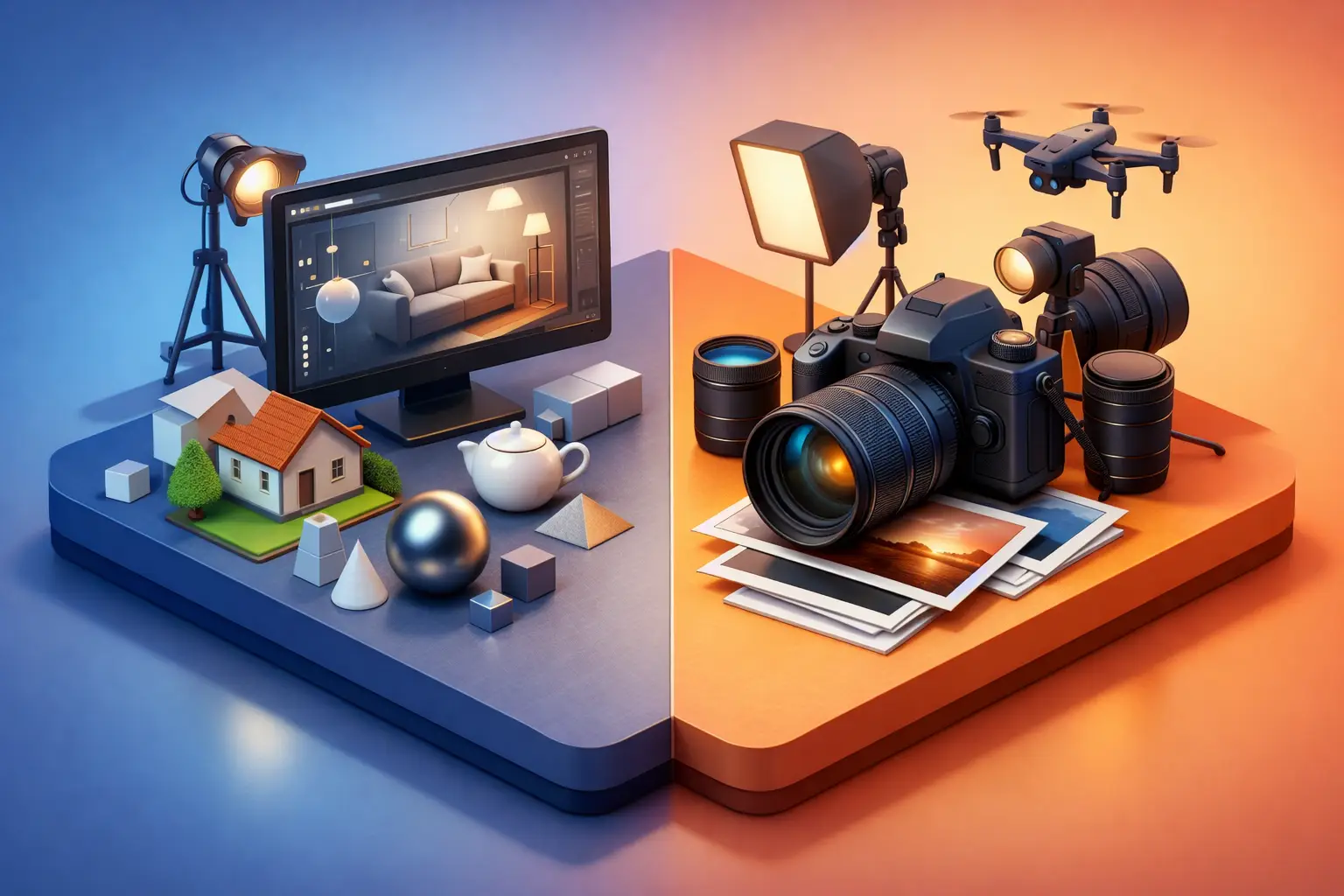
3D rendering vs photography in real production terms
Photography captures what already exists. If the product, space, or subject is physically available and ready to shoot, photography can produce authentic, high-impact imagery with a natural sense of detail and atmosphere.
3D rendering creates imagery digitally. That means the object, environment, lighting, camera angle, and materials can all be built and adjusted before anything exists in the physical world. For companies managing launches, revisions, or multiple variations, that changes the production equation significantly.
The key difference is not just visual style. It is operational flexibility. Photography depends on physical readiness, location access, crew scheduling, and reshoots when something changes. Rendering depends on asset quality, technical skill, and a well-managed pipeline. Both can deliver strong results. The question is which workflow serves your business goal with less friction.
When photography is the stronger choice
Photography still has clear advantages, especially when realism must come from a real-world capture rather than digital construction. If you are shooting fashion, food, live events, people, or handcrafted products where subtle imperfections matter, photography often feels more immediate and credible.
It is also effective when a brand wants a documentary or lifestyle quality that depends on real environments and human interaction. A well-directed photoshoot can communicate emotion quickly. That is difficult to replicate if the concept relies heavily on spontaneous movement, nuanced skin tones, or the unpredictability of real light.
Photography can also be efficient when everything is already in place. If the product is manufactured, the location is booked, and the creative direction is locked, a shoot may be the shortest path to final assets. In those cases, rendering may introduce unnecessary setup time.
Still, photography becomes less efficient when revisions stack up. A packaging change, product color update, or new camera angle can turn into another day on set, another crew booking, and another round of post-production.
When 3D rendering is the better business decision
3D rendering becomes especially valuable when speed, flexibility, and repeatability matter more than physical capture. That is why it has become a best choice for product marketing, architecture, manufacturing, medical visuals, and entertainment pre-production.
If a product is still in development, rendering lets marketing start before manufacturing is complete. If a client needs ten colorways, five finishes, and multiple regional packaging versions, those can be produced from the same digital asset base. If an architect wants to show a building before construction begins, rendering is not an alternative to photography – it is the only viable option.
This is where outsourced production support creates a real advantage. An expert 3D team can build once, then scale outputs across stills, animation, cutaways, exploded views, and campaign variations without forcing the client to restart from zero each time.
For commercial teams, that translates into faster approvals, lower reshoot risk, and better asset consistency across channels.
Cost is not as simple as it looks
Many buyers assume photography is cheaper and rendering is more expensive. Sometimes that is true. Often, it is not.
A straightforward photoshoot with a single product and limited outputs may cost less upfront than creating a detailed 3D asset. But cost changes when scope expands. Add travel, studio rental, prop sourcing, set building, stylists, retouching, weather delays, and reshoots, and photography can escalate quickly.
Rendering has a different cost structure. The initial asset build may require more front-loaded investment, especially for highly detailed products, architectural spaces, or technically accurate medical and industrial visuals. Once that asset exists, though, producing new views, new finishes, and new environments is usually far more efficient than reshooting.
That is why 3D often delivers stronger long-term ROI for brands with multiple SKUs, ongoing campaigns, or frequent product updates. The more you need to reuse and adapt visuals, the more rendering starts to outperform photography from a budget perspective.
Realism is no longer the deciding factor it used to be
A few years ago, many teams saw rendering as visibly artificial and photography as the only way to achieve premium realism. That gap has narrowed dramatically.
High-end 3D rendering can now produce photorealistic images with accurate materials, natural lighting behavior, and highly controlled composition. In product advertising, architecture, and technical visualization, it is often difficult for viewers to tell whether an image was photographed or rendered.
That does not mean rendering is automatically convincing. Poor modeling, weak textures, or inaccurate lighting are immediately noticeable. Quality depends on the production team. The same is true in photography, where bad lighting or rushed retouching will also reduce impact.
For business buyers, the practical takeaway is simple: realism is achievable in both formats. The differentiator is execution quality and whether the chosen method fits the subject.
Control and revisions change everything
This is where 3D rendering usually takes the lead.
In photography, control exists up to a point. You can art direct a set, light a scene, and retouch afterward, but major changes often require another shoot. In rendering, nearly every visual variable remains editable throughout production. Camera height, lens style, environment, shadow strength, material finish, product labels, and background treatments can all be adjusted without rebuilding the entire process.
That level of control matters for approval-heavy environments. Marketing teams need variations. Product teams need accuracy. Sales teams want region-specific visuals. Creative directors want optional compositions. Rendering supports that reality better than photography in many commercial workflows.
It also reduces risk when products are confidential or unavailable. Instead of waiting for prototypes or shipping physical samples across teams, brands can approve visuals using digital assets and move campaigns forward.
Speed depends on the stage of the project
If the subject is available and the creative is simple, photography can be fast. A focused shoot can generate campaign-ready assets in a short timeframe.
But if the product is not ready, the location is not accessible, or multiple variants are required, rendering is often faster overall. It avoids logistics that slow down physical production. There is no weather issue, no damaged sample, no missing prop, and no need to reassemble a set to create one more angle.
This is particularly relevant for outsourced production pipelines. Companies facing seasonal demand, launch pressure, or limited in-house bandwidth need a process that scales without adding operational drag. Rendering supports that kind of production planning well, especially when managed by a team built for volume and technical precision.
Choosing the right method by use case
For product marketing, rendering is often the stronger option when products are customizable, not yet manufactured, or sold in many variations. Photography works well when tactile authenticity is central to the campaign and samples are ready.
For architecture and real estate, rendering is essential before a space exists and still valuable after completion for conceptual presentations, phased development, and design approvals. Photography becomes useful once the built environment is ready to document.
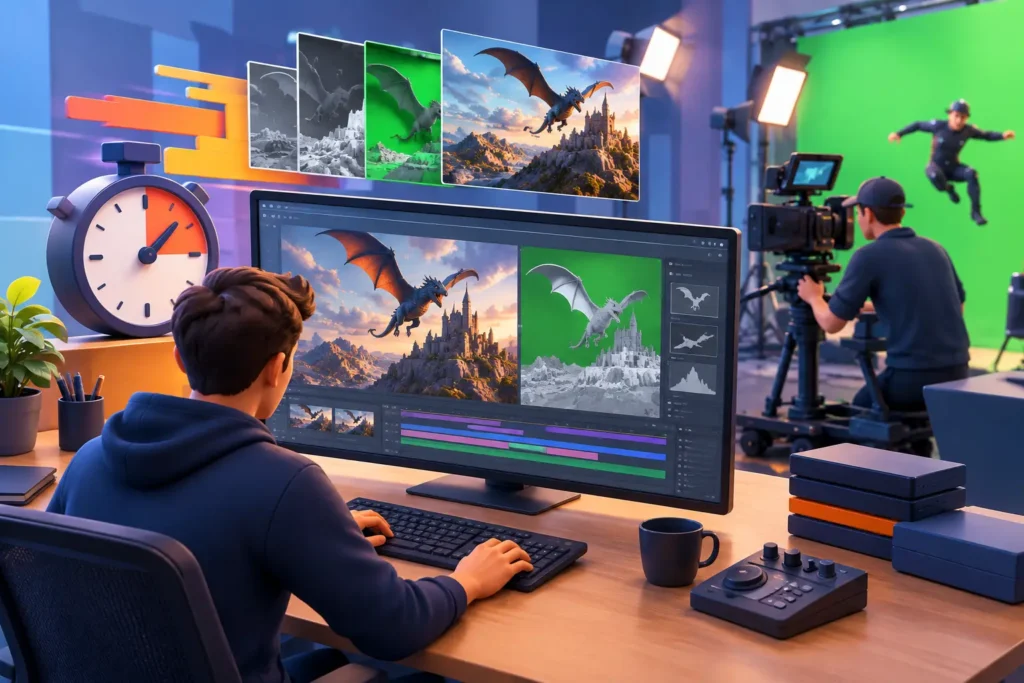
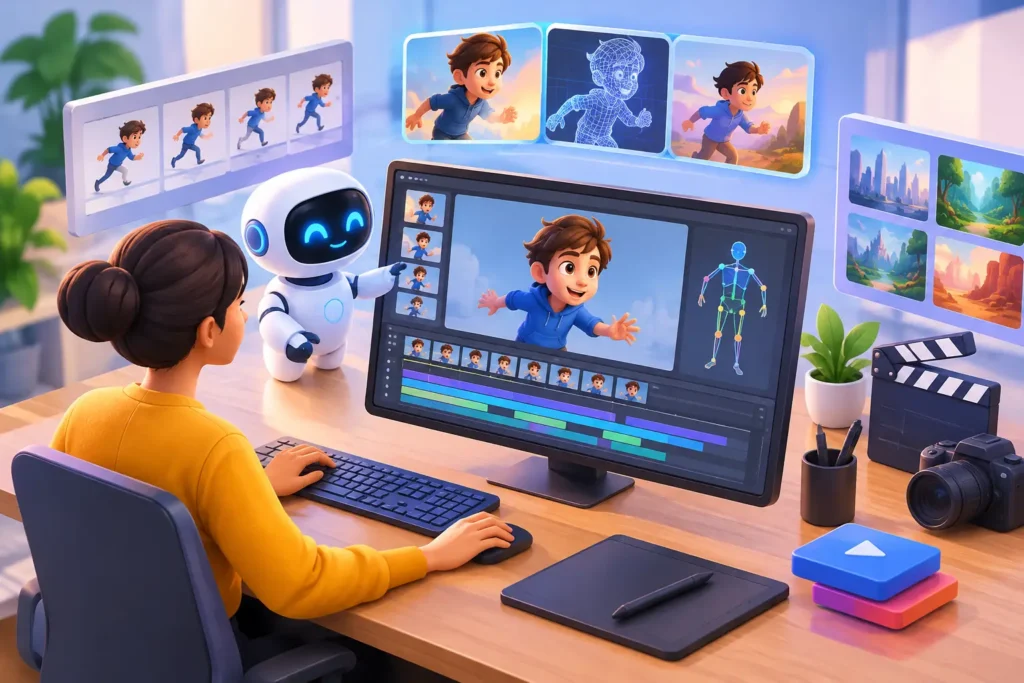
For film, TV, and animation pipelines, rendering is part of the production foundation. Photography may support plates, textures, or reference, but final visual development often depends on 3D.
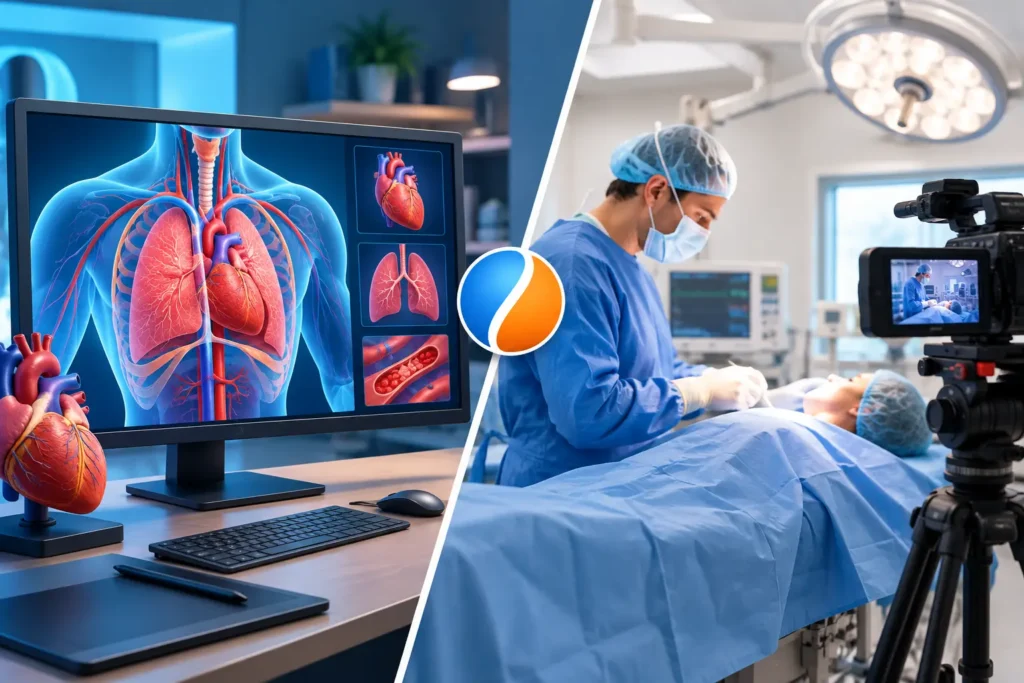
For medical, industrial, and technical sectors, rendering usually offers better clarity. It can show internal components, impossible camera angles, and processes that photography simply cannot capture.
The smartest answer is often both
This is not always a strict either-or decision. Many strong campaigns combine both methods.
A brand may use photography for lifestyle scenes with human interaction and 3D rendering for clean product hero shots, cutaways, or variant-heavy ecommerce assets. An architectural firm may use renderings during pre-sales and photography after project completion. A production house may blend photographed textures and environments into rendered scenes.
The best choice depends on the brief, the timeline, the revision load, and the asset plan beyond the current campaign. Teams that think only about the next image often miss the bigger production cost. Teams that think about the full content lifecycle usually make better decisions.
At 3D Modeling Animation Studio, we see this shift clearly across industries. Buyers are not just asking which medium looks good. They are asking which workflow helps them launch faster, scale assets efficiently, and maintain quality under pressure.
If your project depends on flexibility, versioning, technical accuracy, or visuals before physical production is complete, 3D rendering is often the stronger move. If your message depends on live-action authenticity and the subject already exists, photography may be the right call. The most effective production strategy starts by matching the medium to the business objective, not by defaulting to habit.