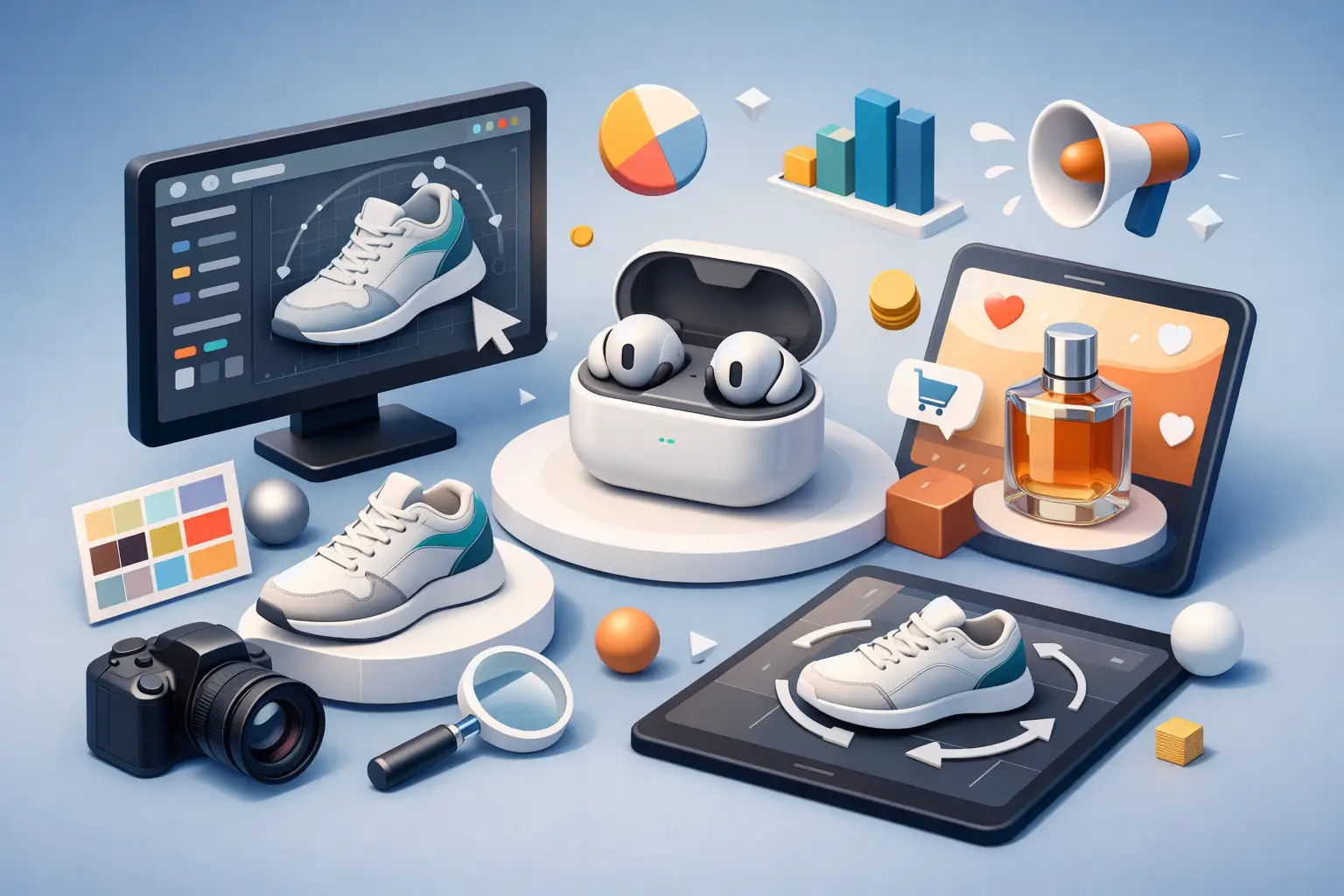
A product launch slips by two weeks because packaging changed, the color was slightly off in the studio, and the team still needs retailer-ready images. That is usually the moment decision-makers start asking why use 3d product rendering instead of relying only on traditional photography. The short answer is control. The better answer is that 3D rendering gives brands a faster, more flexible way to produce sales-ready visuals without rebuilding the entire production process every time something changes.
For product companies, marketing teams, agencies, and studios managing tight timelines, that flexibility is not a nice extra. It directly affects launch speed, revision cycles, campaign consistency, and production cost.
Why use 3D product rendering in commercial production?
3D product rendering is the process of creating photorealistic product images or animation from a digital model rather than a physical photoshoot. That matters because many of the delays in visual production happen before the camera even starts working. Samples need to be manufactured, shipped, approved, styled, lit, photographed, retouched, and often reshot.
With 3D, much of that bottleneck disappears. Teams can visualize a product before manufacturing is complete, test multiple finishes without rebuilding a set, and create assets for ecommerce, paid ads, social, packaging, trade presentations, and retail sell-in from the same core source files. For brands with multiple SKUs or frequent product updates, that creates a production advantage that compounds over time.
This is one of the strongest reasons why use 3d product rendering has become a practical business question rather than a purely creative one. It is not only about making images look good. It is about reducing friction in how those images are planned, approved, and deployed.
The real business value goes beyond visuals
Photorealism gets attention, but operational efficiency is usually what justifies the investment. A well-built 3D asset can support far more than a single campaign. Once a product is modeled accurately, teams can repurpose it across static renders, cutaway views, exploded views, product configurators, short animations, and launch content.
That means one production pipeline can feed multiple channels. Instead of briefing separate vendors for photography, retouching, motion, and technical visuals, a brand can build from a single digital foundation. For companies with growing product catalogs, this creates consistency that is difficult to maintain through repeated photo productions alone.
There is also less exposure to the usual production variables. Weather, shipping delays, damaged prototypes, set availability, and studio scheduling become less disruptive when the visual asset exists digitally. That kind of predictability matters to marketing teams who are balancing launch dates against ad calendars and sales commitments.
Speed matters when products change late
Most teams do not struggle with the first version of an asset. They struggle with revision rounds. A cap changes shape. A label gets updated for compliance. The finish shifts from matte black to brushed aluminum. The packaging team introduces a new dieline after the hero imagery was already approved.
In a traditional workflow, those changes often trigger expensive reshoots or heavy retouching. In 3D, revisions are usually more manageable if the source model was built correctly. A texture can be swapped. Lighting can be adjusted. Camera angles can remain consistent while the product changes underneath.
That does not mean every revision is instant. Complex geometry changes still require skilled work, and rushed changes can create downstream quality issues. But compared with staging another photoshoot, 3D typically gives teams far more room to adapt without losing momentum.
For outsourced production, this is especially valuable. An experienced external team can absorb changes quickly, scale output when needed, and keep asset creation moving without forcing the client to expand in-house capacity.
Better control over consistency across channels
Consistency is one of the most overlooked reasons to use 3D product rendering. A brand may need the same product shown across Amazon listings, DTC ecommerce, in-store displays, distributor presentations, paid media, and launch video. When those assets are produced through separate shoots or vendors, small differences in scale, lighting, angle, and color treatment can weaken the presentation.
A centralized 3D workflow helps avoid that. The same model, materials, and scene logic can be reused across asset types, which makes it easier to preserve brand standards. That is important for premium brands, technical products, and any company selling through multiple channels where visual consistency affects trust.
This also helps when products come in variants. Instead of photographing every color, size, or configuration individually, a team can build one approved visual system and roll out the range with greater efficiency. For larger catalogs, the savings in coordination alone can be significant.
Why use 3D product rendering before manufacturing is finished?
Because campaigns often cannot wait for final physical samples. Sales teams need presentation materials. Retail partners want previews. Ecommerce teams need launch pages staged before inventory lands. Investors or internal stakeholders may need visuals for approvals.
3D rendering solves that timeline gap. If CAD data, product dimensions, or design files are available early enough, brands can begin creating visuals before production is complete. That can compress the launch timeline and give teams more control over pre-release marketing.
There is a trade-off here. Early rendering only works well when the source data is accurate and decision-makers understand that late engineering changes may require updates. If the product is still evolving significantly, the visual pipeline needs disciplined version control. But when managed properly, rendering ahead of physical production can remove weeks from a go-to-market schedule.
It supports storytelling that photography cannot always deliver
Some products need more than a clean hero shot. They need to show how something works, what is inside, or why a design feature matters. That is where 3D becomes especially valuable.
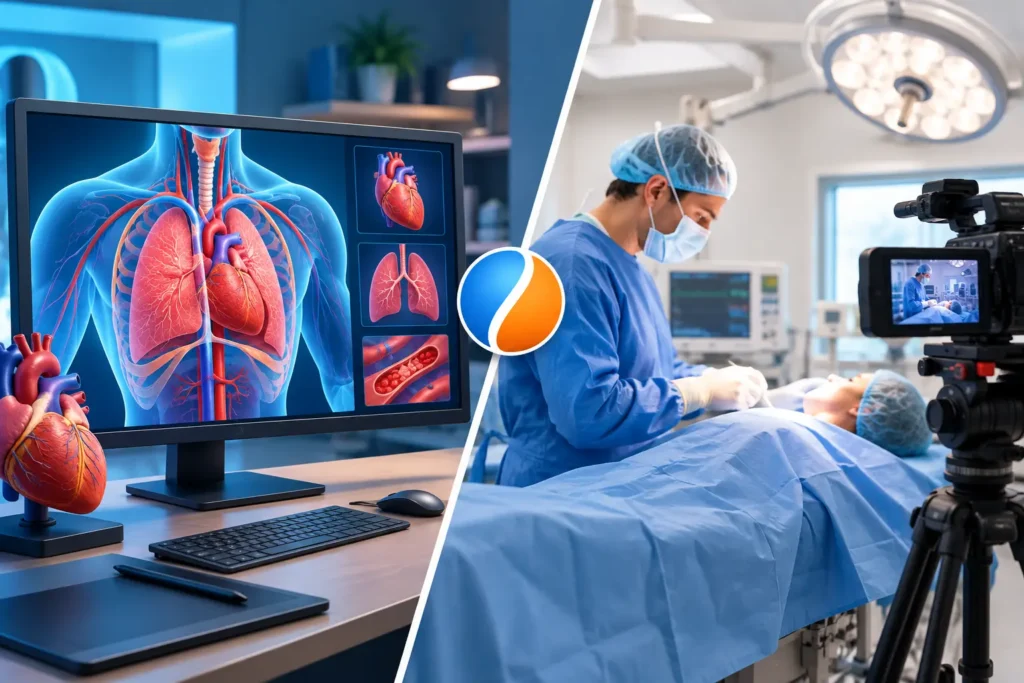
Rendered visuals can show transparent views, internal components, product assembly, motion paths, material transitions, or side-by-side comparisons that would be difficult or costly to capture practically. This is useful in consumer electronics, furniture, industrial equipment, medical devices, and any category where function matters as much as appearance.
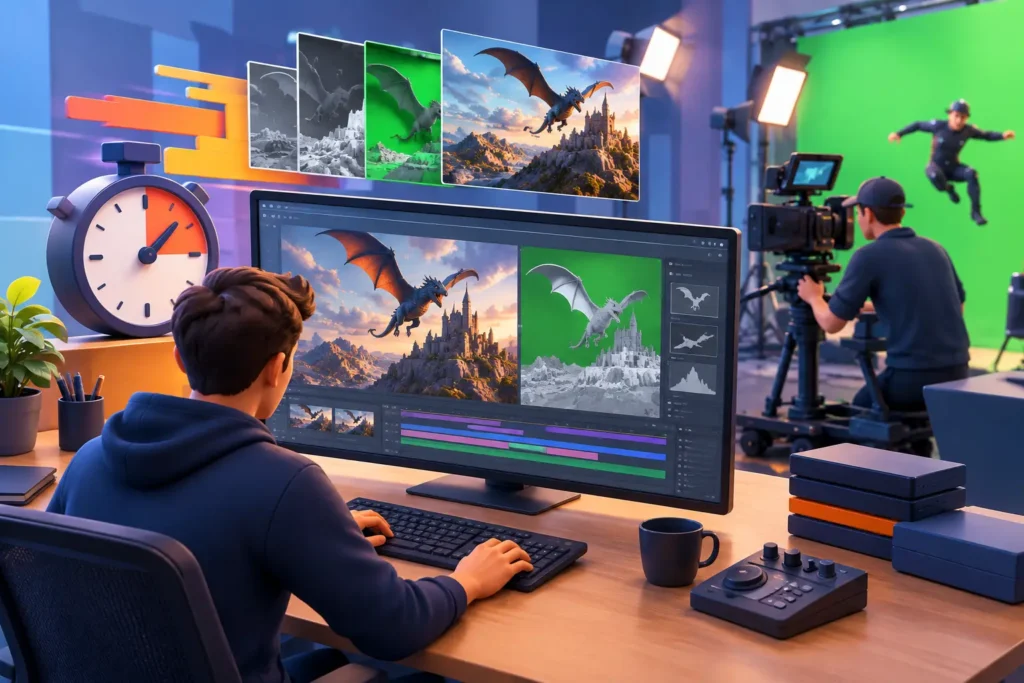
Animation extends that value further. A product can be shown in use, disassembled for explanation, or placed in a fully controlled environment that reinforces the brand message. For technical buyers, this clarity can improve understanding. For consumer audiences, it can increase confidence before purchase.
Cost efficiency is real, but it depends on volume
A common question is whether 3D product rendering is cheaper than photography. Sometimes yes. Sometimes no. The better comparison is long-term production value rather than the cost of one image.
If a company needs a small number of straightforward shots for a single product that already exists, photography may still be the most efficient option. But if the project involves multiple variants, frequent updates, launch visuals before manufacturing, or reuse across channels, 3D often becomes the smarter investment.
That is because the cost of building the digital asset can be spread across many outputs. The more a brand reuses that asset, the stronger the return. This is why 3D rendering works particularly well for companies with product pipelines, recurring campaigns, or ongoing content needs.
The key is execution. Poorly built models, inaccurate materials, or weak lighting will not save money if they create approval issues. The best results come from a team that understands both visual quality and production efficiency.
Outsourcing often makes more sense than building in-house
Many companies see the value of 3D rendering but underestimate what it takes to produce at a consistently high level. Modeling, surfacing, lighting, rendering, compositing, and revision management require specialized skill. So does understanding how to translate product specs into commercially effective visuals.
For many brands, outsourcing is the practical option. It gives access to an expert team without the cost and complexity of hiring full-time specialists, managing software pipelines, or balancing uneven production demand. It also allows internal teams to stay focused on strategy, approvals, and campaign execution instead of asset production bottlenecks.
A reliable production partner can also scale more easily. If a company needs ten SKU variations this month and an animated launch sequence next month, the workflow can expand without rebuilding the department. That is one reason many brands and studios work with external teams such as 3D Modeling Animation Studio when speed, quality, and capacity all matter at once.
Where 3D rendering delivers the strongest advantage
The strongest use cases tend to be product categories with complexity, variation, or speed pressure. Consumer goods brands use it to create launch imagery before samples arrive. Furniture and home brands use it to show finish options and lifestyle scenes without repeated set builds. Medical and industrial companies use it to explain features that cannot be photographed clearly. Agencies and production houses use it to extend campaign capabilities without stretching internal teams.
That said, 3D is not a magic fix for weak product data or unclear approvals. If stakeholders are misaligned, revisions can still multiply. If the visual standard is high, the rendering team needs strong references and precise feedback. The technology helps, but process discipline still matters.
The companies that get the most value from 3D rendering are usually the ones that treat it as part of a repeatable content system, not a one-off experiment. They build quality assets once, adapt them intelligently, and use them across sales and marketing touchpoints with purpose.
When teams ask why use 3d product rendering, the strongest answer is usually this: it gives you more control over timing, quality, consistency, and scale. And in commercial production, control is what keeps launches moving.