
Missed deadlines on product launches, overloaded internal artists, and inconsistent asset quality usually point to the same issue – production demand has outgrown internal capacity. A strong 3d modeling outsourcing guide helps solve that problem before it starts costing time, budget, and client confidence. For brands, studios, architects, and production teams, outsourcing is not just a way to reduce workload. It is a way to build a more flexible production pipeline.
What a 3D modeling outsourcing guide should help you decide
The best outsourcing decisions are not based on hourly rates alone. They are based on fit. You need to know whether an external team can match your technical standards, work within your review process, and deliver assets that support real business outcomes.
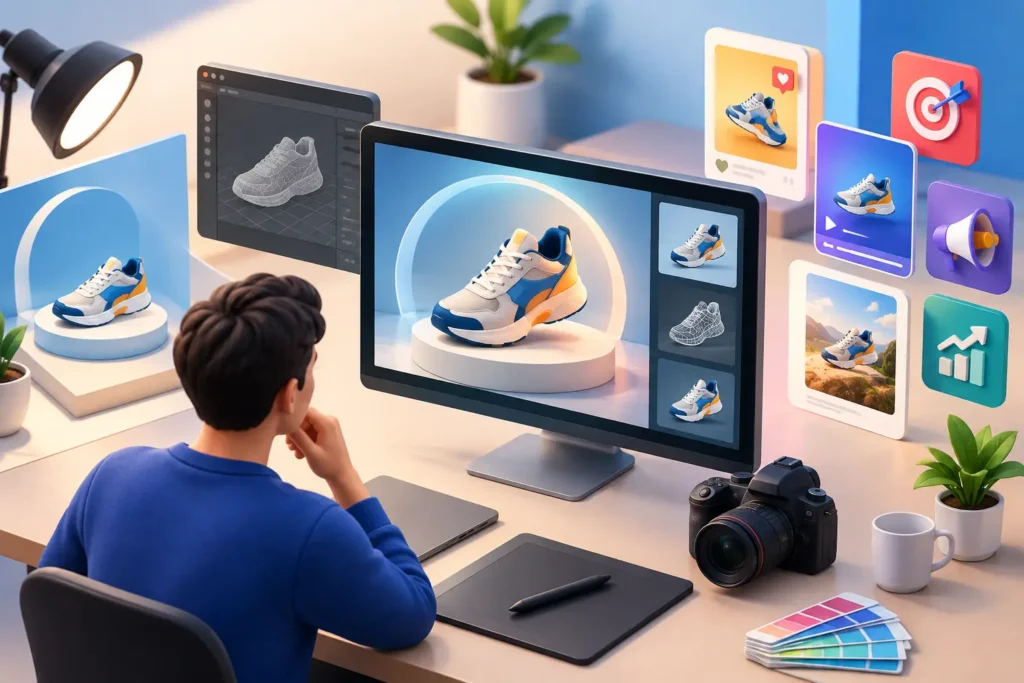
That matters because 3D modeling is rarely an isolated task. A product model may feed into animation, e-commerce visuals, AR experiences, or post-production. An architectural model may support still renders, walkthroughs, and investor presentations. If the outsourced work is inaccurate at the modeling stage, every downstream step becomes slower and more expensive.
A useful guide should therefore answer three core questions. What should you outsource, when does outsourcing make financial sense, and how do you choose a partner that can deliver consistently under deadline pressure?
When outsourcing 3D modeling makes the most sense
Outsourcing is usually the best choice when demand is uneven, deadlines are compressed, or the work requires skills your internal team does not use every day. Many companies do not need a large in-house 3D department year-round. They need dependable production capacity when a campaign, product launch, series, or visualization package ramps up.
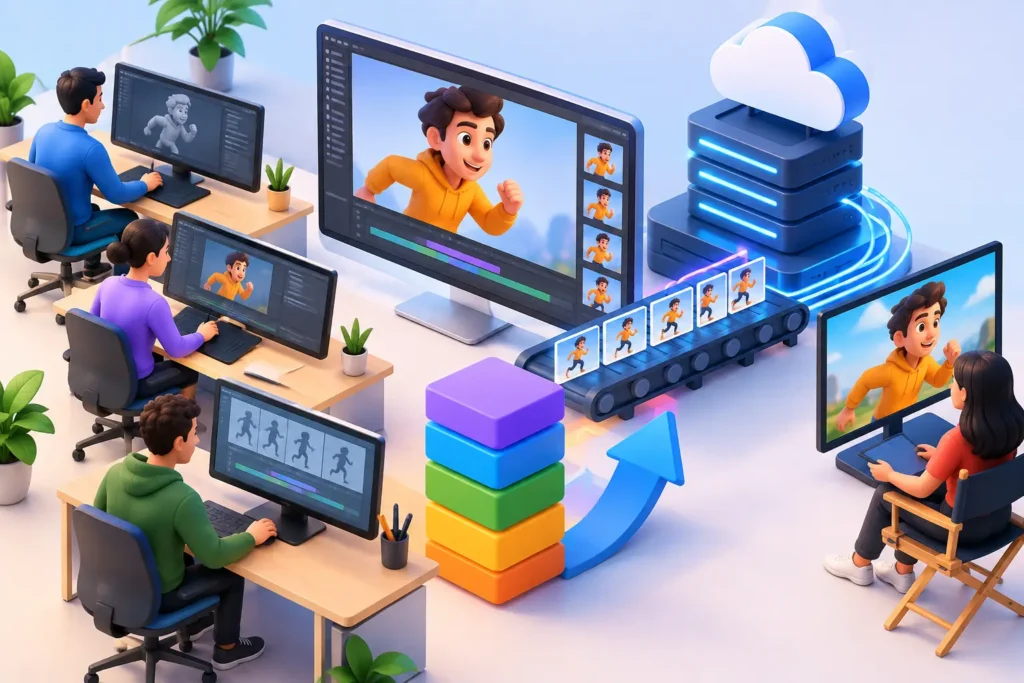
This is especially true for marketing teams and studios managing multiple deliverables at once. A single initiative might require product models, environment assets, rigging support, animation, and final edits on a tight schedule. Hiring full-time specialists for every phase is rarely efficient. An outsourced team gives you access to that capability when you need it.
There is also a quality argument. Specialized vendors often work across product visualization, entertainment, architecture, and medical content, which means they bring broader technical exposure than a small internal team can maintain alone. That outside experience can improve both speed and accuracy, provided the partner understands your standards.
What to outsource and what to keep in-house
A practical 3D modeling outsourcing guide should be clear about boundaries. Not every task belongs outside your company.
Strategic creative direction is usually better kept in-house. Brand-sensitive decisions, campaign messaging, product positioning, and stakeholder approvals tend to move faster when owned internally. The same applies when your team is defining the visual language for a new launch or a franchise with strict art direction.
Execution-heavy production work is often the strongest outsourcing candidate. That includes hard-surface product modeling, environment modeling, retopology, UV mapping, texturing, rigging preparation, and asset variations. These are specialized, time-intensive tasks that can be clearly briefed and quality-checked.
The line is not fixed. Some clients outsource only overflow work. Others hand over complete production blocks, from modeling through animation and post-production. The right model depends on how mature your internal process is and how much review bandwidth your team actually has.
How to evaluate an outsourcing partner
The biggest mistake buyers make is choosing a vendor based on portfolio images without testing production discipline. A polished reel looks good, but it does not tell you how files are organized, how revisions are handled, or whether the team can stay accurate across a 200-asset pipeline.
Start with technical fit. Ask whether the team has direct experience in your category. Product marketing, film assets, medical animation, and architectural rendering all have different modeling standards. A studio that excels at stylized entertainment work may not be the best choice for engineering-driven product visuals.
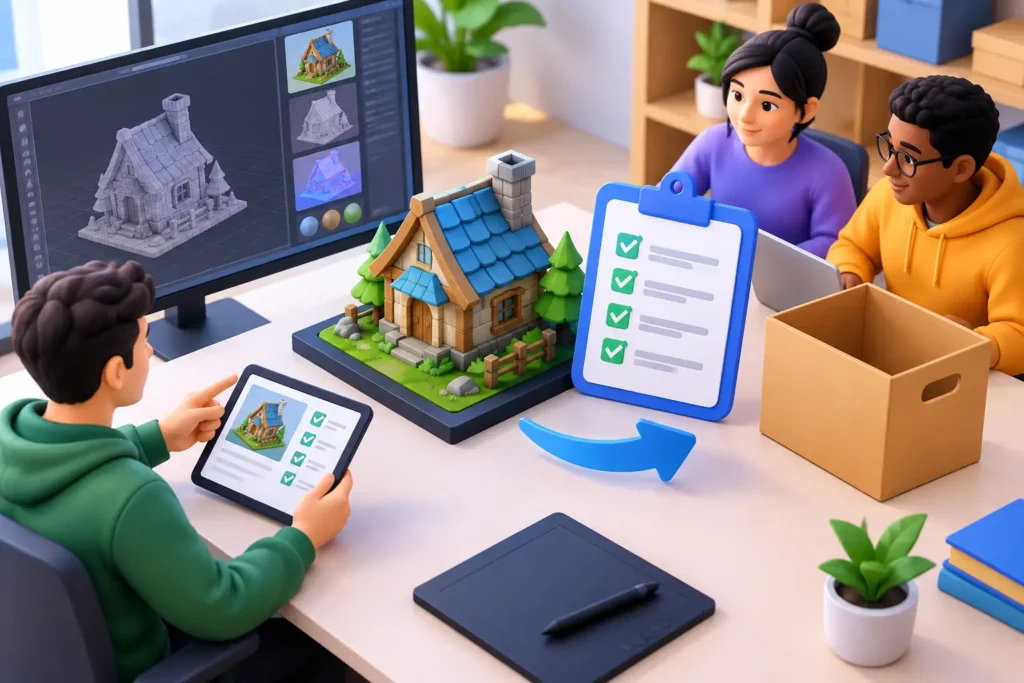
Next, examine process reliability. You want a partner that can explain how briefs are translated into milestones, how quality control works, and what happens when scope changes. Strong outsourcing teams are transparent about timeline assumptions, revision limits, dependencies, and file handoff standards.
Communication matters just as much as modeling skill. Fast response time is useful, but clarity is more valuable. You need a team that can flag issues early, ask precise questions, and keep your project moving without constant follow-up. For most business buyers, this is where good vendors separate themselves from risky ones.
Briefing for better results
Outsourcing works best when the brief removes ambiguity. Vague inputs create slow reviews, repeated revisions, and budget creep.
At minimum, your brief should define the asset purpose, required level of detail, intended output formats, dimensions or scale references, visual style, software or pipeline constraints, and deadline structure. If the model will be animated, say so early. If it must support close-up product shots, manufacturing accuracy, or real-time optimization, make that explicit from the start.
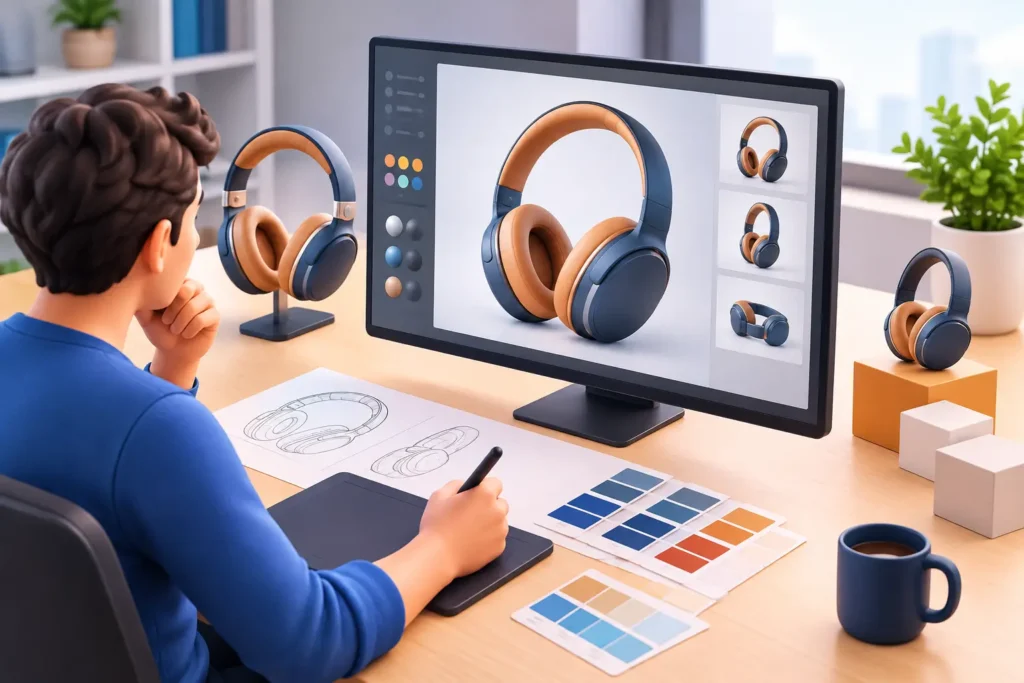
Reference material is where many projects either tighten up or fall apart. Good references do not need to be elaborate, but they do need to be relevant. CAD files, sketches, image boards, material samples, past campaign examples, and annotated screenshots all help reduce interpretation risk.
It also helps to define approval authority before production starts. Too many outsourced projects slow down because several stakeholders give conflicting direction. One client-side decision-maker with clear sign-off responsibility keeps the workflow stable.
Pricing, timelines, and the real cost equation
Outsourcing can reduce cost, but low price alone is rarely a win. If the asset fails quality review, misses launch timing, or requires significant rework internally, the savings disappear quickly.
A better way to evaluate cost is to look at total production efficiency. That includes turnaround speed, revision load, communication time, and whether the vendor can support connected services such as rigging, animation, rendering, or post-production. A partner that handles multiple stages can often reduce handoff friction and compress delivery time.
Timelines should also be discussed in terms of capacity, not just promises. Ask how many artists are assigned, what the review cycle looks like, and how the team handles urgent changes. A realistic timeline from an experienced vendor is more valuable than an aggressive estimate that slips halfway through production.
For larger engagements, test projects are often the best way to validate pricing and workflow. A paid pilot with one asset set or one sequence gives both sides a chance to confirm quality expectations before scaling up.
Common risks in 3D modeling outsourcing
Most outsourcing problems are preventable. They usually come from weak scoping, inconsistent feedback, or choosing a team that is not built for the type of work required.
One common risk is technical mismatch. This happens when a vendor can produce attractive visuals but not production-ready assets. Another is review drag, where unclear feedback creates multiple rounds of avoidable revisions. Time zone differences can also become a problem if communication windows are too narrow for active collaboration.
The solution is not to avoid outsourcing. It is to structure it properly. Clear milestones, approval checkpoints, file specifications, and a documented revision process reduce most delivery issues before they affect the final schedule.
This is why experienced buyers look for partners, not just freelancers on demand. A capable production partner brings account management, quality control, scheduling discipline, and enough bench strength to handle scale.
Building a long-term outsourced production pipeline
The highest return from outsourcing usually comes after the first project. Once a partner understands your brand standards, file preferences, review style, and delivery expectations, production gets faster and more predictable.
That is where outsourcing shifts from tactical support to operational advantage. Instead of scrambling each time demand spikes, you have an external team that can extend your internal capacity without the delay of hiring and onboarding. For studios, agencies, and brands with recurring visual content needs, that consistency is often more valuable than any one-off cost reduction.
A company like 3D Modeling Animation Studio is built around that model – giving clients scalable access to modeling, animation, rendering, and post-production support under one production structure. For organizations balancing speed, quality, and resource constraints, that kind of integrated support can simplify vendor management and strengthen delivery confidence.
Choosing the right outsourcing model for your business
The best choice depends on how often you produce 3D content and how tightly it connects to your core operations. If your needs are occasional, project-based outsourcing may be enough. If you manage continuous campaigns, product updates, or episodic content, an ongoing partnership is usually the smarter move.
What matters most is control without bottlenecks. You should retain strategic oversight while relying on an expert team for precision execution, scalable output, and dependable delivery. That balance is what makes outsourcing commercially effective rather than merely convenient.
If you are evaluating your next production move, do not ask only whether outsourcing is cheaper. Ask whether it gives your team more capacity, better quality control, and a faster path from concept to final asset. That is the decision that tends to pay off long after the current deadline passes.