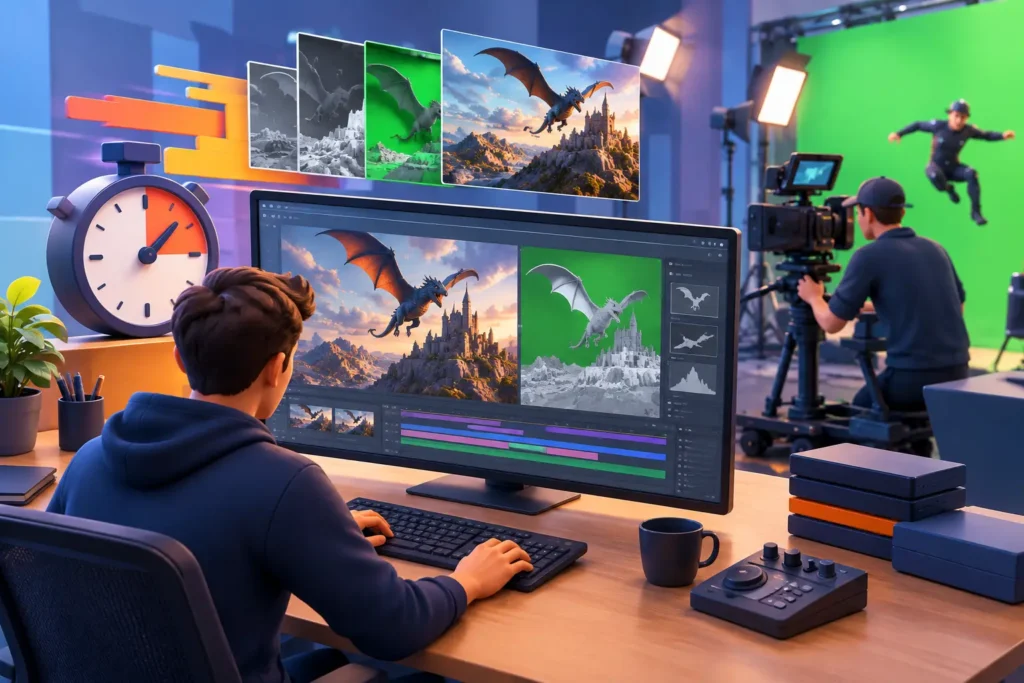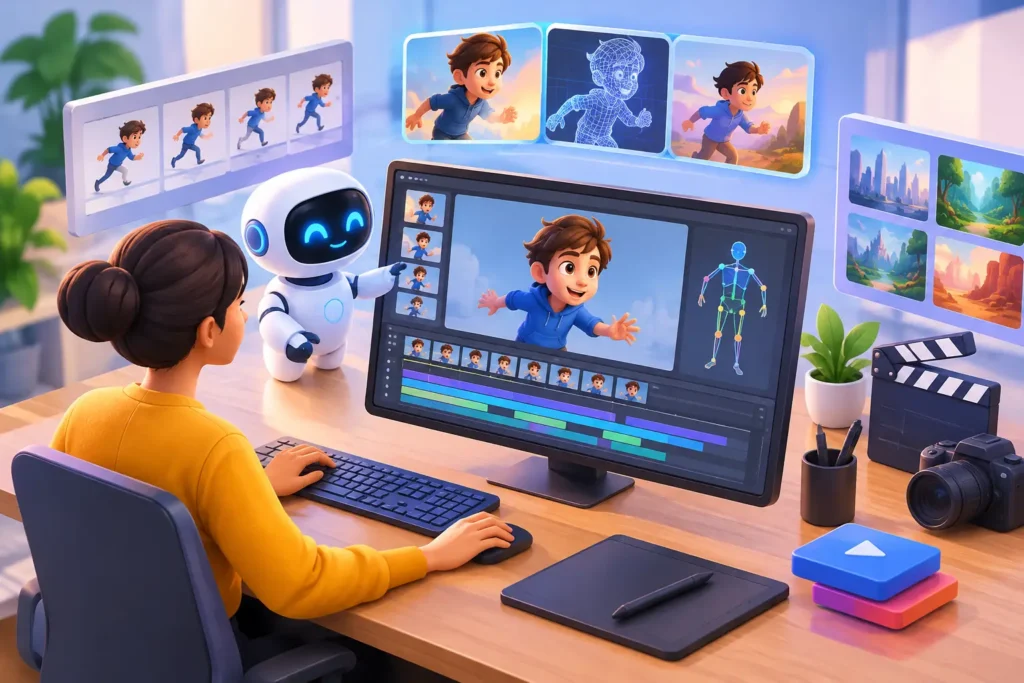

When a launch date is fixed, revisions keep coming, and your internal team is already at capacity, the question is not whether you need outside help. It is how to outsource 3d rendering without losing control of quality, timelines, or brand standards. For product companies, architects, agencies, and production teams, outsourcing works best when it is treated as a production decision, not a last-minute rescue.
The good news is that 3D rendering is one of the most outsource-friendly parts of the visual pipeline. It is technical, process-driven, and highly scalable when the right partner is in place. The challenge is that not every rendering vendor is built for commercial deadlines, complex feedback cycles, or industry-specific requirements.
Why companies outsource 3D rendering
Most businesses do not outsource because they lack standards. They outsource because demand changes faster than headcount can. A product team may need a burst of photorealistic visuals before a launch. An architecture firm may need consistent rendering output across multiple developments. A studio may need overflow support to keep delivery on schedule without expanding payroll.
Outsourcing solves a capacity problem, but it can also solve a specialization problem. Interior rendering, medical visualization, product CGI, and cinematic environment work each require different technical judgment. Hiring a generalist in-house rarely gives you the same flexibility as working with a team that already supports multiple rendering styles and production needs.
There is also a cost reality. Building an internal rendering team means salaries, software, hardware, management, training, and downtime between projects. Outsourcing lets you pay for output and production support when you actually need it.
How to outsource 3D rendering with fewer risks
The biggest mistake buyers make is choosing based on sample images alone. A polished portfolio matters, but delivery performance matters more. If you want reliable results, evaluate the provider as a production partner, not just a creative vendor.
Start by defining what success looks like in business terms. That means more than saying you need high-quality renders. Decide whether the renders are meant for e-commerce, investor presentations, architectural approvals, ad campaigns, pitch decks, or film production. The end use affects resolution, realism, file formats, animation needs, revision expectations, and speed.
Once that is clear, build your outsourcing brief around five essentials: scope, references, technical inputs, timeline, and approval process. Scope covers how many images or sequences you need and what level of complexity is involved. References show the visual target. Technical inputs include CAD files, sketches, dimensions, textures, branding, and camera guidance. The timeline should include review windows, not just final delivery. The approval process should identify who signs off at each stage.
If these details are vague, even a strong vendor will spend the first part of the engagement decoding expectations. That slows delivery and creates revision loops that feel avoidable because they usually are.
What to look for in an outsourced rendering partner
A rendering provider should be able to show more than pretty output. They should demonstrate process discipline. Ask how they handle kickoff, file intake, quality control, review rounds, change requests, and version management. A serious team will answer clearly and without overpromising.
Industry relevance matters too. A product rendering team should understand materials, manufacturing cues, and marketing angles. An architectural rendering team should understand scale, lighting logic, finishes, and the difference between design intent imagery and sales-focused visualization. If you work in a technical sector such as medical animation or industrial equipment, your partner should also be comfortable with accuracy, not just aesthetics.
Communication is often the deciding factor. Fast replies are helpful, but structured communication is better. You want a team that can ask the right questions early, flag missing inputs, and translate creative feedback into production actions. That is what keeps a project moving when deadlines tighten.
A capable outsourcing partner should also be transparent about what they need from you. If a vendor claims they can handle anything with almost no input, that is usually a warning sign. Strong rendering depends on strong source material and aligned expectations.
Pricing: what you are really paying for
Cost is important, but low pricing can be expensive when rework piles up. In outsourced 3D rendering, price usually reflects a mix of complexity, turnaround speed, asset readiness, number of views, realism level, and revision scope.
For example, rendering a simple product from clean CAD files is very different from creating a detailed lifestyle scene with custom materials, lighting design, and post-production. Architectural exterior images may look straightforward, but landscaping, entourage, weather conditions, and multiple camera angles can change the effort significantly.
This is why fixed pricing only works when the scope is clear. If your project is still evolving, a phased estimate often works better. One phase covers modeling cleanup or scene setup, another covers draft renders, and another covers final output. That gives both sides more control.
When comparing quotes, do not just ask what is included. Ask what triggers additional costs. Extra views, major design changes, missing source files, and compressed timelines are common variables. Clear pricing is not just about budget protection. It helps prevent friction later.
A practical workflow for outsourcing successfully
The most efficient outsourcing relationships follow a simple pattern: align early, review at the right moments, and avoid giving final-stage feedback on first-stage issues.
1. Begin with a production-ready brief
A strong brief shortens the entire cycle. Provide source files, visual references, target dimensions, intended use, brand guidelines, and examples of what to avoid. If realism matters, say what kind of realism. Photoreal product advertising looks different from conceptual real estate marketing or stylized entertainment work.
2. Approve direction before final rendering
Do not wait until full-resolution finals to comment on camera angle, composition, lighting mood, or material choices. Ask for low-resolution previews or clay renders first. This is where the largest decisions should happen because changes are cheaper and faster.
3. Keep feedback centralized
One decision-maker or a clearly organized review chain makes a major difference. Scattered feedback from sales, design, marketing, and leadership can stall a project unless one person consolidates comments into a single direction.
4. Define revision boundaries
Revisions are normal. Endless reinterpretation is not. Agree on how many review rounds are included and what counts as a revision versus a scope change. That protects the schedule and keeps expectations realistic.
5. Build for continuity if more work is coming
If you expect recurring rendering needs, think beyond the first project. Ask your partner to maintain asset libraries, material standards, lighting setups, and naming conventions. This makes future work faster and more consistent.
Common outsourcing mistakes to avoid
One common mistake is sending incomplete files and expecting the vendor to fill every gap. Some gaps can be solved in production, but too many assumptions lead to avoidable delays. Another is choosing a partner based only on low cost, then discovering they cannot handle revisions professionally or maintain consistency across a larger batch of images.
A third mistake is treating rendering as purely visual rather than commercial. If the images are meant to sell a product, support a pitch, win planning approval, or communicate a technical concept, the rendering team needs that context. Output improves when the production goal is clear.
There is also a timing mistake many teams make. They bring in an outsourced rendering vendor too late, after internal uncertainty has already created compression. The earlier the partner understands your scope and approval path, the more efficiently they can plan around it.
When outsourcing is the better choice than building in-house
If your rendering volume is unpredictable, your projects require varied specialties, or your internal team is spending too much time on overflow production, outsourcing is usually the better business decision. It gives you access to a broader skill base without locking you into permanent overhead.
That said, it depends on your operating model. If you produce the same rendering output every week at high volume with minimal variation, in-house production may make sense for part of the pipeline. Many companies find the best approach is hybrid: internal teams own strategy and creative direction, while an external partner handles scalable production.
This is where an experienced company like 3D Modeling Animation Studio can add value. The advantage is not just technical execution. It is the ability to support multiple industries, adapt to changing project loads, and deliver dependable production capacity without slowing your core team down.
How to know you found the right fit
The right rendering partner does not just accept files and send images back. They reduce uncertainty. They ask smart questions, set realistic milestones, communicate clearly, and deliver work that meets both visual and operational expectations.
If you are evaluating vendors, pay close attention to how they handle the first conversation. A capable team will want to understand your assets, your deadlines, your usage goals, and your approval process before they commit. That level of rigor is usually a good sign.
Outsourcing 3D rendering works best when it strengthens your production model instead of patching a short-term gap. Choose a partner that can scale with your workload, protect quality under deadline, and make your next project easier than the last.