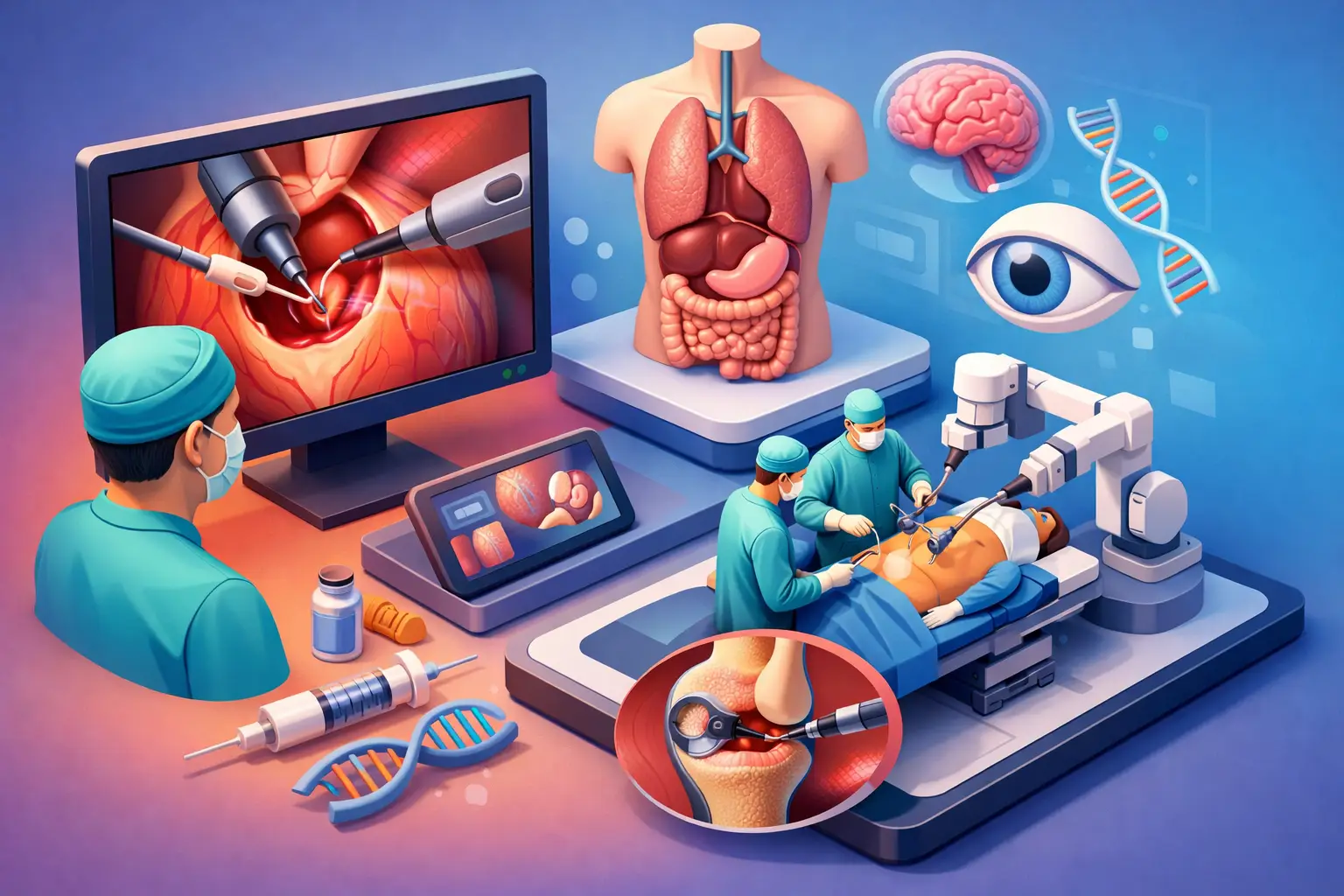
When a surgeon explains a spinal fusion, a catheter placement, or a valve repair using words alone, the gap between what is said and what is understood can be wide. That gap is exactly where how medical animation explains procedures becomes commercially valuable. For healthcare brands, device companies, hospitals, and medical marketers, animation turns technical complexity into something patients, providers, and stakeholders can actually follow.
Why procedure-based communication often breaks down
Medical procedures are hard to explain because they happen inside the body, involve multiple stages, and rely on terminology that means very little to a non-specialist audience. Even experienced healthcare professionals can struggle to communicate a process clearly when the procedure includes microscopic views, internal movement, or device interaction that cannot be captured well with standard video.
Static diagrams help to a point, but they do not show sequence, timing, or cause and effect. Live-action footage can be useful for clinical training, yet it is not always appropriate for patient education, marketing, or broad stakeholder presentations. It can also be visually difficult to watch, especially when the goal is reassurance and understanding rather than raw surgical realism.
That is why animation has become a practical solution rather than a decorative extra. It gives teams control over what the viewer sees, when they see it, and how much detail they need at each step.
How medical animation explains procedures more clearly
The main advantage of medical animation is selective clarity. Instead of showing everything, it shows the right things in the right order. A well-produced sequence can isolate anatomy, remove visual clutter, highlight pathology, and demonstrate precisely how a treatment or device works.
It makes invisible actions visible
Many procedures involve actions the audience cannot normally see. Blood flow changes, tissue response, implant deployment, nerve compression, and internal repair are difficult to communicate through photography or verbal explanation alone. Animation can place the viewer inside the anatomy and present those actions from the most useful angle.
For example, if a company needs to explain how a stent expands in a narrowed artery, the animation can first establish healthy anatomy, then show plaque buildup, then illustrate deployment and restored blood flow. That progression answers the key question quickly: what was wrong, what happens during treatment, and what improves afterward.
It reduces cognitive overload
Good medical communication is not about adding more information. It is about controlling complexity. Animation allows producers to layer information so the viewer can absorb it in stages. A sequence may begin with a simplified whole-body view, move into a localized anatomical area, then focus on the device or procedure itself.
This structure matters for patient education and commercial communication alike. A patient needs reassurance and comprehension. A hospital buyer may need to understand clinical function and product differentiation. A sales team may need a concise visual asset that supports a presentation without overwhelming the room.
It improves consistency across audiences
A procedure explained by five different presenters often becomes five slightly different stories. Animation creates a consistent visual narrative that can be used across marketing, training, investor presentations, conference booths, and digital campaigns. That consistency is valuable for regulated industries where clarity and message control matter.
It also helps global teams. When a medical company is selling across regions, a strong visual explanation can reduce dependence on lengthy text and improve cross-market usability.
Where medical procedure animation delivers the most value
Not every use case demands the same level of detail. The best results come from matching the animation style and depth to the audience and the business goal.
Patient education
Patients rarely want a full technical lecture. They want to know what will happen, why it is being done, what the treatment is intended to fix, and what to expect next. Animation supports that by simplifying anatomy and presenting the procedure in a calm, structured format.
There is a clear trade-off here. Oversimplify too much, and the content loses credibility or leaves important questions unanswered. Make it too technical, and patient comprehension drops. The right balance depends on the procedure, the care setting, and the intended viewing context.
Medical device marketing
For device manufacturers, animation is often one of the fastest ways to explain product function and differentiation. If the value of a device depends on internal deployment, material behavior, or interaction with tissue, animation can present that mechanism with precision.
This is especially useful before large-scale clinical footage is available or when live capture would be costly, limited, or visually unsuitable for commercial use. In those cases, a high-quality 3D sequence becomes both a sales tool and a strategic content asset.
Clinical training and professional education
For professional audiences, animation can clarify workflow, anatomy, and device use without the distractions of operating room footage. It can also standardize instruction across distributor networks, field teams, and training programs.
That said, animation is not a replacement for every other training format. For hands-on procedures, it works best as part of a broader training mix that may also include cadaver labs, simulations, live demonstrations, or expert-led instruction.
What makes a medical animation actually effective
A polished visual is not enough. If the anatomy is weak, the pacing is off, or the narrative lacks focus, the animation may look impressive while failing to communicate. The strongest procedure animations are built around three core disciplines: scientific accuracy, production strategy, and audience fit.
Scientific and anatomical precision
Medical audiences notice errors fast. Anatomy, pathology, procedural sequence, and device mechanics all need to be grounded in accurate source material. That often means working from surgical references, product documentation, imaging data, clinical input, and structured review cycles.
Precision is not only about avoiding mistakes. It also protects credibility. For healthcare and medtech brands, a visual asset that looks questionable can weaken trust in the broader message.
Clear scripting and storyboarding
A strong script decides what the viewer needs to understand and what can be left out. Storyboarding then turns that message into a sequence with logic and pacing. This stage often determines whether the final piece feels clear and authoritative or visually busy and unfocused.
In procedure-based animation, structure matters. The story usually works best when it moves from problem to intervention to outcome. That seems simple, but each phase requires decisions about terminology, camera angle, labels, motion, and level of detail.
Production choices that support the message
Visual realism is useful, but only when it serves the goal. Some projects need highly realistic tissue behavior and cinematic lighting. Others are better served by cleaner, more graphic visuals that improve comprehension. The right choice depends on the audience, distribution channel, budget, and deadline.
This is where experienced outsourced production teams add real value. A capable partner can align scientific review, 3D modeling, animation, rendering, editing, and revision management under one process instead of treating them as disconnected steps.
The business case for outsourced medical animation
For many organizations, the question is not whether animation helps. It is whether building it internally makes sense. In most cases, medical animation projects demand specialized talent that spans anatomy research, 3D asset creation, animation, post-production, and stakeholder management. Maintaining that full capability in-house is expensive, especially when demand fluctuates.
Outsourcing gives companies access to expert execution without adding permanent headcount. It also makes scaling easier when launch schedules tighten or content needs expand across product lines. For agencies, medtech marketers, and healthcare brands, that flexibility can be the difference between meeting a deadline and missing a market opportunity.
A production partner with broad 3D capacity can also support related needs beyond the animation itself, including still renders, cutaway visuals, presentation assets, and adapted versions for trade shows or digital campaigns. That reduces fragmentation and keeps quality more consistent across deliverables.
3D Modeling Animation Studio operates in that space by providing outsourced production support that combines technical accuracy, visual quality, and dependable delivery for specialized animation projects.
How to plan a procedure animation that performs
The most successful projects start with business clarity, not software choices. Before production begins, define who the audience is, what they need to understand, where the content will be used, and what decision the animation should support.
A patient-facing education piece will need a different script, pace, and visual tone than a physician training asset or investor presentation. Review cycles should also be planned early. Medical projects often require input from marketing, regulatory, product, and clinical stakeholders, and delays usually appear when those checkpoints are not built into the schedule.
It also helps to decide what level of realism is necessary. More realism can improve credibility in some contexts, but it may increase production time and make revision rounds more complex. In other cases, a cleaner and slightly simplified visual style will communicate faster and produce a better outcome.
The strongest medical animations do not just explain a procedure. They help the audience trust what they are seeing, understand why it matters, and move forward with more confidence.